
Last updated November 14, 2026
 Wrought iron
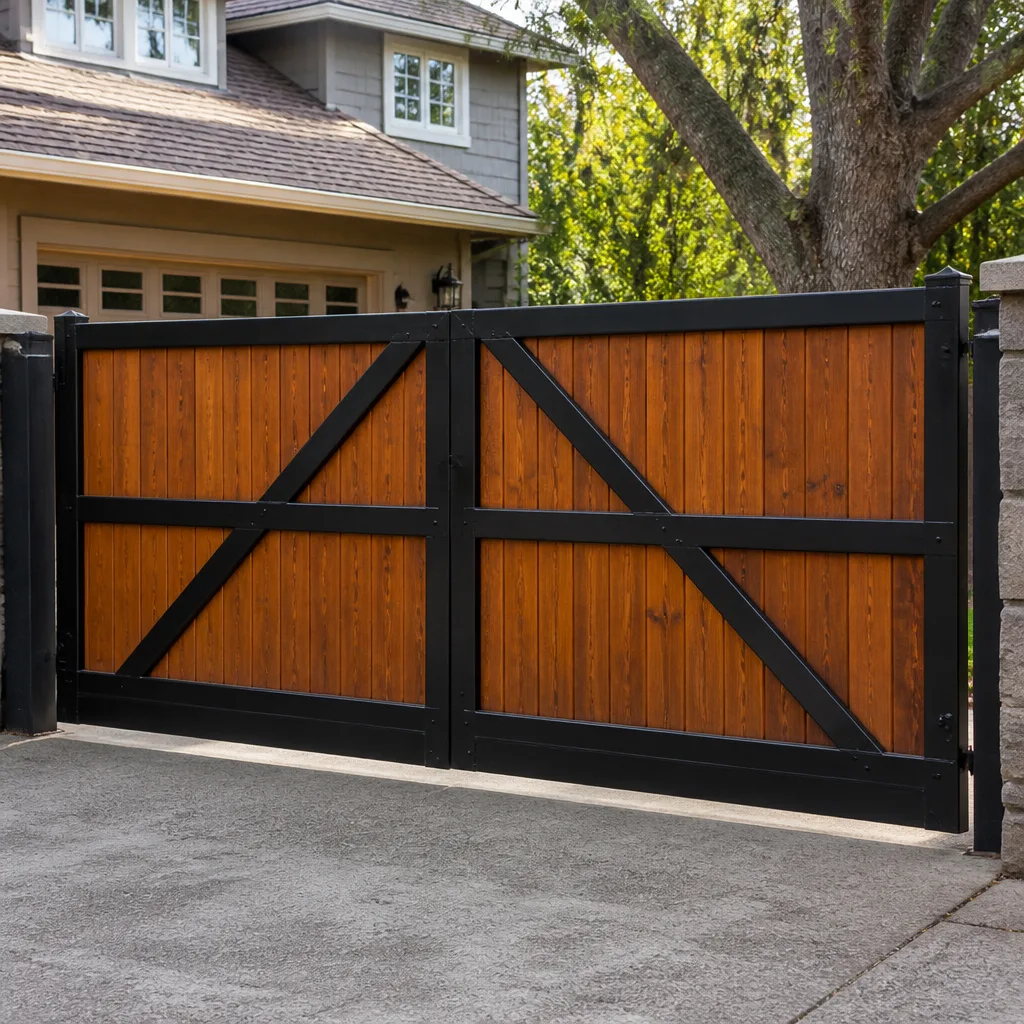 Wood & steel frame
 Farm & ranch
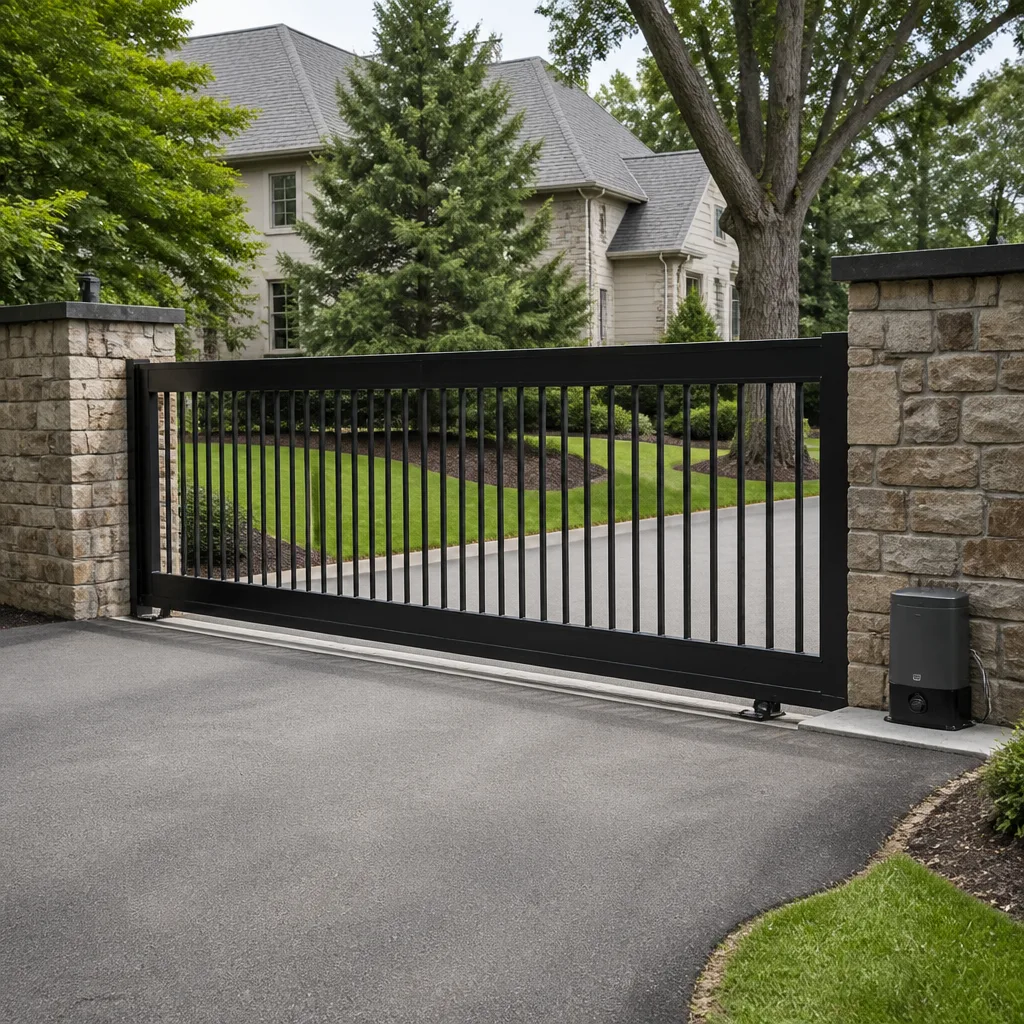 Sliding driveway gates
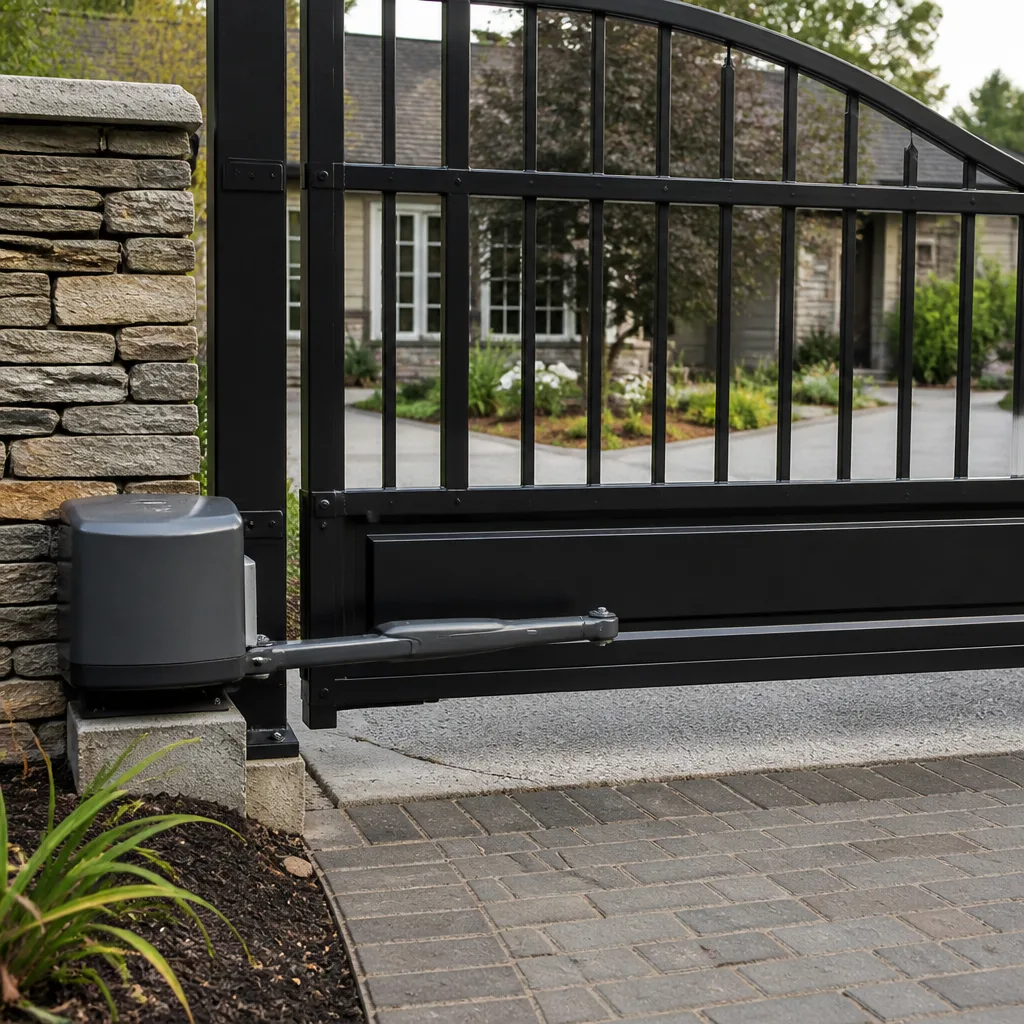 LiftMaster operators
Free on-site gate assessment - hinges, posts, and your LiftMaster or Nice gate operator checked before anything is quoted
The assessment is free and the quote is the invoice.
Get your free estimateGate Repair Maintenance Schedule: What to Do and When
The leading cause of premature gate operator failure isn’t age. It’s correct maintenance done on the wrong schedule for the wrong system. A solar-powered swing gate on a Fountaingrove hillside faces grit, ash, and sun exposure that a high-cycle slide gate at a commercial property in southeast Santa Rosa never sees, so copying one service rhythm onto the other wastes money and shortens equipment life. In this guide, we break a gate maintenance schedule into monthly owner checks, twice-a-year professional tasks, and an annual full-system inspection, then show how gate type, drive system, and local conditions change what each tier actually involves. You’ll finish knowing exactly what to do, and when, for the gate you own.
Quick Answer
A practical gate maintenance schedule has three tiers. Once a month, you clear the track, check the safety sensors, and test the manual release. Twice a year, a technician handles lubrication, hinge and roller wear, battery health, and control-board diagnostics. Once a year, you get a full-system inspection covering the operator, wiring, access control, and structural hardware. For Santa Rosa properties, add extra cleaning during wildfire season and a battery check before the rainy months.
Styles & brands we work with
- Wrought iron
- Wood & steel frame
- Farm & ranch
- Sliding driveway gates
- LiftMaster operators
Table of Contents
- Why the Right Schedule Matters More Than the Interval
- Monthly Owner Checks: 15 Minutes That Prevent Most Breakdowns
- Twice-a-Year Professional Tasks
- The Annual Full-System Inspection
- Lubrication by Drive System: Chain, Rack-and-Pinion, and Linear Actuator
- Battery and Solar Panel Windows for Backup and Off-Grid Systems
- Wildfire Season and Rain Season: Two Different Kinds of Wear
- Building a Maintenance Log That Predicts Failures
Why the Right Schedule Matters More Than the Interval
Most gate maintenance advice hands you a number: grease the chain every six months, check the battery once a year, done. That advice assumes every gate lives the same life. They don’t. A residential swing gate that opens four times a day has almost nothing in common with a slide gate at a storage facility that cycles sixty times before lunch, and a solar operator on a shaded rural driveway can’t follow the same battery timeline as a grid-powered operator under an eave.
The variables that actually set your schedule are the ones a manufacturer’s manual can’t know:
- Cycle count. High-cycle gates wear chains, rollers, and hinges faster and need closer inspection intervals than a gate that opens twice a day.
- Drive type. A chain drive, a rack-and-pinion slide operator, and a linear actuator each need different lubrication and different wear checks.
- Power source. Battery-backup and solar operators depend on charge health, not just mechanical condition, so their schedule includes the battery and the panel.
- Environmental load. Ash and dust from Sonoma County’s wildfire season settle into tracks and rollers differently than rain-season moisture does.
- Access-control complexity. A gate with loop detectors, intercom wiring, and keypads has more points of failure than a gate with a single remote.
In our experience, the gates that fail early are rarely neglected. They’re maintained on a schedule borrowed from a different system. For a closer look at what falls under routine service versus a breakdown, see our gate repair overview. Below, we build the schedule around your actual gate.
Monthly Owner Checks: 15 Minutes That Prevent Most Breakdowns
A monthly owner check is the tier that catches problems while they’re still cheap. Fifteen minutes once a month, doing five specific things in order. None of it requires tools beyond a broom and a flashlight.
- Clear the track or swing path. Sweep leaves, grit, and debris out of a slide gate’s track and away from the arc of a swing gate. Debris in the path is the most common cause of an operator stalling or reversing mid-travel.
- Test the safety devices. With the gate moving, break the beam on the photo-eye or walk through the loop-detection zone. The gate should stop and reverse. If it doesn’t, stop using the gate and get it looked at; safety devices that don’t work are a hazard, not a minor fault.
- Test the manual release. Every automated gate has a manual release for power outages. Confirm it disengages the operator and that you can move the gate by hand with reasonable effort. A gate that won’t budge on the release tells you the hinges or rollers are binding.
- Listen. Run the gate and listen for grinding, squealing, or a motor that sounds labored at the same point in every cycle. A noise that repeats at the same spot points to a mechanical issue; a noise that comes and goes often means a loose fastener.
- Look at the hardware. Glance at hinges, rollers, and mounting brackets for rust streaks, cracks, or fasteners backing out. Catching a loose bracket in month one prevents a bent gate frame in month six.
Homeowners across Santa Rosa can do this tier themselves. It’s not a substitute for professional service, but it turns your twice-a-year technician visit into a diagnosis session instead of a discovery session.
Twice-a-Year Professional Tasks
Twice a year, spring and fall, the work moves from observation to service. These are the tasks that need a technician with the right lubricants, a meter, and a diagnostic tool for the operator’s control board. This is the tier where brand knowledge pays off: the control boards on a DoorKing access system, an Elite slide operator, and a LiftMaster residential swing operator all read differently, and diagnosing one like the other wastes time and parts.
What a twice-a-year visit should cover:
- Lubrication by drive type. The right product for a chain is not the right product for a rack-and-pinion or a linear actuator, and we cover that in detail below.
- Hinge, roller, and track wear. Measure play, look for flat spots on rollers, check hinge-pin condition and replace fasteners that are loosening.
- Battery health. Load-test backup and solar batteries and check charge voltage. Lead-acid and AGM batteries fade gradually before they fail outright, and the test catches the fade.
- Safety-device verification. Re-test photo-eyes, loop detectors, and edge sensors and confirm the control board is reading them correctly.
- Control-board diagnostics. Pull fault codes, check for signs of water intrusion or pest activity inside the enclosure, and confirm the board’s settings match how the gate is actually used.
- Structural check. Look at post stability, gate frame alignment, and the mounting of the operator itself.
In Santa Rosa, the spring visit is the one to do before wildfire season, and the fall visit is the one to do before the rain. That timing matters more than any fixed month.
Why twice a year, specifically?
Two visits a year matches how Santa Rosa’s seasonal load actually splits. The dry months bring ash, dust, and grit into every moving part. The wet months bring moisture into tracks, enclosures, and electrical connections. Each of those loads builds up over roughly six months before it starts causing failures, so twice a year delivers a service visit just as each load peaks. Gates on higher-cycle commercial properties in southeast Santa Rosa often need closer intervals; we set that per job after looking at the gate.
The Annual Full-System Inspection
The annual inspection is the tier that goes beyond the gate itself and looks at the whole system, from the operator board to the hinge pin. It’s what we mean when we say one call covers the whole gate: the mechanical side, the electrical side, and the access-control side, checked in a single visit.
An annual full-system inspection covers:
- The operator and control board. Full diagnostic pass, firmware and setting review, and a check of the enclosure for water, insects, or rodent damage.
- The electrical side and power run. Connections, conduit and cable condition, and grounding, verified by a trained technician. High-voltage wiring and panel work is not a do-it-yourself job, and we recommend keeping hands out of enclosures that carry line voltage.
- Access control. Keypads, intercom, remote receivers, loop detectors, and any entry-logging hardware. If a card reader or keypad has a fading button or a flaky relay, this is where it shows up.
- Structural and safety hardware. Posts, frame, hinges, rollers, stops, and the physical condition of the gate panel itself, including any heavy panels that could crush if a hinge fails.
- Drive-specific wear. Chain stretch measurement, rack-and-pinion tooth inspection, or linear-actuator travel review, depending on what you own.
This is also the tier where a technician can tell you whether a component is worth repairing or whether it has genuinely reached the end of its life. Our approach is diagnose first, replace only when necessary, and the annual inspection is where that judgment has the most information to work from. For a system that’s already struggling, our electric gate repair team can pick up where the inspection leaves off.
Lubrication by Drive System: Chain, Rack-and-Pinion, and Linear Actuator
Lubrication is the most misunderstood task on the list. Using the wrong product doesn’t just fail to help; it accelerates wear. The most common mistake is spraying a wet, sticky grease or a chain-and-cable lubricant on a component that needs a dry film, which then attracts grit and forms an abrasive paste that grinds moving parts down faster than no lubrication at all.
Here’s how the three common drive types actually differ:
- Chain drive. Chain needs a lubricant formulated for roller chain, applied thin and worked into the links, not a heavy grease that collects dust. In Santa Rosa’s dry season, a light application holds up better than a thick one because thick product catches ash. Wipe the chain first; never lubricate over grit.
- Rack-and-pinion slide operator. The rack and driving pinion want a specific gear-type lubricant for metal-on-metal contact, applied to the teeth, not the whole rail. Greasing the rail itself does nothing except collect debris. The rail should stay clean and dry.
- Linear actuator. The rod and pivot points want a light application at the pivots only. The actuator’s motor and gear housing is sealed; adding product to it is a mistake that can damage seals.
Swing-gate hinges and rollers, whatever the drive type, want a product that penetrates and stays put without attracting grit. A technician who knows the drive on your gate will use the right one. A generalist working from a single can won’t. This is one of the reasons a Gate Repair Santa Rosa specialist visit exists: knowing what product goes where is the whole point of the twice-a-year service.
Battery and Solar Panel Windows for Backup and Off-Grid Systems
Battery-backup and solar operators follow a schedule the mechanical side never needs. This matters more in Santa Rosa than in many markets because a meaningful share of rural properties on the city’s outskirts run gates on solar or battery systems where there’s no easy grid tie at the gate location. A gate that stops because its battery faded at the wrong moment strands the vehicle that’s already outside.
The battery and solar windows to keep on your calendar:
- Every month, glance at the panel. Solar panels want a clean surface. Ash, dust, and bird droppings cut panel output more than most people realize, and a partially shaded panel on a swing gate operator can leave the battery undercharged even in full sun.
- Every three months, check the operator’s battery indicator or voltage reading. If the operator reports a low-battery state, treat it as a scheduled replacement, not a surprise.
- Twice a year, during the professional visit, load-test the battery. A load test tells you how much capacity is actually left. Voltage alone doesn’t.
- Before the rainy months, confirm the enclosure seals. A backup battery box that takes on water will fail faster than any calendar predicts.
- Every few years, plan a battery replacement cycle. Battery types age differently, so the replacement interval depends on what’s installed. We check the type and condition at each visit and tell you when a replacement is due.
Solar and battery systems are one of the reasons we recommend the twice-a-year professional visit no matter how light your gate’s usage is. The mechanical side of a lightly used gate can forgive a missed visit. The battery side can’t.
Wildfire Season and Rain Season: Two Different Kinds of Wear
Sonoma County asks two different things of a gate. In wildfire season, the load is particulates: ash, dust, and soot that settle into tracks, rollers, hinges, and panel gaps. Ash is abrasive, and in a slide gate’s track it forms a grinding paste that wears rollers fast. It also gets into operator enclosures through any gap not sealed well, where it can short electrical contacts and coat a control board.
In rain season, the load is moisture. Water in a slide track pools and holds grit; water in an operator enclosure condenses on the control board; water on hinges and hardware starts rust at fasteners and hinge pins. Santa Rosa’s winters are mild, which means the wet-season problem is not extreme weather but repeated damp-dry cycles that quietly degrade seals and hardware over a full season.
The schedule shifts accordingly:
- Wildfire season: clean the track and moving parts more often than the monthly minimum in high-ash periods, check enclosure seals, and wipe down rather than hose down. Ash plus water is not a cleaning strategy.
- Rain season: check for standing water in the track, verify enclosure seals, inspect hinges and fasteners for rust streaks, and make sure the operator’s drip path is clear.
- In between: the twice-a-year professional visit lands right before each season, which is why spring and fall timing works so well in Santa Rosa.
The key insight is that the amount of maintenance you do doesn’t change much between the seasons; the kind does. Ash is an abrasive problem, water is a corrosion problem, and neither responds to the same cleaning or inspection routine.
Building a Maintenance Log That Predicts Failures
A simple log is the difference between reacting to gate failures and predicting them. The point isn’t record-keeping for its own sake. It’s spotting a trend before it strands a car.
Five things worth recording, every time:
- Date and cycle count. Many operators track cycles. Note the count at each service so you can see how fast the gate is actually being used.
- What was checked and what was found. A short note is enough: “chain stretched, adjusted,” “photo-eye intermittent, cleaned lens.”
- Any parts replaced. What, and when. This tells you which components are on a short cycle and which are holding up.
- Battery voltage and load-test result. A slow decline across visits is your replacement warning, months ahead of a failure.
- Anything you noticed but didn’t fix yet. A hinge with a little play. A louder-than-usual motor. These become the early-warning list for the next visit.
After a year or two, the log starts telling you things no manual can. You’ll see that your track needs cleaning more often in August than in April. You’ll see that a particular hinge is replaced every eighteen months and it’s worth asking why. When you know the brand you own, whether that’s a LiftMaster residential operator or a Mighty Mule on the back fence, the service history plus the brand tells a technician exactly where to look. If you call us for service on a gate you already own, bring the log. It’s the single most useful document you can hand a technician.
Common Mistakes to Avoid
- Following the manufacturer’s interval as if it were your interval. The manual doesn’t know your cycle count, your solar setup, or how much ash your gate sees. Build the schedule around your system, not the box the operator came in.
- Using the wrong lubricant. Grease on a rack-and-pinion rail, or a sticky product on a chain in a dusty Santa Rosa summer, attracts grit and accelerates wear. Match the product to the drive type.
- Hosing the gate down after a dusty stretch. Water plus ash makes a paste that finds its way into every moving part. Wipe or blow out; don’t wash.
- Skipping the safety-device test because the gate “seems fine.” A gate that opens and closes smoothly tells you nothing about whether its photo-eye or edge sensor will stop it when it matters.
- Ignoring a slow battery decline in a solar or backup operator. By the time the gate refuses to open, the battery is already past saving, and you’ve discovered it when you’re trying to leave.
- Never testing the manual release. The one time it matters is when there’s no power, and that’s the worst moment to learn that the release is seized or the gate is binding.
- Letting a generalist work on a gate. A contractor who handles gates among many other trades reads one control board the same as another. Gate specialists read the specific board on the specific brand, which is why we work on DoorKing, Elite, LiftMaster, and the rest by their actual systems, not their similarities.
See the difference
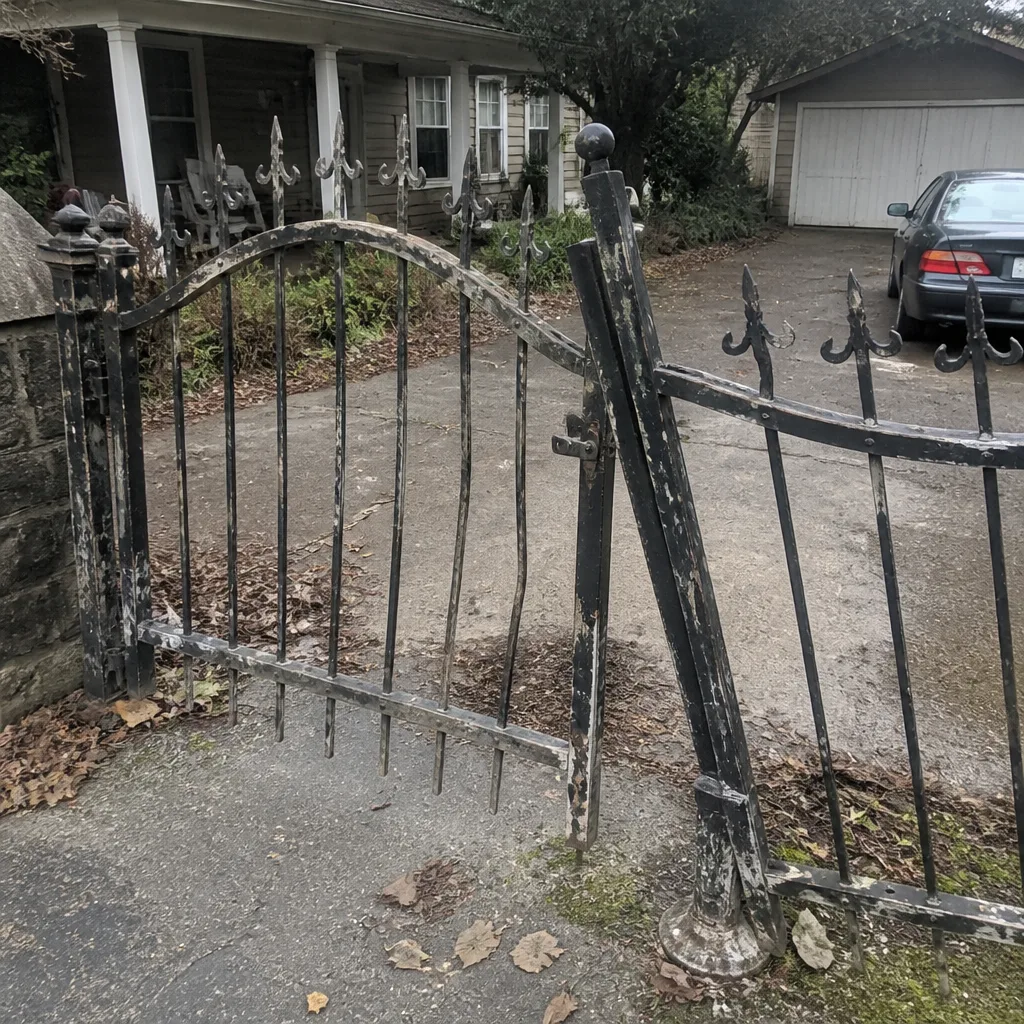 Before
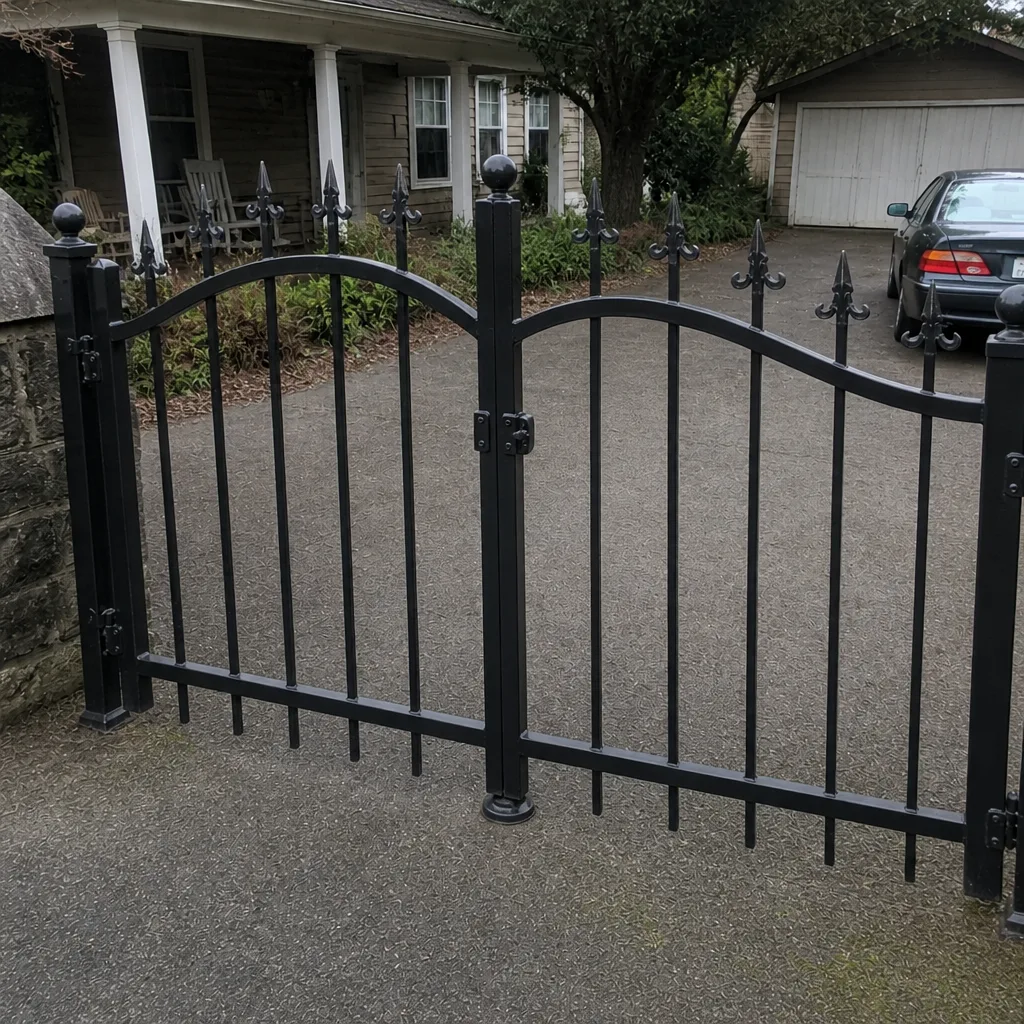 After
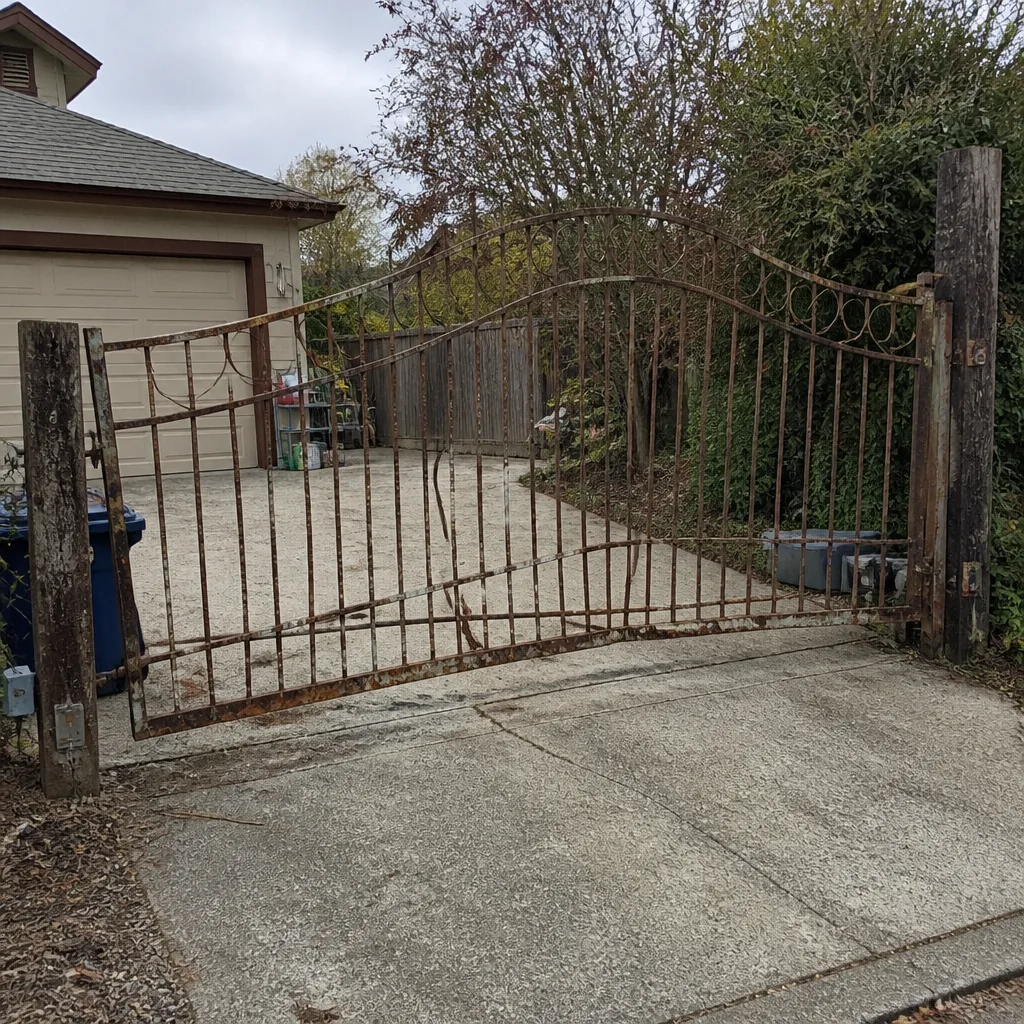 Before
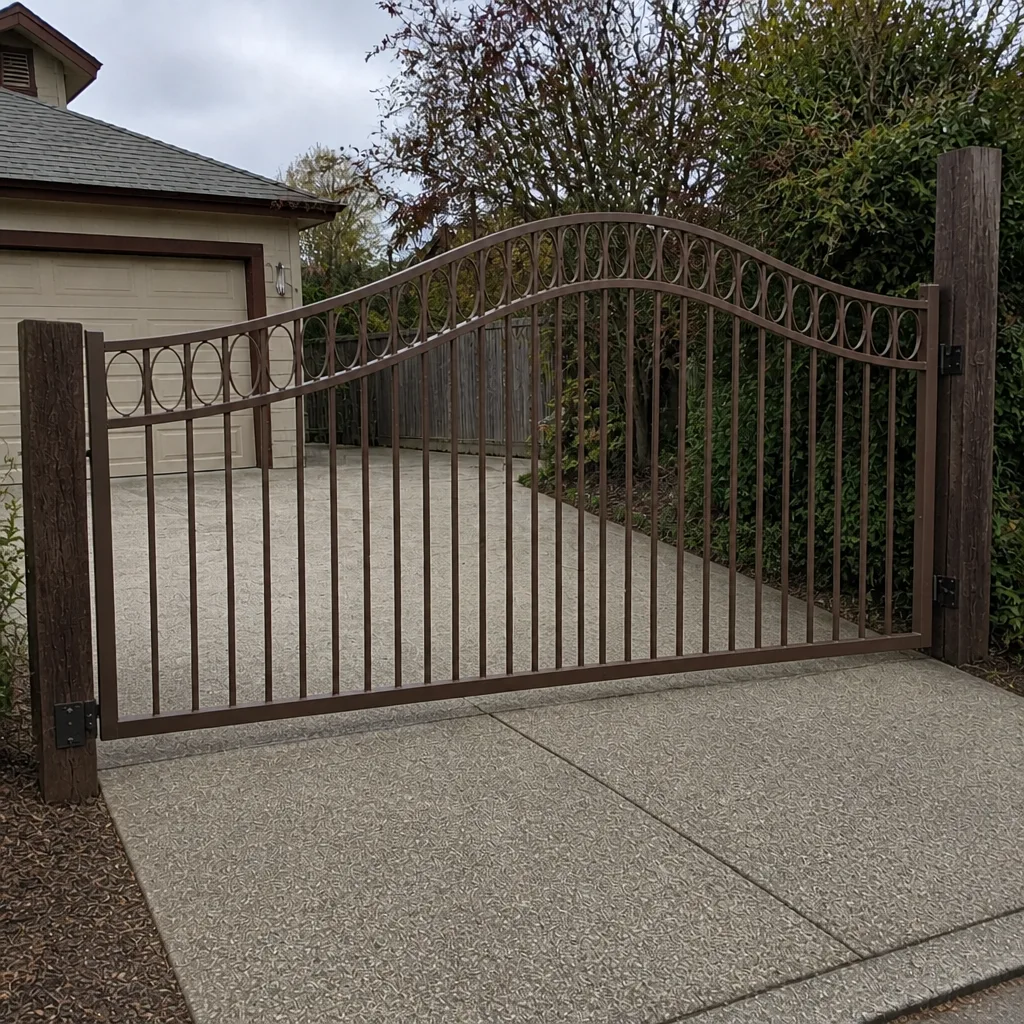 After
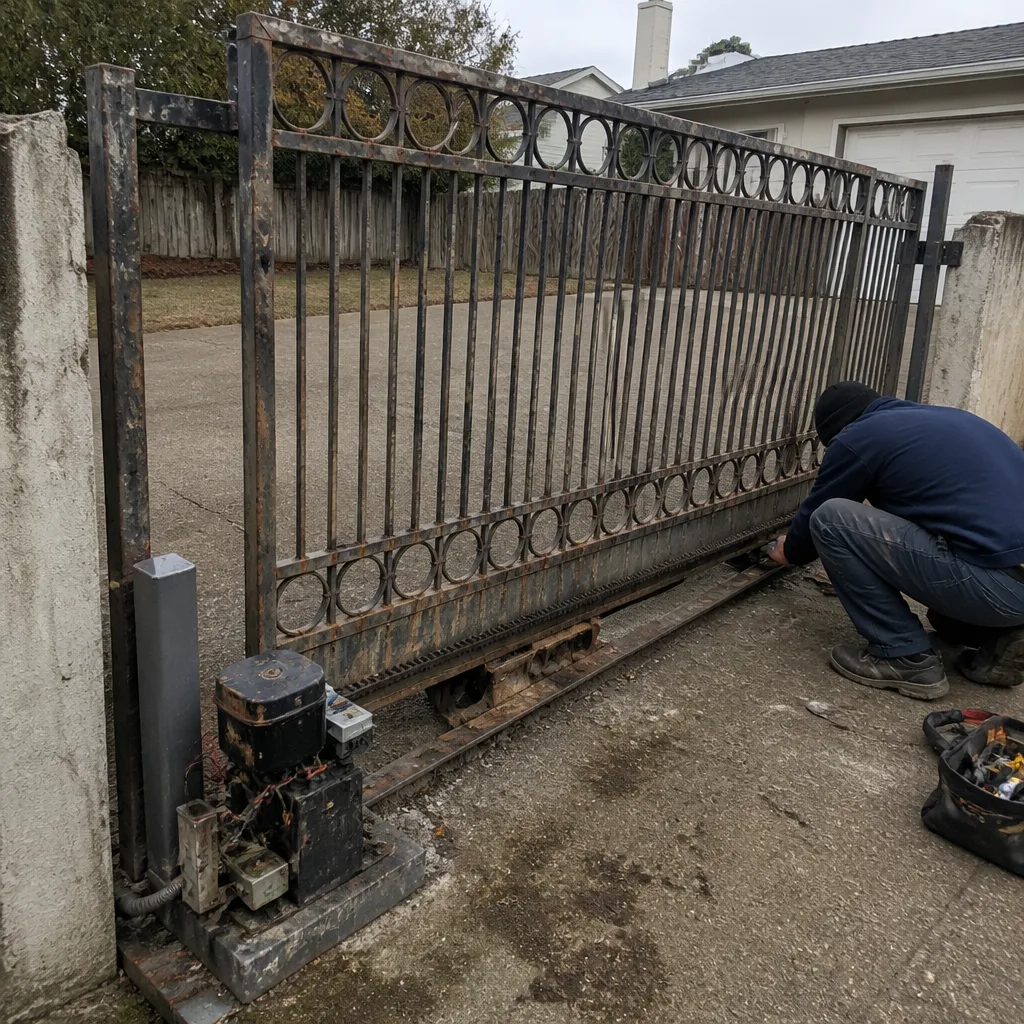 Before
 After
When to Call a Professional
Some tasks in this guide are yours to do. Others should go straight to a technician, and a few should stop you from using the gate until they’re checked. Call a professional if the gate reverses or stops when it shouldn’t, if the safety sensors fail the monthly test, if the operator throws fault codes you can’t clear, if the manual release doesn’t free the gate, if you see water inside the operator enclosure, or if the gate has visibly shifted on its posts. High-voltage wiring and control-panel work belong with a trained technician, and we recommend not opening an operator enclosure that carries line voltage yourself.
Call (888) 298-3409. We answer 24/7. Fast dispatch from 7am to 7pm, Sunday through Friday. Gate Repair Santa Rosa offers free estimates in Santa Rosa, and every price is quoted and agreed before any work starts. Our technicians have up to 14 years of experience, and we diagnose first, replacing parts only when repair genuinely isn’t cost-effective.
Frequently Asked Questions
Twice a year for most residential gates, timed just before wildfire season and just before the rainy months. Higher-cycle commercial gates in southeast Santa Rosa often need closer intervals, and a lightly used gate with a solar or battery operator should still get the twice-a-year visit to check battery health. Once a year, add the full-system inspection that covers wiring, access control, and the structural hardware.
Yes, for the monthly tier. Clearing the track, testing safety devices, testing the manual release, listening for new noises, and checking hardware for rust are all safe owner tasks. Lubrication by drive type, control-board diagnostics, battery load-testing, and anything involving line voltage should go to a technician.
The spring visit is the one before wildfire season: cleaning out ash and grit, checking enclosure seals, and inspecting the track for abrasive wear. The fall visit is the one before the rain: checking for moisture intrusion, rust at fasteners, and water pooling in the track. Same gate, same technician, different checklist.
If your operator has a backup battery, yes. Backup batteries fade slowly and the failure shows up as a gate that won’t open when the power is out, which is exactly when you need it. The twice-a-year load test catches the fade months before it becomes a failure.
The annual inspection adds the electrical side, access control, and a full diagnosis of the operator and its connections. The twice-a-year visit handles lubrication, mechanical wear, safety-device verification, control-board diagnostics, and battery health. Together, the two tiers cover the whole gate, from the operator board to the hinge pin.
We identify it on the visit. Our technicians work on the brand you already own across nine major operator brands, including LiftMaster, DoorKing, Elite, and Mighty Mule. Knowing exactly what’s installed tells us which lubrication and which inspection steps apply. Call (888) 298-3409 for an exact quote, and estimates are free.
The Bottom Line
A gate maintenance schedule works when it’s built around your gate, not a generic calendar. Monthly owner checks catch the cheap problems. Twice-a-year professional visits handle lubrication, wear, and battery health. The annual full-system inspection covers the electrical side, access control, and structural hardware. In Santa Rosa, add extra cleaning during wildfire season and a moisture check before the rainy months, and keep a simple log so you can spot trends before they become failures. If your gate is already showing symptoms, or you want a professional to look over the whole system, we’re the specialists for that. Call (888) 298-3409. We answer 24/7, fast dispatch from 7am to 7pm, Sunday through Friday, and estimates are free for Santa Rosa properties.
Written by the team at Gate Repair Santa Rosa.