
Last updated November 14, 2026
 Wrought iron
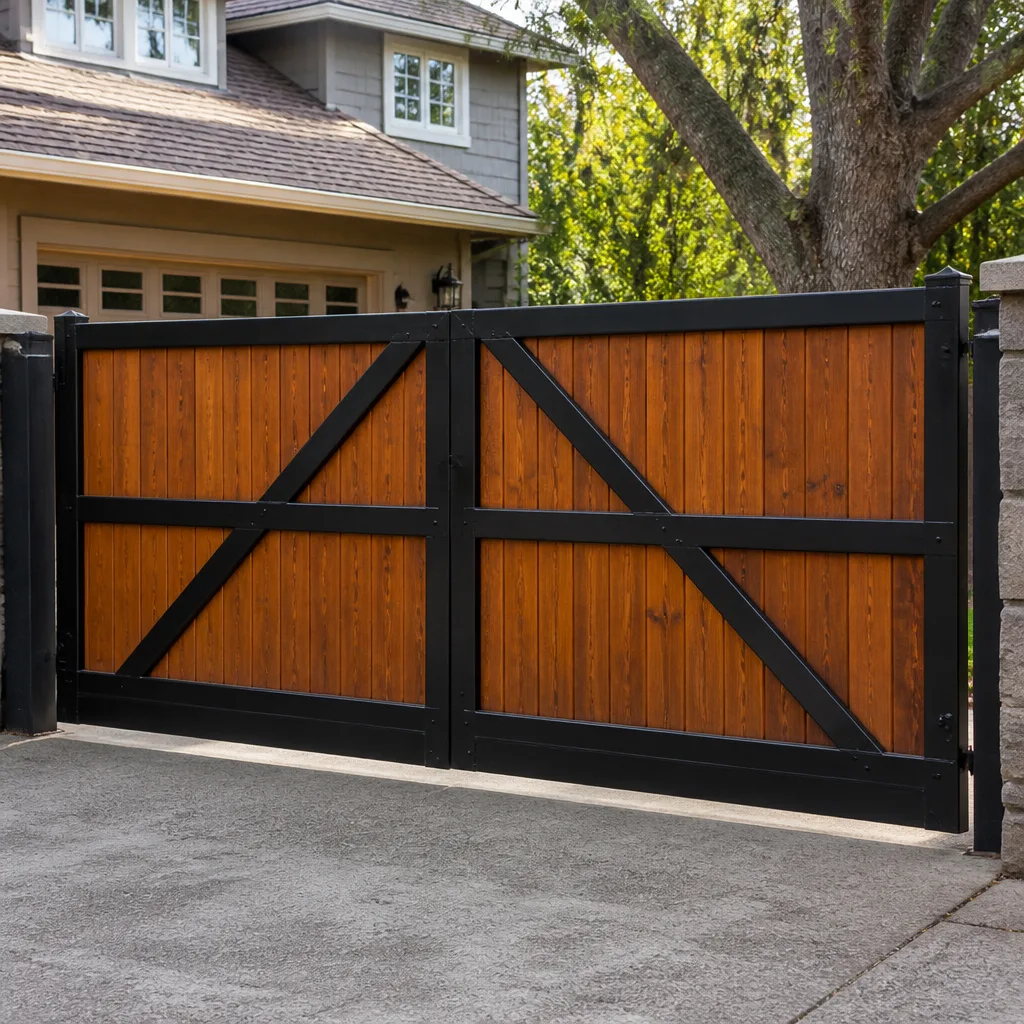 Wood & steel frame
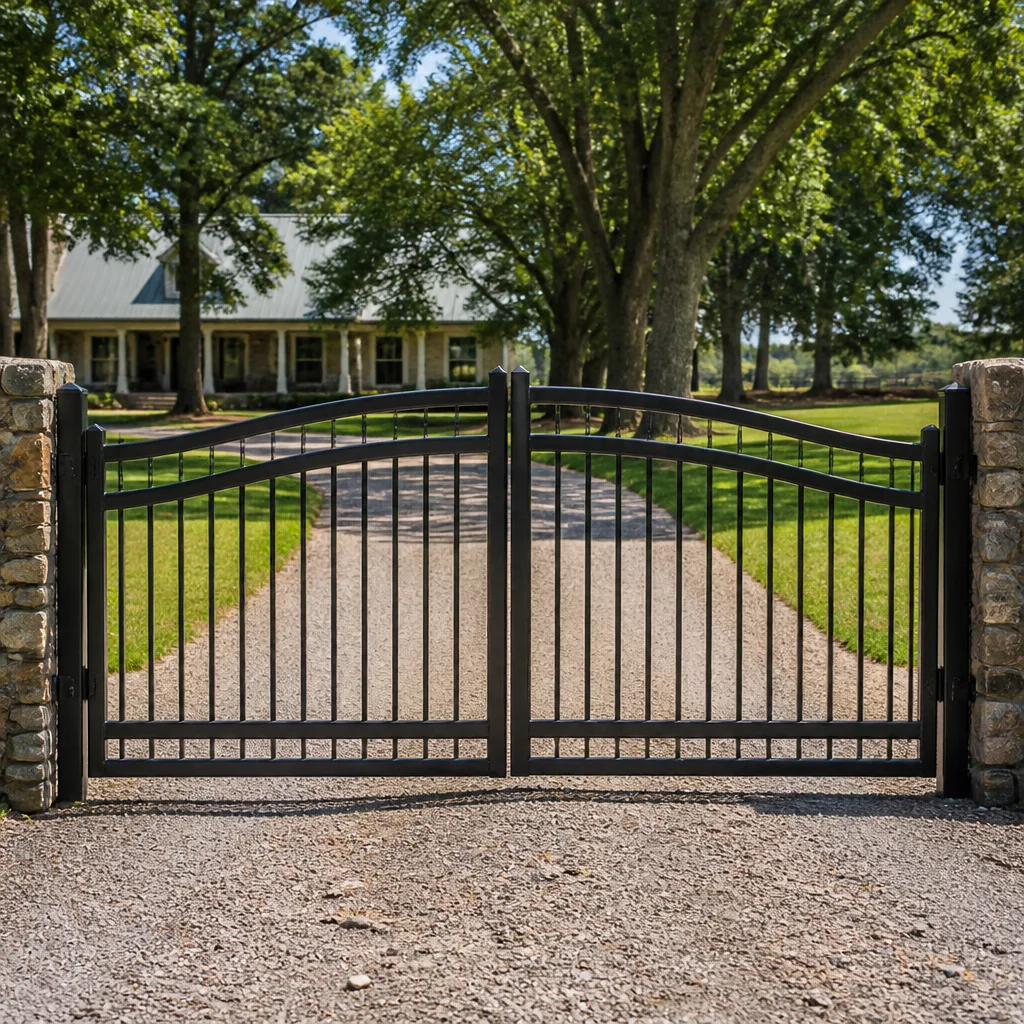 Farm & ranch
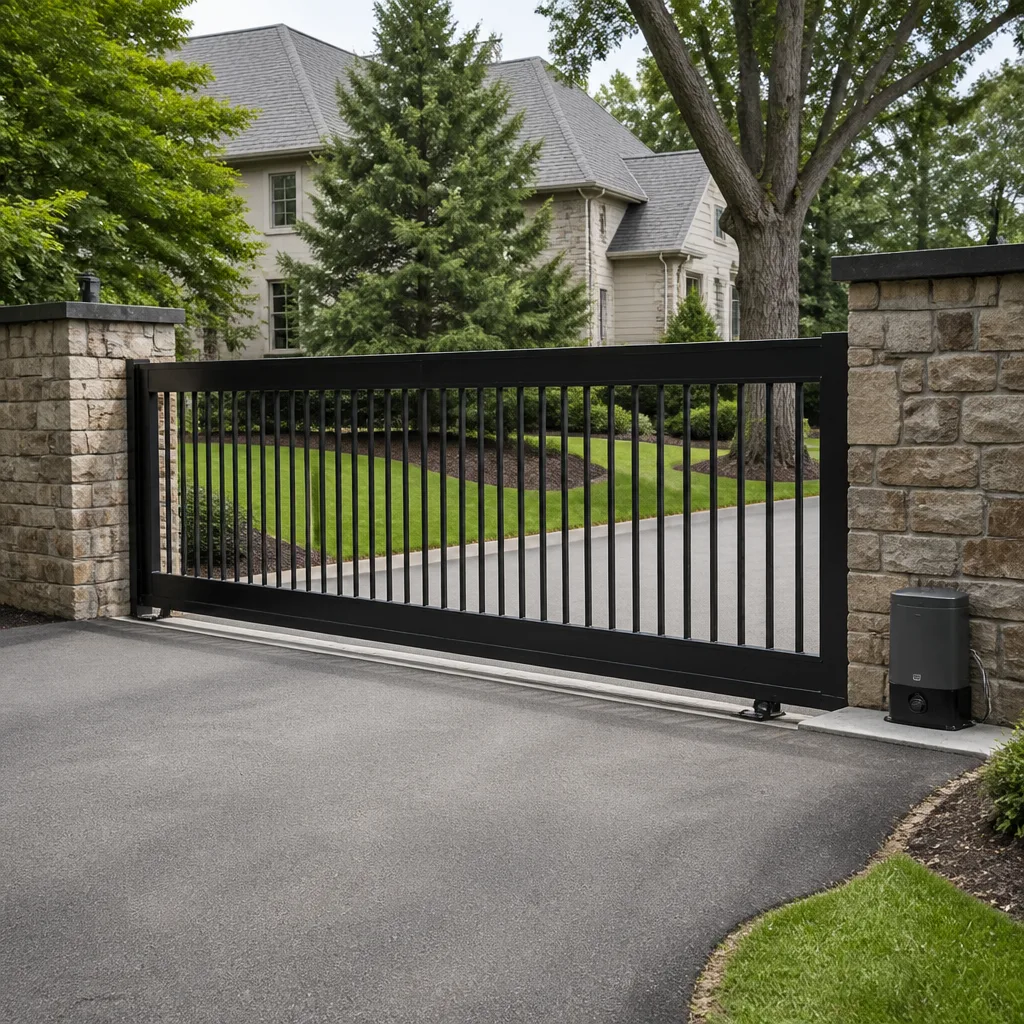 Sliding driveway gates
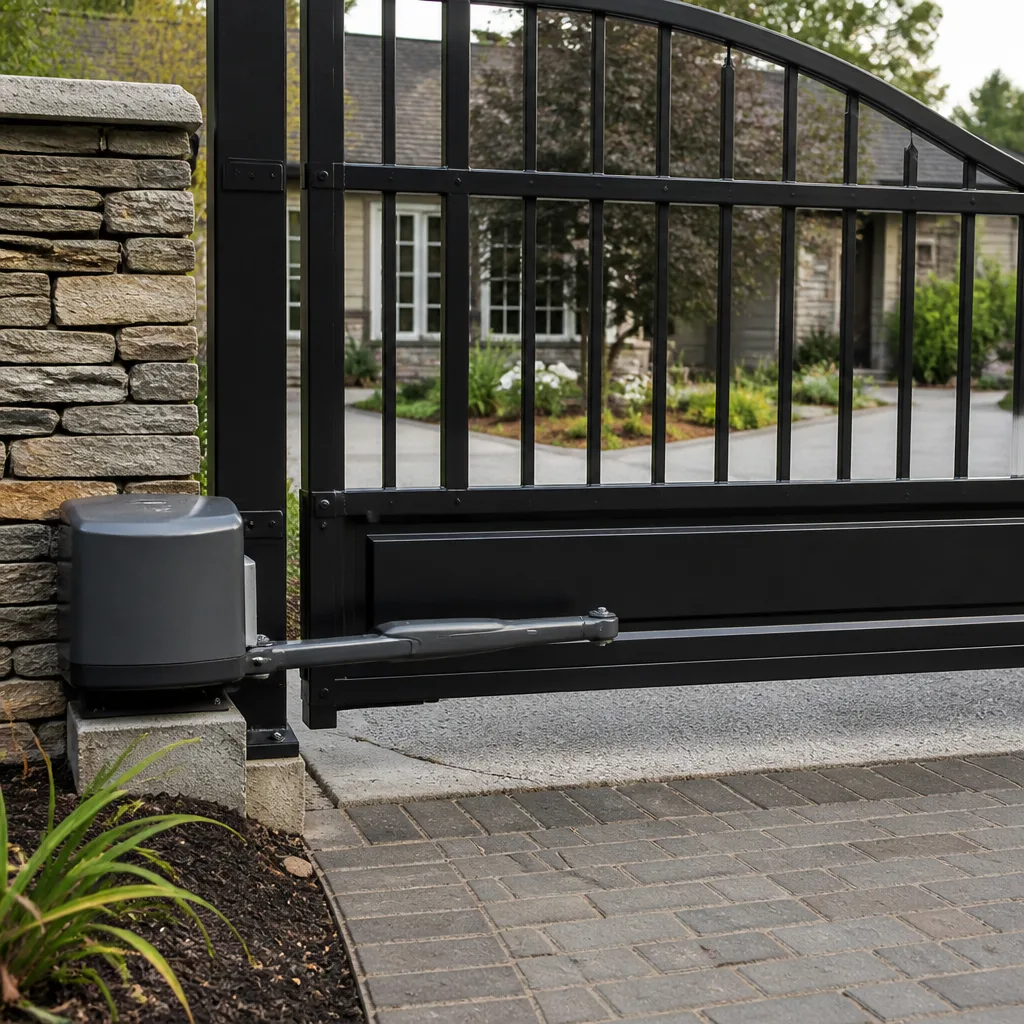 LiftMaster operators
Free on-site gate assessment - hinges, posts, and your LiftMaster or Nice gate operator checked before anything is quoted
The assessment is free and the quote is the invoice.
Get your free estimateGate Repair Troubleshooting in Santa Rosa: Common Problems and How to Fix Them
A gate that reverses before it fully opens isn’t broken. It thinks it is. The operator has a safety circuit, a limit setting, and a force adjustment, and any one of them telling the board “something is in the way” will send the gate back before it finishes the run. That distinction matters, because the homeowner who reads a reversing gate as a failing motor buys a motor they don’t need, while the real culprit sits in a misaligned limit switch. This guide teaches you to trace a gate problem back to its source instead of its symptom: how to separate electrical, mechanical, and control-system failures, which Santa Rosa conditions trigger specific failure patterns, and which fixes are safe for you to handle yourself.
Quick Answer
Most gate problems fall into one of three buckets: power and electrical faults, mechanical faults like misaligned hinges or a gate off its track, and control-system faults in the operator board, limit switches, safety sensors, or receiver. Troubleshooting means isolating which bucket you’re in before touching hardware. A gate that won’t move at all is usually electrical; a gate that moves but stops or reverses is usually a control or safety-sensor issue; a gate that moves but won’t latch is usually mechanical alignment.
Styles & brands we work with
- Wrought iron
- Wood & steel frame
- Farm & ranch
- Sliding driveway gates
- LiftMaster operators
Table of Contents
- The Three Failure Types: Electrical, Mechanical, and Control-System
- The Diagnostic Tree: Won’t Move, Stops Mid-Run, or Won’t Latch
- How Santa Rosa Conditions Shape Gate Failures
- Safety Sensors and Remotes: The Two Fixes Worth Trying Yourself
- When the Operator Board Is the Problem
- Why Brand Fluency Shortens the Diagnosis
- What to Photograph and Document Before You Call
- DIY-Safe Fixes vs. Fixes That Risk Warranty or Injury
The Three Failure Types: Electrical, Mechanical, and Control-System
Every gate failure you’ll encounter traces back to one of three layers, and knowing which layer you’re in is the single most useful skill in gate repair. Randomly replacing parts is expensive and usually wrong.
Electrical failures are about power delivery. The operator isn’t getting the voltage it needs, the breaker tripped, a transformer died, or a wire connection corroded. Symptoms lean toward total silence: no motor hum, no lights on the board, no response to any input.
Mechanical failures are about the physical gate itself. Sagging hinges, a bent or misaligned track on a slide gate, a bent wheel carriage, or binding rollers. The operator is trying to move something that is physically fighting back. You’ll usually hear the motor strain or see the gate drag.
Control-system failures live in the brain: the operator board, limit switches, safety sensors, loop detectors, or receiver. The gate has power and the hardware is sound, but the logic is wrong. A gate that opens a few inches and reverses, or opens fine but won’t close, is almost always in this layer.
Here’s a quick way to start sorting it out:
- No lights, no sound, no motion: start with power and the board.
- Lights on, motor hums, gate doesn’t move: start with mechanics.
- Gate moves partway then reverses or stops: start with sensors and limit switches.
In Santa Rosa, a surprising number of “dead motor” calls we diagnose turn out to be control-system problems. The homeowner assumes the worst, but the board is fine and only a limit setting has drifted. Diagnose the layer first, and the fix usually gets cheaper and faster.
The Diagnostic Tree: Won’t Move, Stops Mid-Run, or Won’t Latch
Instead of starting from parts, start from behavior. The way your gate fails tells you which branch of the tree you’re on, and each branch has a short list of likely causes worth checking.
Branch 1: The gate won’t move at all
Silence usually means the operator has no power or the board has shut down.
- Check the breaker that feeds the operator, not just the wall switch.
- Look for an indicator light on the control board. No light usually means no incoming power or a failed transformer.
- Test the safety circuit by watching whether the operator’s release lever is engaged (some gates won’t run while manually released).
- Inspect the low-voltage wiring at the operator terminals for loose or corroded connections.
Branch 2: The gate moves but stops or reverses
This branch is where most misdiagnosis happens. The gate behaves as if it thinks an obstacle is present, so the safety circuit or force setting is the prime suspect.
- Confirm the safety sensors are aligned and unobstructed (more on this below).
- Check the limit switch that stops travel at each end.
- Look for small debris in a slide gate’s track or a swollen wooden member on a swing gate.
- Listen for the motor straining against excess force, which can trip the operator’s force setting.
Branch 3: The gate moves but won’t latch or close fully
When the panel swings or slides but doesn’t seat properly, the operator is likely fine and the gate has lost alignment.
- Inspect hinges and posts for sag or wobble.
- Check the gate’s stop bracket or catch for a bent or worn surface.
- Verify the track (slide gates) is clear and the carriage wheels aren’t worn flat.
- Adjust the close limit only after the mechanical alignment is sound.
On a Santa Rosa hillside lot where the gate sits on a slope, alignment drift is common, and a gate that “just won’t latch anymore” usually has a settlement or hinge issue under the hood.
How Santa Rosa Conditions Shape Gate Failures
Gates fail differently depending on the climate around them, and Santa Rosa sits in a useful middle zone: mild, wet winters and hot, dry summer stretches. That combination produces a few recognizable failure patterns.
Winter moisture. Santa Rosa’s rainy season pushes humidity into operator enclosures and low-voltage connections. Corrosion at terminal blocks and the receiver is a recurring cause of “random” failures that show up on wet days. Outdoor-rated enclosures help, but even they accumulate moisture over a season, and older installations often have failing gaskets.
Summer heat spikes. Extended hot afternoons hit operator cabinets and can push the board into thermal shutdown, especially on older heavy-duty residential units that have poor ventilation. If your gate “works in the morning but quits by afternoon,” heat is worth suspecting. Operators that run hot also age their capacitors faster, and a failing capacitor is a classic cause of a motor that hums but won’t start.
Seasonal ground movement. The soils around Santa Rosa, especially on sloped lots, shift with wet-dry cycles. A gate that worked in spring and drags by fall may be reacting to post movement, not the operator.
Foliage and debris. Leaf fall and airborne debris are a top cause of slide gate problems here. A surprising share of “gate stuck” calls we handle turn out to be obstructions in the track or at the pivot.
The key takeaway is that weather in Santa Rosa doesn’t break operators so much as reveal weak points. If a gate fails seasonally, the season is the clue, and the fix is usually in wiring, alignment, or the safety circuit.
Safety Sensors and Remotes: The Two Fixes Worth Trying Yourself
Most of a gate is not DIY territory, but two fixes are safe, don’t void warranties, and solve a real share of daily calls. Those are safety-sensor alignment and remote re-pairing.
Aligning safety sensors
Safety sensors sit in pairs, often as photoelectric beams, one on each side of the gate path. If the beam is broken, misaligned, or dirty, the operator will refuse to close and sometimes refuse to open.
- Clean the lens on both sensors with a soft cloth.
- Look for a small alignment indicator light on each unit; if one is dark or flickering, the beam isn’t landing.
- Loosen the mounting bracket slightly and nudge the sensor until the indicator is solid.
- Test the gate through a full cycle.
If the beam still won’t align after a modest adjustment, don’t keep cranking on the bracket: the wiring or the sensor itself is suspect.
Re-pairing a remote
A remote that stops working while the wall control does is a pairing or receiver issue, not a motor issue.
- Check the remote’s battery first; it’s the cheapest test.
- On the operator, follow the brand’s pairing sequence. On most LiftMaster and Linear residential operators this means pressing a “learn” button on the receiver and then the remote.
- Test at close range and from the car, which also tests the receiver’s antenna position.
If a re-pair session works once and then the remote drops out again, the receiver or its wiring is the likely cause, and that crosses into technician territory.
Sensor alignment and remote pairing are the two fixes worth attempting on your own. Everything else on this list benefits from a trained eye, and we’ll explain why in the DIY-versus-pro section.
When the Operator Board Is the Problem
If the gate has power, the mechanics are sound, and the sensors check out, the control board is the next layer. Electric gate systems concentrate their intelligence on a small circuit board that runs the motor, reads the safety inputs, and watches the limits. When the board goes, the symptoms can look like almost anything else.
Signs the board or its components may be at fault:
- Every input behaves the same way, as if the operator ignores the remotes, the keypad, and the loop detector equally.
- The board looks discolored, has a burnt smell, or has visibly bulging capacitors.
- The gate cycles on its own with no command, or the motor chatter-stops in one direction only.
- A brand-new remote pairs but immediately stops working, while the wall control still functions.
Electric gate repair is a genuinely different skill than garage door work. It requires reading the operator’s diagnostic codes, understanding loop detectors, intercom wiring, and the safety edges wired into the board. When a gate fails, technicians who aren’t trained on boards will often suggest replacing the whole operator, when a swapped board or a cleared diagnostic code would restore function. That’s exactly the kind of over-replacement to avoid. If your gate has an operator, look for a specialist with hands-on experience on the brand and drive type you own, rather than a generalist.
Why Brand Fluency Shortens the Diagnosis
Every gate operator brand has its own quirks. The diagnostic routine that works on a Mighty Mule DIY-grade operator won’t tell you much about a DoorKing commercial unit, and a FAAC swing gate operator has different limit and force settings than a BFT model.
Where this matters in troubleshooting:
- Limit switches. Brands differ in whether limits are mechanical cams, magnetic, or encoder-based, and how they’re reset differs with them.
- Safety inputs. Some boards expect a monitored edge, some expect a simple contact; jumping the wrong terminal can fry the board.
- Diagnostic codes. Commercial operators like DoorKing give explicit fault codes; residential brands like Mighty Mule and LiftMaster often communicate through light patterns or beep sequences.
We’ve learned to read those signals across the brands that show up most on Santa Rosa properties: LiftMaster, FAAC, BFT, Linear, Viking, Ghost Controls, DoorKing, Elite, and Mighty Mule. That covers the budget DIY-grade units through commercial-grade openers, which means when we examine your gate, we’re not guessing at the board or brushing up on the manual. We fix the system you already own, and we only recommend replacement when a repair genuinely doesn’t make sense.
What to Photograph and Document Before You Call
Half of a diagnostic visit’s time can be spent gathering information a homeowner could have collected in five minutes. If you document these items before calling, the technician can arrive ready to test the right layer, and often the safety and wiring issues are visible in the photos.
What to gather:
- A photo of the operator’s brand and model plate. The full label is worth more than you might guess.
- A short video of the failure. Ten seconds showing exactly what the gate does when it stops or reverses tells the technician more than a description.
- A photo of the control board. The indicator lights and wiring terminals on the board are diagnostic gold.
- A photo of the safety sensors, including the brackets and any visible wiring.
- A note of what changed. New remote, new addition to the drive, recent rain, recent landscaping, or a power outage are all clues.
- Photos of the track or swing path. Obstructions and alignment issues show up clearly from the camera.
If your failure is intermittent, note when it happens: mornings vs. afternoons, wet days vs. dry days. In Santa Rosa, seasonal patterns often point right at the cause. Having this packet ready also means the estimate you get is grounded in real information, and the price is quoted and agreed before any work starts.
DIY-Safe Fixes vs. Fixes That Risk Warranty or Injury
Which fixes are genuinely safe to try yourself? A narrow but useful set. Which fixes can void a warranty or hurt someone? More than most people realize.
DIY-safe with caution
- Safety-sensor alignment and cleaning. Safe as long as you don’t touch mains wiring.
- Remote battery replacement and re-pairing. Safe on any brand; follow the manual sequence.
- Clearing debris from the track or swing path. Safe and often solves the problem outright.
- Visually inspecting the board and connections for obvious damage. Look, don’t touch.
Risky or warranty-voiding
- Opening the operator’s high-voltage enclosure. Gate operators run mains current. Even small residential operators can deliver a dangerous shock if the wrong terminal is touched.
- Replacing the control board or motor yourself. Wrong wiring at the board can destroy the operator, void the manufacturer’s warranty, and create a genuine shock hazard.
- Adjusting the force settings to “make it work.” Raising force to mask a mechanical problem puts excess strain on the operator and can make a safety failure more dangerous.
- Modifying the safety edges or loop detectors. These are the systems that stop the gate before it crushes someone. Never bypass them.
- Working under a heavy swing gate panel. A gate panel can crush; without proper blocking, it’s a serious injury risk.
When in doubt, ask a trained technician. Gate work is more electrical than most homeowners expect, and a small mistake on a control board can turn a cheap repair into a full operator replacement.
Common Mistakes to Avoid
- Replacing the operator before diagnosing. If the gate has any power at all, the operator may be fine and the problem is in the sensors, limits, or board. Swap parts only after the diagnosis points at a specific component.
- Raising the force setting to make the gate close. Force adjustments hide misalignment and put extra strain on hinges, tracks, and the motor. In Santa Rosa’s seasonal ground movement, they also accelerate wear on gate hardware.
- Assuming the remote is dead when the receiver is at fault. If the wall control still works, the issue is on the receiving side, and buying a new remote won’t help.
- Ignoring the little signs of seasonal failure. A gate that drags on foggy mornings and works by afternoon is telling you the wiring or gaskets are taking on moisture; catch it early and the repair is smaller.
- Lubricating the wrong parts. Greasing a slide gate’s track attracts dirt and grit that wears the carriage faster. Keep tracks clean, and follow the operator manual for what to lubricate and what to leave dry.
- Skipping documentation. A homeowner who arrives with photos, a brand plate, and a video often gets a faster, more accurate estimate than one describing the problem over the phone.
- Trying to defeat a safety system. Jumping a sensor or edge to make the gate work creates a dangerous gate. It’s the single most common shortcut to avoid on any Santa Rosa property.
See the difference
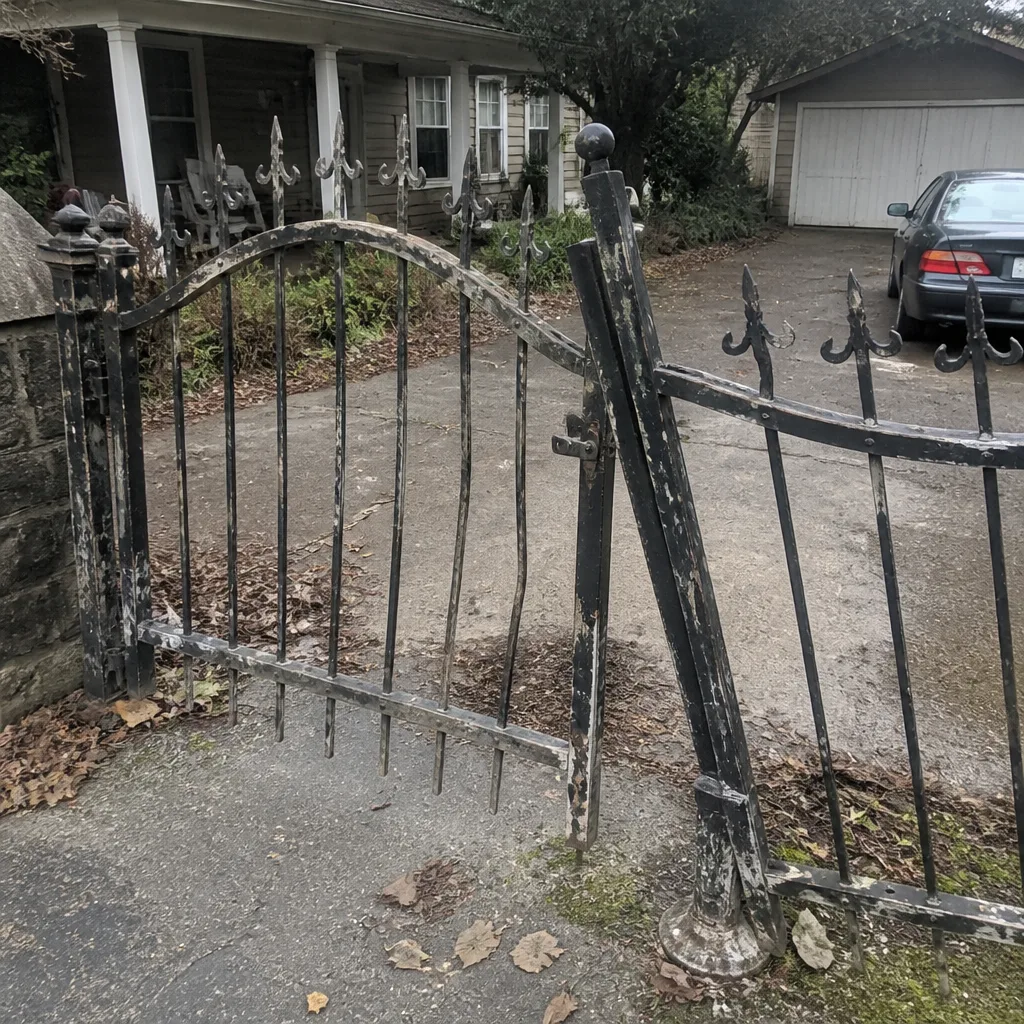 Before
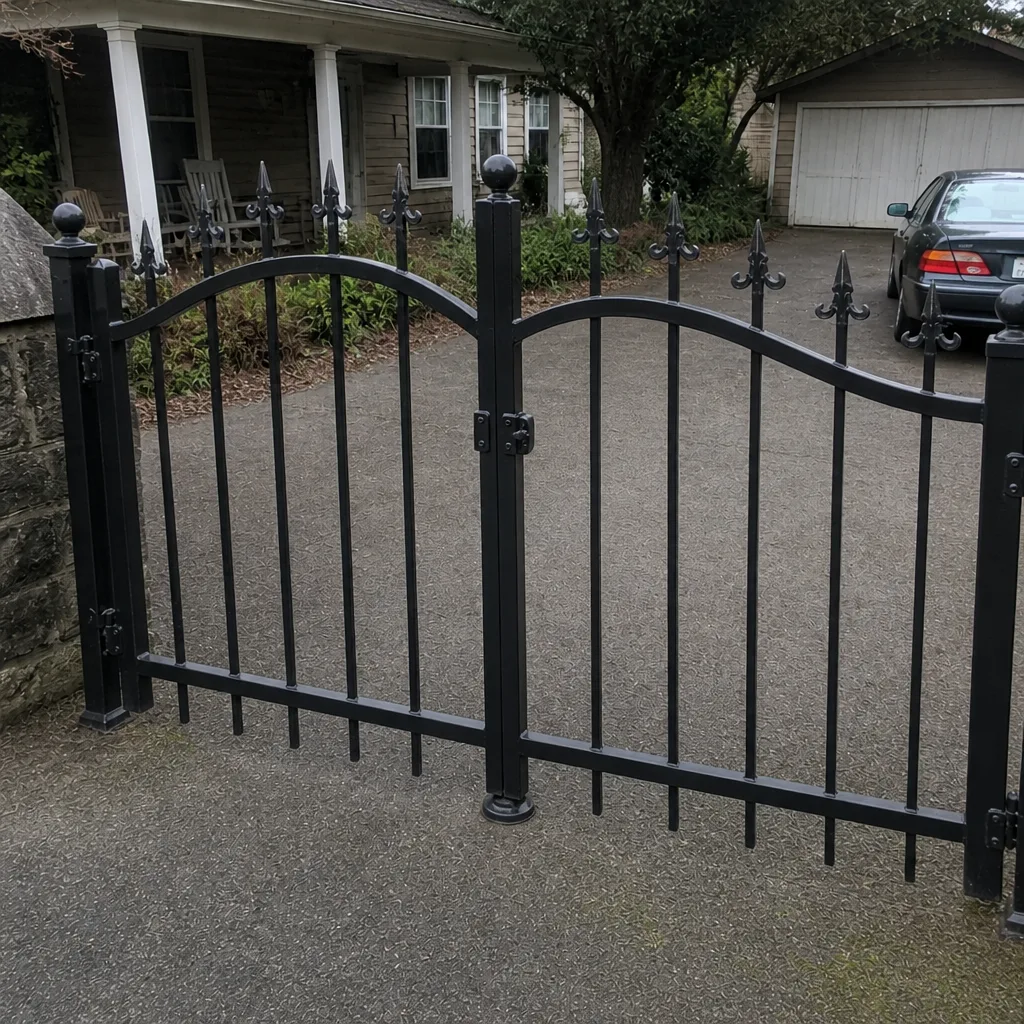 After
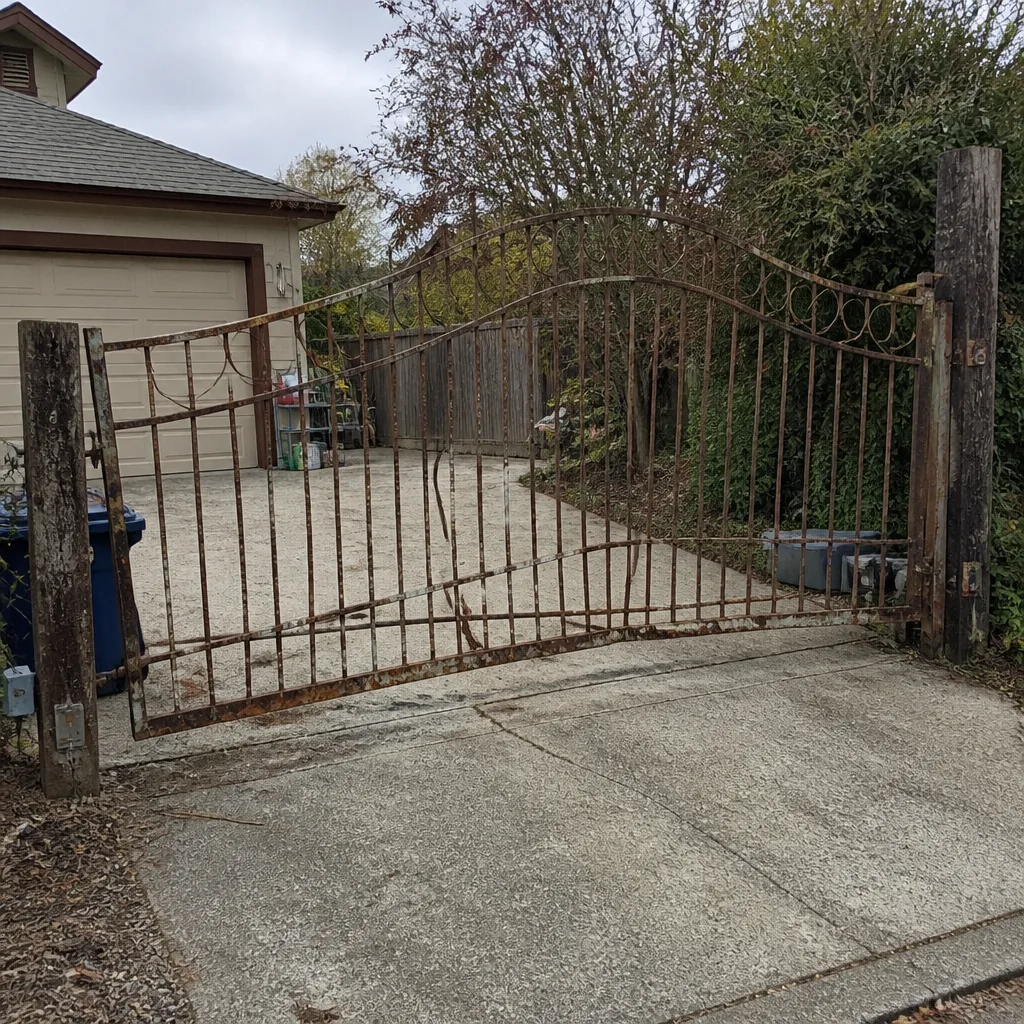 Before
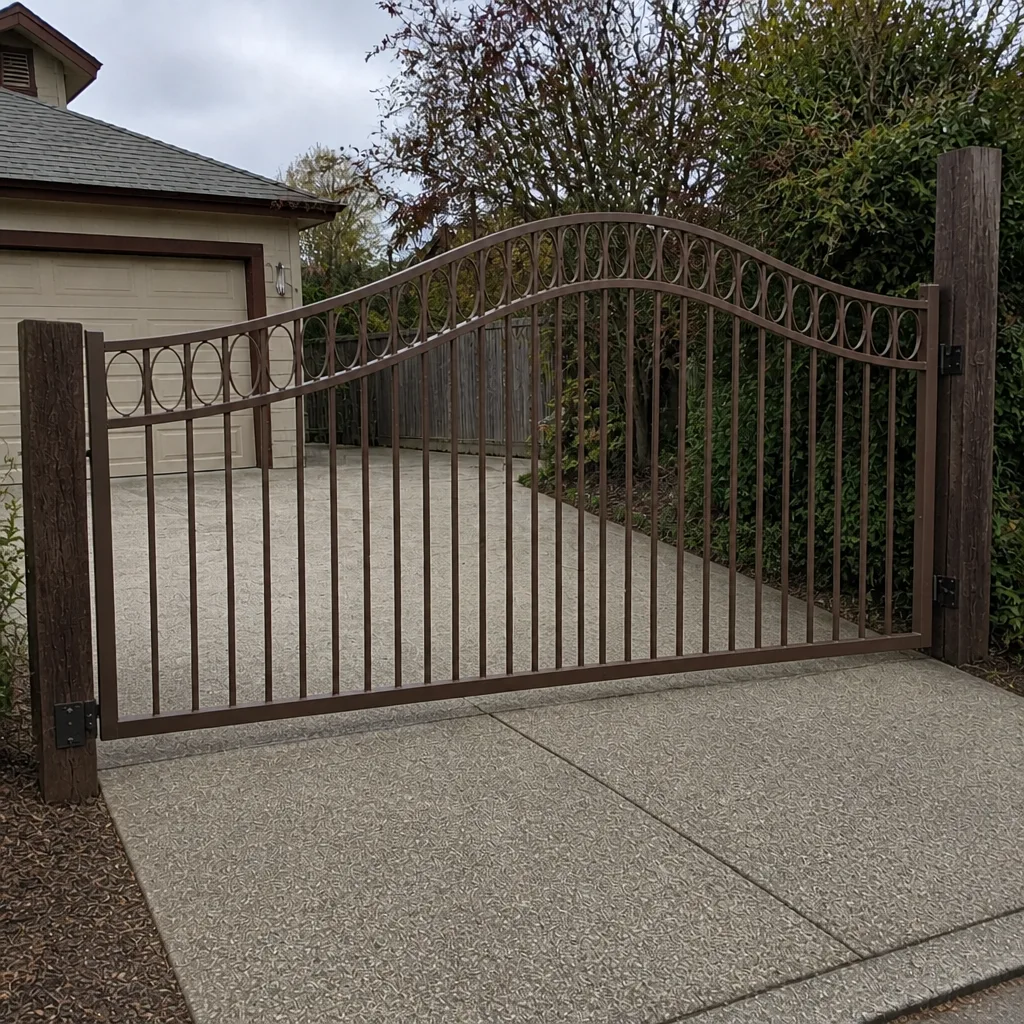 After
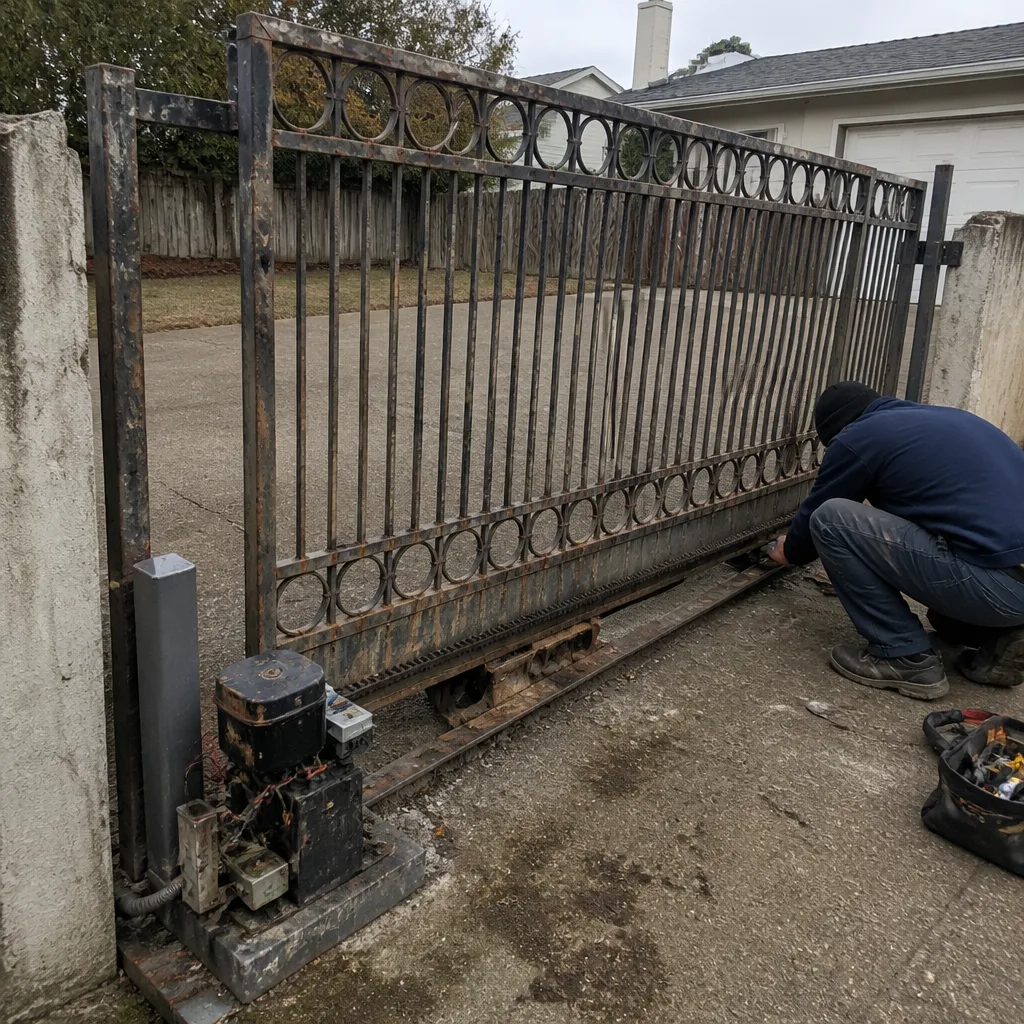 Before
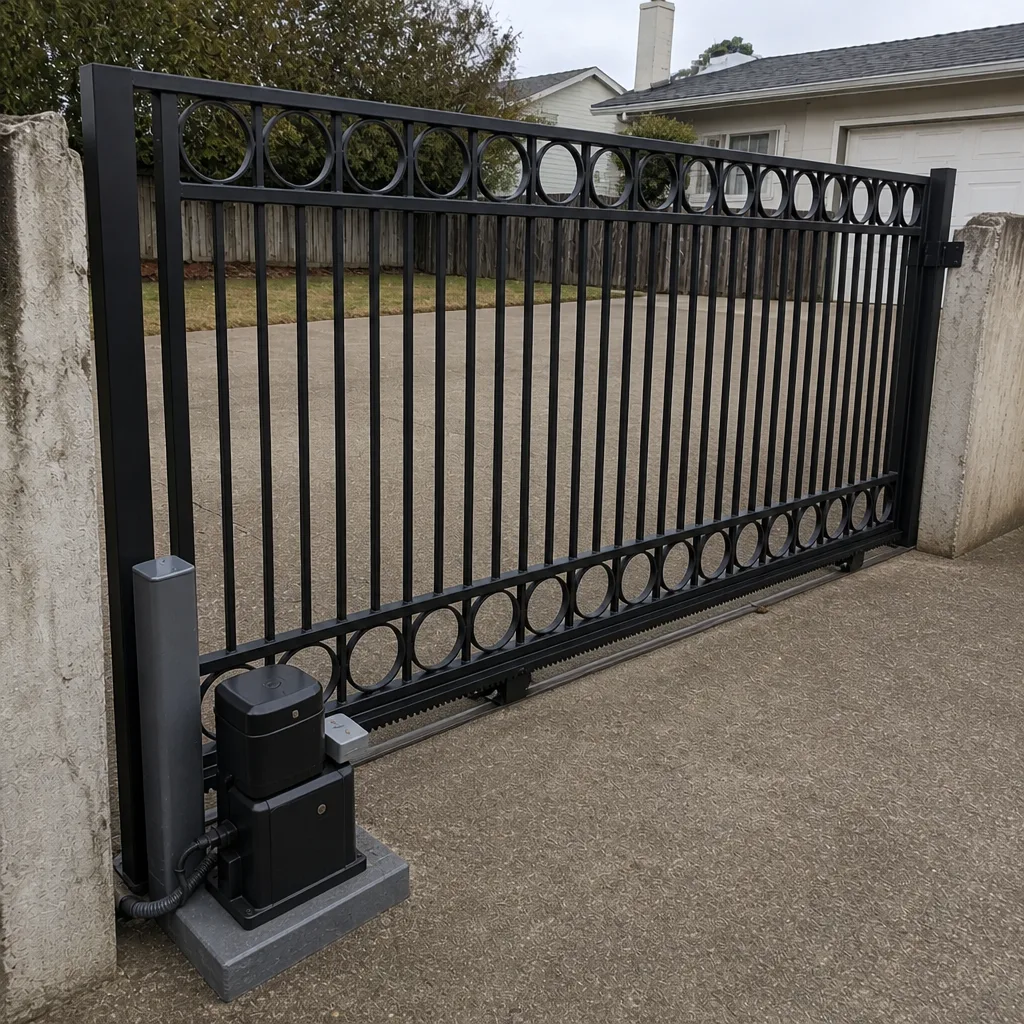 After
When to Call a Professional
Some problems are clear signals to stop troubleshooting and bring in someone trained on gates. Call a professional if the gate has lost power to the operator and you’ve checked the breaker, if the control board shows damage, if the gate reverses, stops, or cycles on its own, or if the gate is off its track or a swing panel has dropped. Also call if the operator is a brand you don’t recognize, if the gate has been repaired multiple times with the same symptom coming back, or if the safety edges or loop detectors appear bypassed. Electric gate repair is genuinely a specialist skill, and the wrong DIY repair can void the manufacturer’s warranty or create a hazard. Gate Repair Santa Rosa offers free estimates in Santa Rosa. Call (888) 298-3409. We answer 24/7. Fast dispatch from 7am to 7pm, Sunday through Friday.
Frequently Asked Questions
A reversing gate is almost always responding to a safety input or a limit setting. Check the safety sensors first: if a beam is broken, misaligned, or dirty, the operator will reverse. If the sensors are clear, look at the limit switch and the weather; in Santa Rosa’s rainy season, moisture in the sensor wiring is a frequent cause. If those check out, the control board may be misreading the input, which is work for a technician. Call (888) 298-3409 for an exact diagnosis – estimates are free.
Gate motors can often be repaired, especially when the problem is in the control board, capacitors, or wiring rather than the motor itself. Replacement is only warranted when the motor windings are actually failed or the operator is at end of life. We diagnose first and replace only when repair isn’t cost-effective. Call (888) 298-3409 for an exact quote – estimates are free.
Listen to what the operator does. Silent with no lights points at power and the board (electrical). A motor that hums but doesn’t move points at binding hinges, a misaligned track, or the carriage (mechanical). A gate that moves partway and reverses or stops is usually a control-system or safety-sensor issue. Diagnosis comes before parts. Call (888) 298-3409 to book an on-site estimate.
Residential Santa Rosa gates most often run LiftMaster, Mighty Mule, Linear, and Ghost Controls operators, while commercial and gated-entry systems commonly use FAAC, BFT, Viking, DoorKing, or Elite units. Each brand has its own diagnostics and pairing sequences, which is where brand familiarity speeds up a repair. If you’re not sure what’s on your gate, photograph the model plate before calling. Call (888) 298-3409 for a free estimate.
You can safely try two fixes: aligning and cleaning the safety sensors, and re-pairing the remote. Beyond that, gate operators carry mains voltage and the control board, force settings, and safety edges are not DIY territory. A wrong move at the board can void the warranty or create a real shock or crush hazard. For anything past sensors and remotes, call a trained technician. Call (888) 298-3409 – estimates are free.
Yes. Full gate installation includes the operator, the power run to the enclosure, safety edges, and any access-control wiring such as intercoms or loop detectors. Installation is scheduled, not same-day, because the right operator for your gate has to be measured and matched to the drive type. Call (888) 298-3409 to arrange a free measure and a written price for your Santa Rosa property.
The Bottom Line
Most gate problems look worse than they are. A reversing gate isn’t a dying motor; it’s a control system doing its job until something tells it to stop. A gate that won’t move isn’t always a dead operator; often it’s a tripped breaker or corroded connection. The winning approach is to isolate the failure layer – electrical, mechanical, or control-system – before you touch a single part. In Santa Rosa, the seasonal wet-dry cycle and summer heat tell you where to look first, and documenting what you see before you call shortens the repair and grounds the estimate. Electric gate repair is specialist work, and if the board, safety edges, or heavy panels are in play, a trained technician is the right answer. When you’re ready, we’re here with free estimates and a diagnosis of your gate, not a sales pitch. Find the full range of what we handle on our Gate Repair Santa Rosa homepage, and start with a straightforward conversation about gate repair.
Written by the team at Gate Repair Santa Rosa.