
Last updated November 14, 2026
 Wrought iron
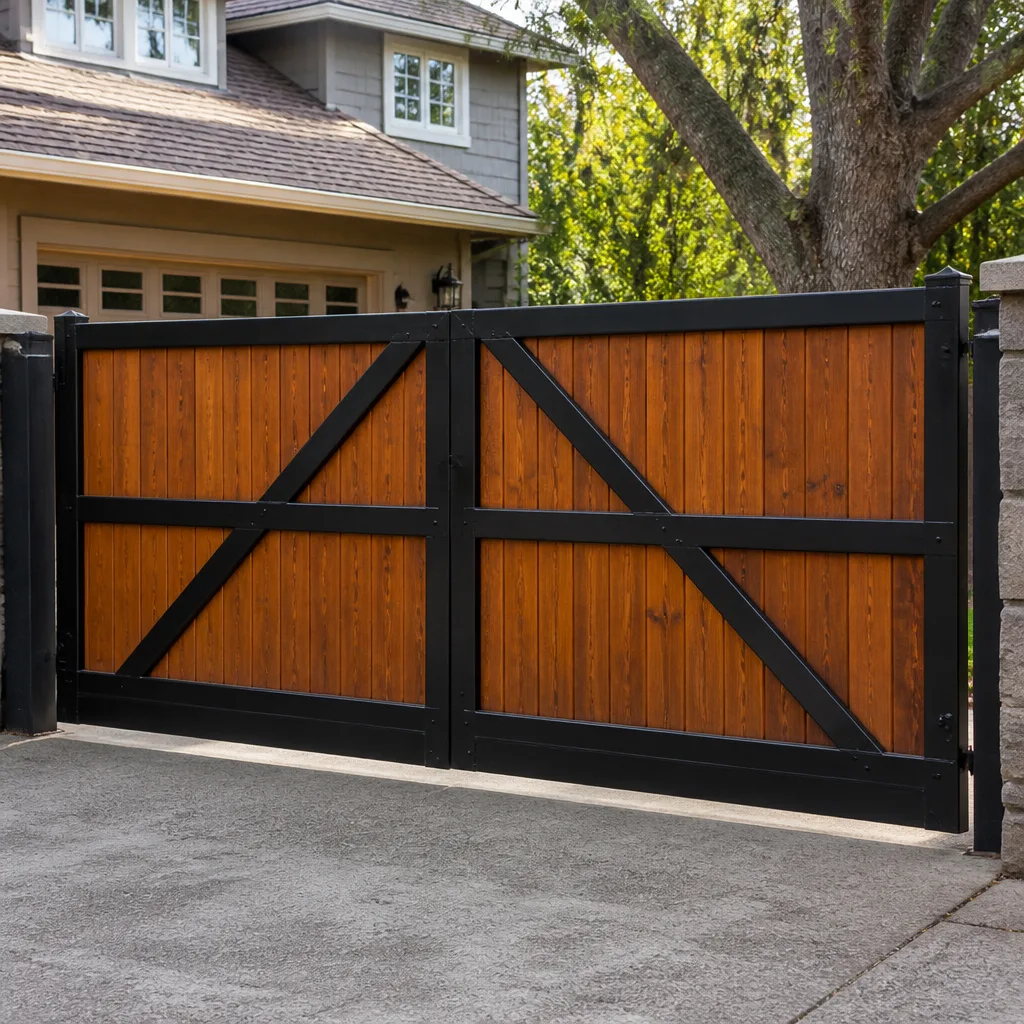 Wood & steel frame
 Farm & ranch
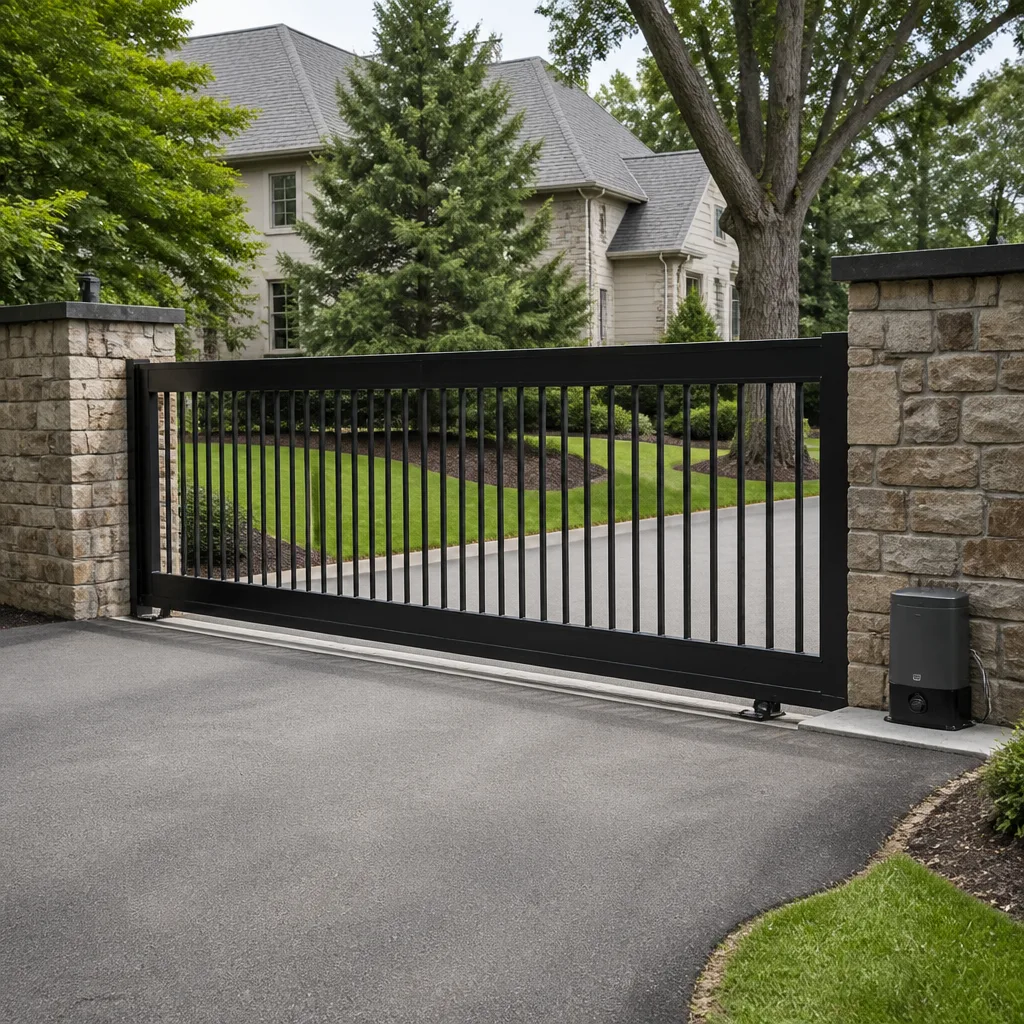 Sliding driveway gates
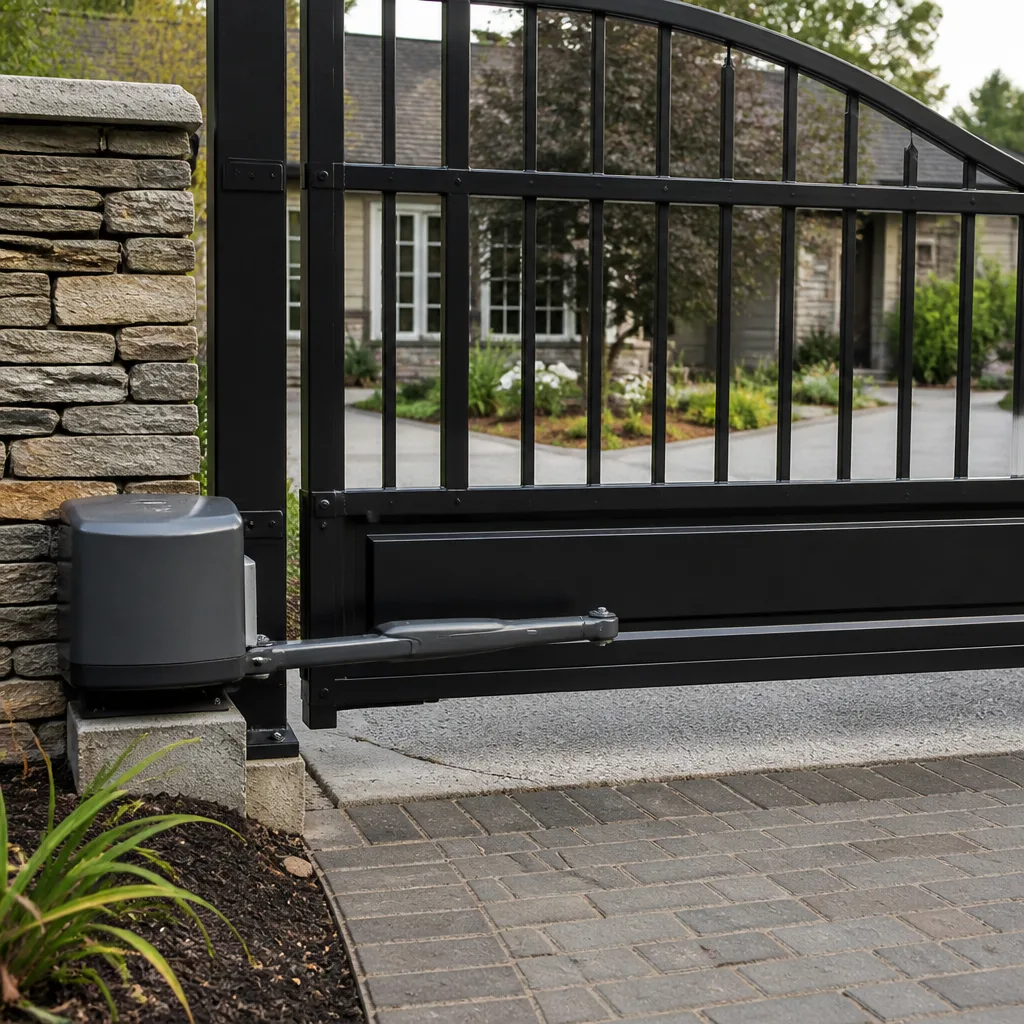 LiftMaster operators
Free on-site gate assessment - hinges, posts, and your LiftMaster or Nice gate operator checked before anything is quoted
The assessment is free and the quote is the invoice.
Get your free estimateSeasonal Gate Repair Care for Santa Rosa: Year-Round Homeowner’s Guide
Most gate maintenance advice is built for a four-season climate, and Santa Rosa doesn’t have one. Our year runs on a different sequence: a foggy late spring, a long dry stretch that turns the hills to fuel, power shutoffs in the fall, then rain arriving all at once. Each of those phases stresses a gate in its own way, and the failures show up months later, usually in January when the first real storms hit. In January, the gates we’re called out to aren’t failing because of cold. They’re failing from damage that started in October. This guide walks you through the Santa Rosa gate year phase by phase, so you’re ahead of the failure instead of reacting to it.
Quick Answer
Seasonal gate care in Santa Rosa runs on five phases, not four: fog season (May-July) for fastener and finish checks, fire season prep (August-October) for motor filtration and battery backup readiness before power shutoffs, a 20-minute pre-rain inspection (October-November) to catch what the dry months hid, a winter drainage check (December-February) at track level, and a spring mechanical reset (March-April) covering tension, lubrication, and limit recalibration. Aligning your checks to those five windows prevents most of the failures that otherwise surface as surprise breakdowns.
Styles & brands we work with
- Wrought iron
- Wood & steel frame
- Farm & ranch
- Sliding driveway gates
- LiftMaster operators
Table of Contents
- Why Standard Seasonal Advice Fails in Santa Rosa
- Fog Season (May-July): The Corrosion Window
- Fire Season Prep (August-October): Ash, Batteries, and Power Shutoffs
- First-Rain Protocol (October-November): The 20-Minute Inspection
- Winter Drainage Check (December-February): Water at Track Level
- Spring Mechanical Reset (March-April): Tension, Lube, and Limits
- Manual Gate Care vs. Automated Gate Care
- Common Mistakes to Avoid
Why Standard Seasonal Advice Fails in Santa Rosa
The generic gate maintenance calendar assumes winter means freezing temperatures and summer means drying heat. Santa Rosa gets neither in the way those guides describe. Winters here are mild, and that’s part of the problem: nothing forces you indoors for months, nothing freezes the ground into a hard, stable base, and nothing kills off the moisture-loving conditions that work on gate hardware all winter long. We see gates that sit in damp soil for four straight months, and the hardware pays for it.
The other mismatch is timing. In a four-season climate, spring is when things thaw and reveal damage. Here, the reveal happens in the first two weeks of rain in late October or November. That’s when a gate that’s been quietly degrading through the dry season suddenly won’t close, won’t latch, or trips the operator. By the time you notice, the problem has usually been building since summer.
One more factor is the local housing stock. Santa Rosa has everything from older properties with heavy iron swing gates to newer builds in the hills with long driveway slide gates on automated operators. Those two gate types age completely differently through the same weather, and a single maintenance schedule won’t fit both. A slide gate on a Mighty Mule operator has very different seasonal pressure points than a manual iron swing gate on a hillside lot.
What follows is the calendar we use when we walk a property and think about what’s coming. It’s organized around what’s actually happening in Sonoma County, month by month.
Fog Season (May-July): The Corrosion Window
Late spring into early summer is when fog rolls in overnight and burns off by mid-morning, and that daily wet-dry cycle is hard on exposed hardware. Metal that stays damp for hours and then dries in the sun will corrode faster than metal that stays dry or stays wet. The fog season is your window to protect the parts that can’t be replaced cheaply: fasteners, hinges, latches, and the surface finish on the gate frame.
Here’s what a fog-season check covers:
- Walk the whole gate and look at every fastener. Bolts, hinge pins, and bracket screws are the first parts to show rust bloom. A flashlight helps on gate frames with hidden joints.
- Test the finish on the frame and posts. Paint, powder coat, and galvanizing each fail differently. Flaking, chalky residue, and bare metal are all signs of trouble.
- Check hinges and pivot points for tightness. Corrosion inside a hinge works like grit. It loosens the hinge over time and puts stress on the gate frame.
- Look at the soil line at the posts. Where fog moisture and soil moisture meet, post bases corrode fastest. If the footing is exposed, look at it closely.
- Test the latch and strike plate with the gate closed. A latch that was smooth in March but sticks by June is telling you corrosion has started.
Surface treatments that hold up here: a quality exterior-grade paint or powder coat on the frame, a dedicated rust-preventive coating on fasteners and hinge pins, and galvanized or stainless hardware wherever the budget allows. Cheap zinc-plated bolts that were fine in a dry climate will rust within a couple of fog seasons in Santa Rosa. Replacing hardware with better-rated parts before they fail is cheaper than repairing a gate frame that’s been stressed by a failing hinge.
We see a lot of gates in Santa Rosa where the frame is fine but the hinges, latches, and bolts are shot. That’s a fog-season fix, and it’s a job worth doing before fire season stress tests everything.
Fire Season Prep (August-October): Ash, Batteries, and Power Shutoffs
Late summer into fall is when Sonoma County’s fire risk peaks, and that changes what your gate is doing all day. Ash is airborne grit, and grit finds its way into every moving part: gate tracks, rollers, operator arms, and motor housings. Meanwhile, the power shutoffs that come with high fire risk expose every weakness in your gate’s backup system.
Fire season preparation comes down to a few concrete tasks:
- Clean and inspect the motor housing on automated gates. Ash settles into vents and cooling gaps. Dust and ash inside a motor housing shorten motor life and can cause overheating.
- Blow out and wipe down the track or drive rail. Ash mixed with old lubricant turns into a paste that grinds down rollers and drive sprockets.
- Test the battery backup on your operator. Fire season is when you find out whether the backup battery will carry the gate through a power shutoff. Test it before you need it.
- Test the emergency release on every automatic gate. This is the manual release that lets you open the gate by hand when the operator has no power. You should know exactly how it works before a power shutoff, not during one.
- Look at the safety sensors and loop detectors. Ash and grit on sensor lenses and detector loops cause false trips that look like operator failures.
The battery backup piece matters most. Shutoff events in the area can last days, and a gate operator with a weak battery won’t hold a full day of cycles. On systems from brands like Ghost Controls or Mighty Mule, battery condition is one of the first things to check as fire season approaches. We’ve seen gates that worked all year suddenly fail the morning after a power shutoff, and in most of those cases the backup battery had been degrading for months.
Our technicians have up to 14 years of experience, and this is one of the areas where that experience shows: a weak battery doesn’t announce itself. It works fine until the day it doesn’t.
First-Rain Protocol (October-November): The 20-Minute Inspection
The first significant rain of the season is when a year of deferred wear becomes a failure. Dry-season grit, ash, dust, and oxidation all get wet at once. Seals that were tight in July lose their fit as the metal and wood around them move with moisture. This is the highest-failure window of the Santa Rosa gate year, and a 20-minute inspection in the two weeks before the first real storm prevents most of it.
Here’s the checklist, and it’s worth setting a reminder for early October every year:
- Grease or check grease on all moving parts. Hinges, pivot points, and operator arms need fresh lubrication before rain makes everything sticky and gritty.
- Inspect weather seals on the gate and any operator enclosure. Cracks and gaps that were invisible in summer allow water into places it shouldn’t go.
- Clear debris from the track or drive rail. Leaves, twigs, and dust all wash down the track in the first rain and jam the rollers or drive sprocket.
- Check the gate’s clearance at the ground. A gate that just barely cleared the ground in summer can drag once the soil swells and the ground moves slightly.
- Look at the drain path around the posts and footing. If the ground slopes toward the gate, the first rain will show you where the water wants to go.
- Test the operator one full cycle. Run the gate open and closed to catch anything in the mechanism before the wet season starts.
We handle a lot of electric gate repair calls in the two weeks after the first storm, and the pattern is very consistent: the gate was already in trouble, and the rain was the tipping point. Twenty minutes in the dry season is cheaper than a repair call in the wet season.
Winter Drainage Check (December-February): Water at Track Level
Winter is mild here, and that’s what makes it deceptive. There’s no freeze to stop the water from soaking in. Rain in Santa Rosa often comes in long, steady events, and the ground around a gate can hold water for weeks. Every slide gate’s weak point in winter is the track or the drive rail at ground level, because that’s where water pools and where the drive mechanism meets the soil.
Water pooling at track level does damage from underneath. The rollers or drive sprockets sit in moisture for months, the track base rusts and deforms, and the gate becomes harder to move as the season goes on. By March, you can have a gate that needs track repair rather than a simple adjustment. The fix in winter is drainage and clearance, not force.
What to check each winter:
- Walk the track and look for standing water. A track that drains slowly will damage hardware faster than a track that dries out within a day.
- Check the soil level around the footing and the track base. Soil movement during the wet season can bury the track edge or leave the footing exposed.
- Clear the track drain channels, if the gate has them. These clog with leaves and grit faster in winter.
- Check the gate’s ground clearance with a straightedge. A gate that starts scraping during winter needs adjustment, not force.
- Look at the operator enclosure for standing water. Water in the enclosure is a control board problem waiting to happen.
If you have a door-and-gate installation project underway, this is the season to plan footing and drainage carefully. Repair work on wet ground goes slower than repair work on dry ground, and any footing work done in winter needs to account for how the soil behaves when wet.
When a slide gate starts acting sluggish in winter, call before you force it. We’ve seen gates pulled off their track by homeowners trying to push through resistance that turned out to be a drainage problem. Slide gates coming off their track is one of the failures we see most in Santa Rosa between December and February, and it’s almost always preventable.
Spring Mechanical Reset (March-April): Tension, Lube, and Limits
March and April are when we do the mechanical reset for the whole gate. A year of seasonal cycling has moved things: hinges have worn, chains or drive belts have stretched, and the operator’s travel limits have drifted from where they were set a year ago. Spring is your chance to reset everything before fog season and fire season stress it again.
Here’s what a full spring reset covers:
- Re-tension belts, chains, and drive mechanisms. Loose drive components cause uneven travel and put extra load on the operator motor.
- Refresh lubrication on hinges, pivot points, and track contacts. Old lubricant that’s picked up grit over the year should be cleaned and replaced.
- Re-calibrate the operator’s travel limits. Software and mechanical limits both drift over a full seasonal cycle, and a limit set a year ago may not be the right limit now.
- Test all safety sensors and reverse functions. Ash, grit, and winter moisture affect sensor lenses and reverse mechanisms differently than they affect the mechanical parts.
- Inspect the gate frame for stress or distortion. A gate that’s moving slightly out of square needs adjustment before the problem gets worse.
- Test the battery backup and emergency release one more time. These are the parts you want working before fire season starts again.
The recalibration step is the one most homeowners skip, and it’s the one that matters for automated gates on DoorKing, Elite, or similar commercial-grade systems. An operator that’s been running on the same travel limits for a full year is not running as efficiently as it could be, and small errors at the limits can cause the gate to work harder than it needs to.
Spring is also when we get calls about gate repair in Santa Rosa for problems that turned out to be a single loose bolt or a chain tension adjustment. The fix is quick, but finding it requires a full walkthrough of the gate from the operator board to the hinge pin.
Manual Gate Care vs. Automated Gate Care
Manual and automated gates run on the same calendar, but they stress differently, and the maintenance tasks aren’t the same. If your gate is manual, the seasonal care is mostly mechanical: hinges, latches, finish, footing, and swing clearance. If your gate is automated, you’re adding the operator, the sensors, the control board, and the power supply to the list.
A quick comparison of the key seasonal priority for each gate type:
- Manual swing gate: hinge tightness, latch alignment, finish integrity, post and footing condition.
- Manual slide gate: track condition and drainage, roller wear, ground clearance, latch alignment.
- Automated swing gate: operator arm condition, travel limits, battery backup, reverse and safety sensors.
- Automated slide gate: track and rail drainage, drive sprocket or belt wear, control board condition, loop detectors and safety edges.
Automated gates have more season-sensitive failure points because there are simply more parts. The control board, safety sensors, and intercom wiring all sit inside the gate’s electrical envelope, and any of them can be affected by ash, moisture, or a power shutoff. On access-controlled properties, intercom wiring and loop detectors are worth a seasonal check of their own.
If you’re planning a new gate installation, the seasonal angle should influence the choices: which operator fits your gate’s likely stress pattern, how the gate will drain, and whether the backup power setup will carry the operator through a shutoff event. That’s part of how we think about gate repair and installation together. Diagnose first, replace only when necessary.
Common Mistakes to Avoid
A few patterns come up again and again on Santa Rosa gates. None of these are unusual, but each one shortens the life of the gate or the operator.
- Treating gate care as a four-season calendar. If you’re using a maintenance guide written for a cold-winter climate, you’re inspecting for the wrong things at the wrong time. Align your checks to the fog-heat-fire-rain cycle, not to winter freeze and spring thaw.
- Skipping the pre-rain inspection in October. The single highest-value 20 minutes you’ll spend on your gate all year is the October inspection. Most first-rain failures are avoidable, and skipping this check is why we get a wave of electric gate repair calls every November.
- Testing the emergency release for the first time during a power shutoff. If your automated gate has a manual release, you should already know how it works. Test it in September, not the night the power goes out.
- Forcing a sluggish slide gate through winter resistance. A gate that’s hard to move in January is telling you about water pooling at track level or a worn roller. Forcing it can pull it off the track, and a gate that’s off the track is a bigger repair than a drainage fix.
- Ignoring the battery backup until it fails. Backup batteries on gate operators degrade slowly. If you only check yours once it fails, you’ll find out at the worst possible time. Test it in fire-season prep every year.
- Using the wrong lubricant or finishing product. Regular lubricant that attracts grit does more harm than good in the fog season. Ask what the gate manufacturer recommends, or have a specialist look at what’s already on the gate.
- Assuming the operator is the problem when it’s the gate. A gate that binds, drags, or flexes puts extra load on the operator. If the operator is tripping or wearing out early, the cause may be in the gate itself. Diagnose the gate and the operator together before replacing anything.
When to Call a Professional
Some gate care is reasonable to do yourself: visual inspections, debris clearing, and testing the emergency release. Some things need a trained gate specialist. Call a professional if you see structural damage to the gate frame or posts, if the gate has come off its track or out of alignment, if the operator trips repeatedly or won’t complete a cycle, if the control board is showing faults, or if the safety sensors are reversing the gate during normal operation. Electrical work inside an operator, control board diagnostics, and any motor drive or power wiring should be handled by someone trained on gate operators specifically. Automated gates are heavy, and the moving parts on a powered gate are not something to troubleshoot by hand.
Gate Repair Santa Rosa offers free estimates in Santa Rosa – call (888) 298-3409. We answer 24/7. Fast dispatch from 7am to 7pm, Sunday through Friday. The price is quoted and agreed before any work starts, and the written estimate sets the final price.
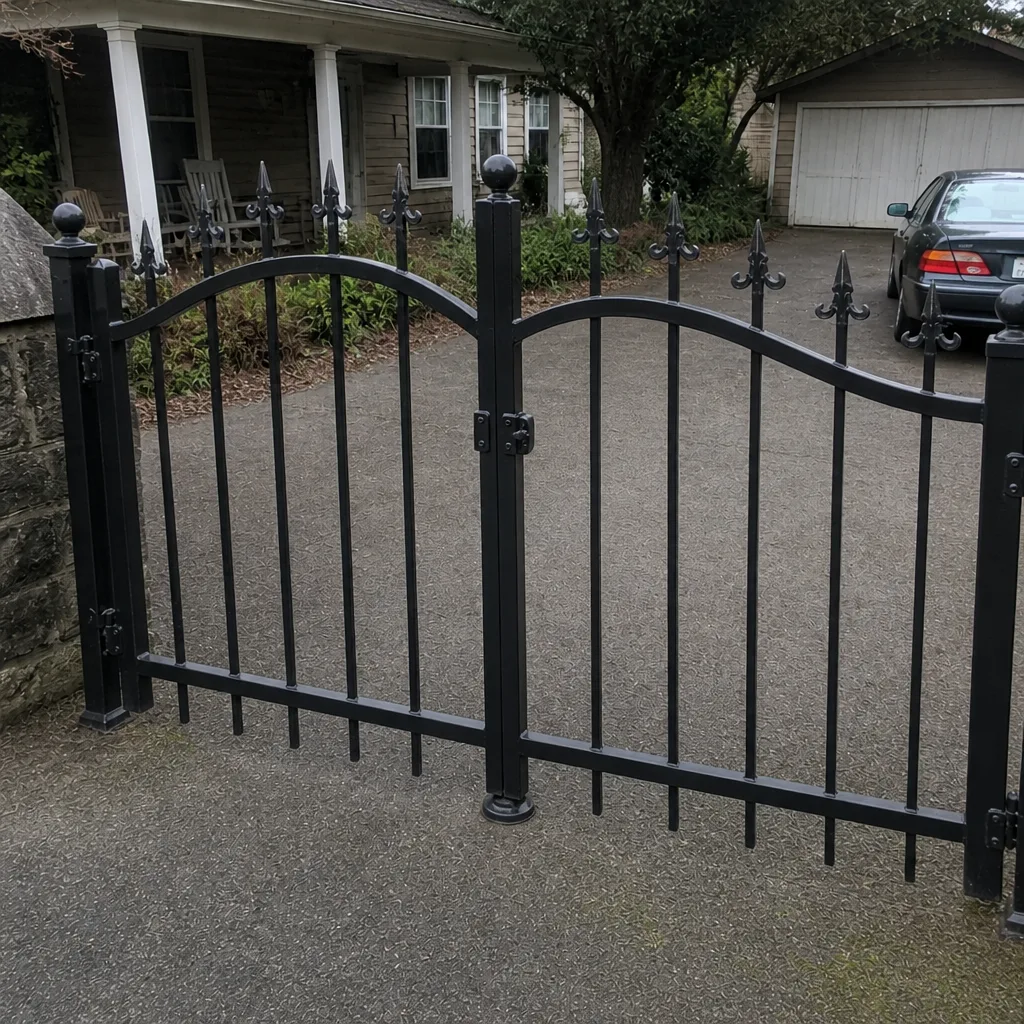
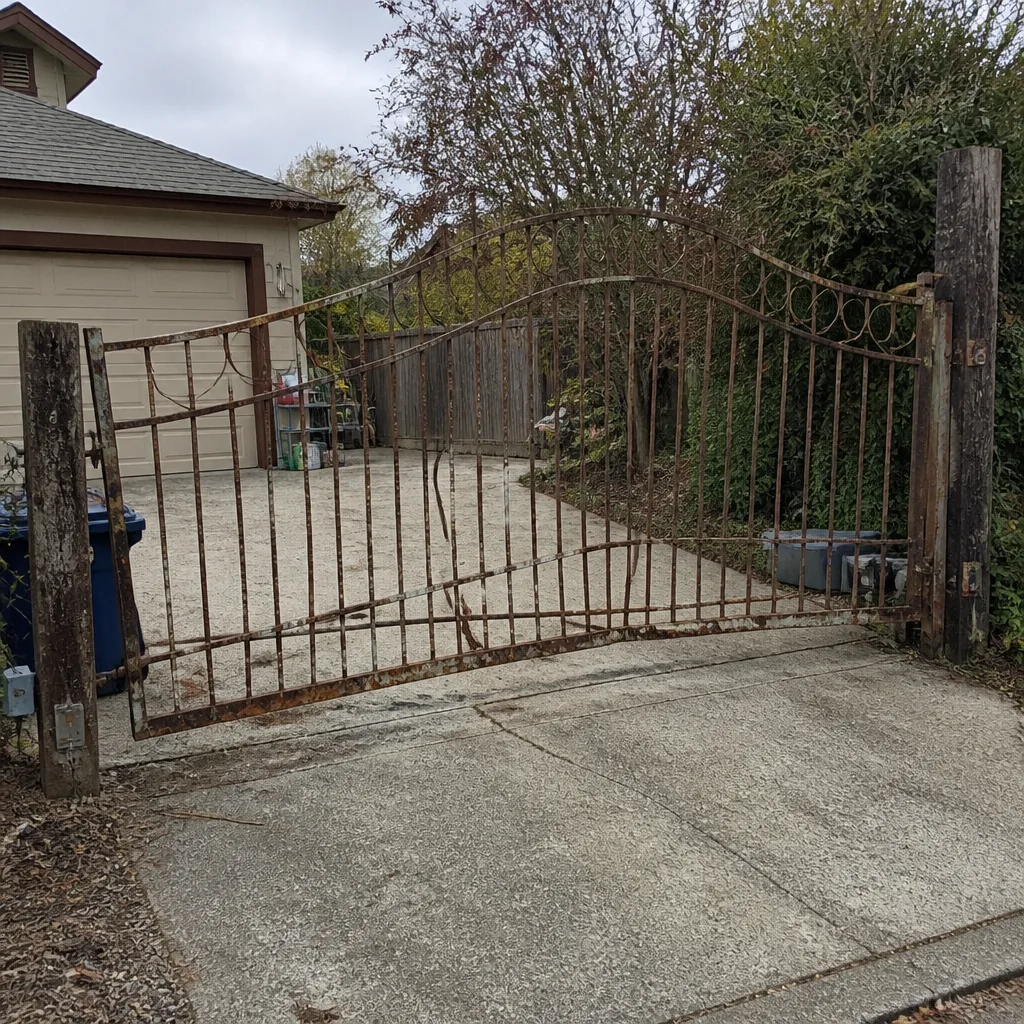
See the difference
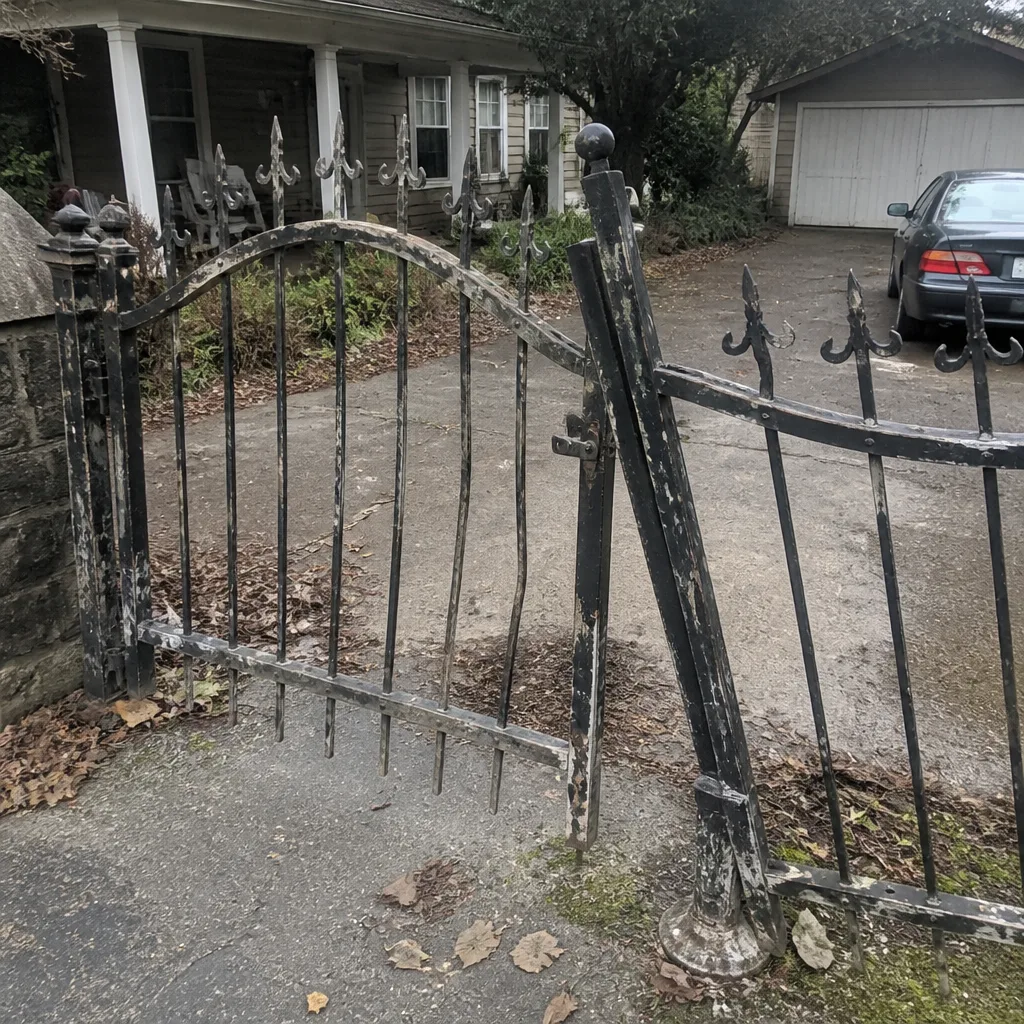 Before
 After
 Before
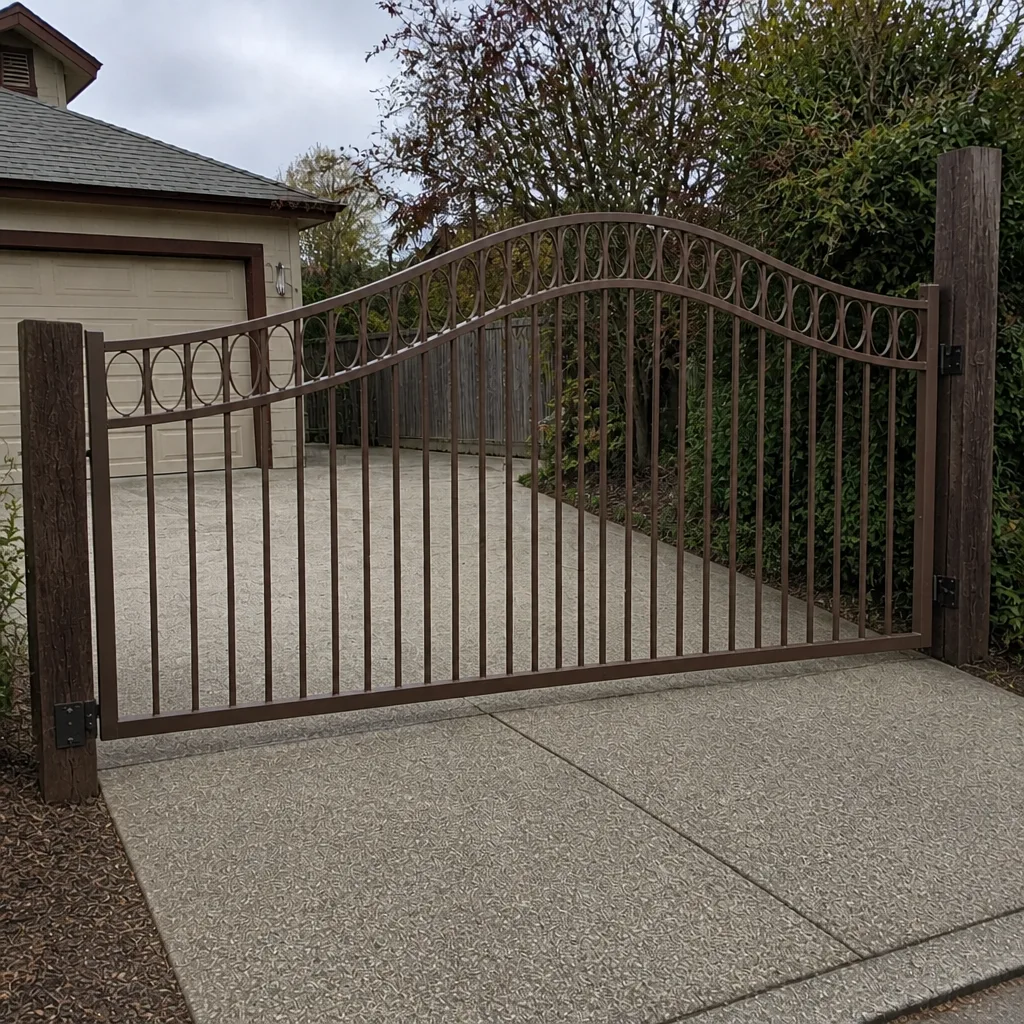 After
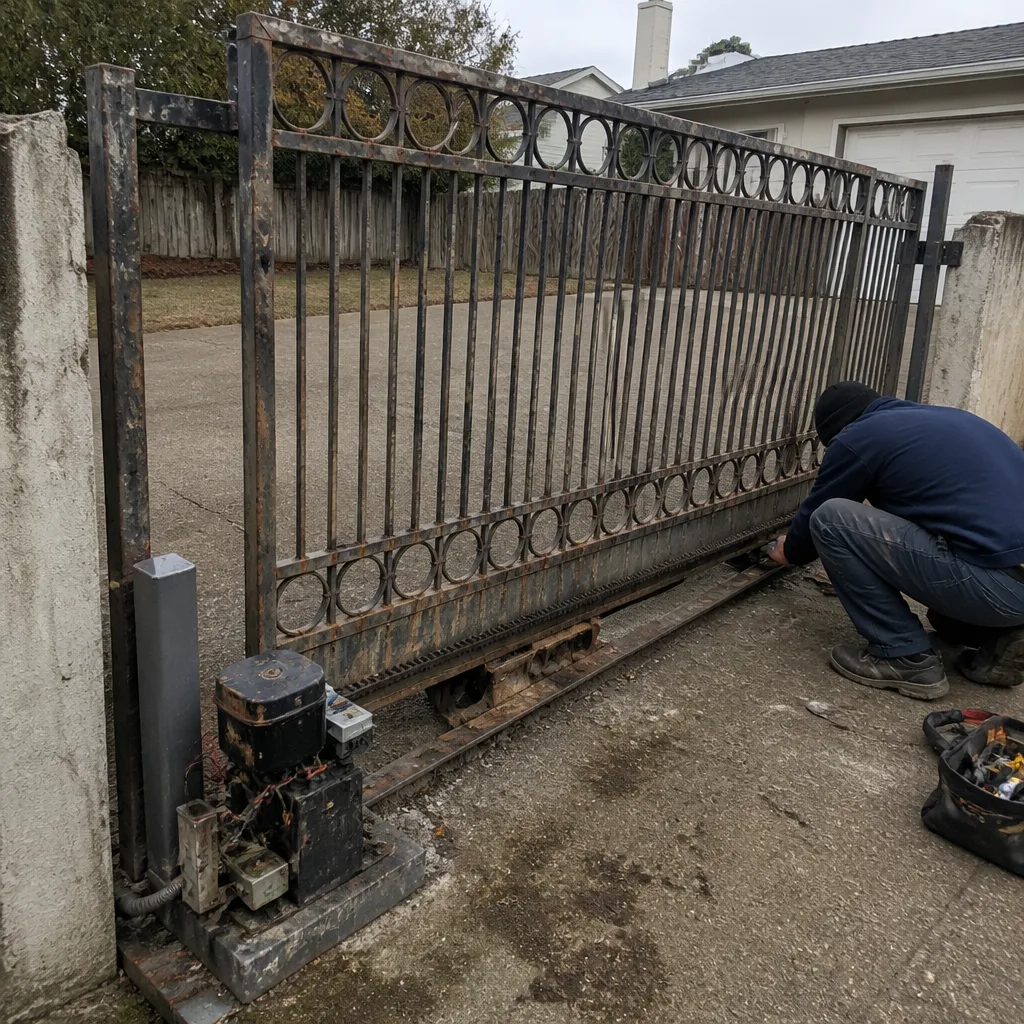 Before
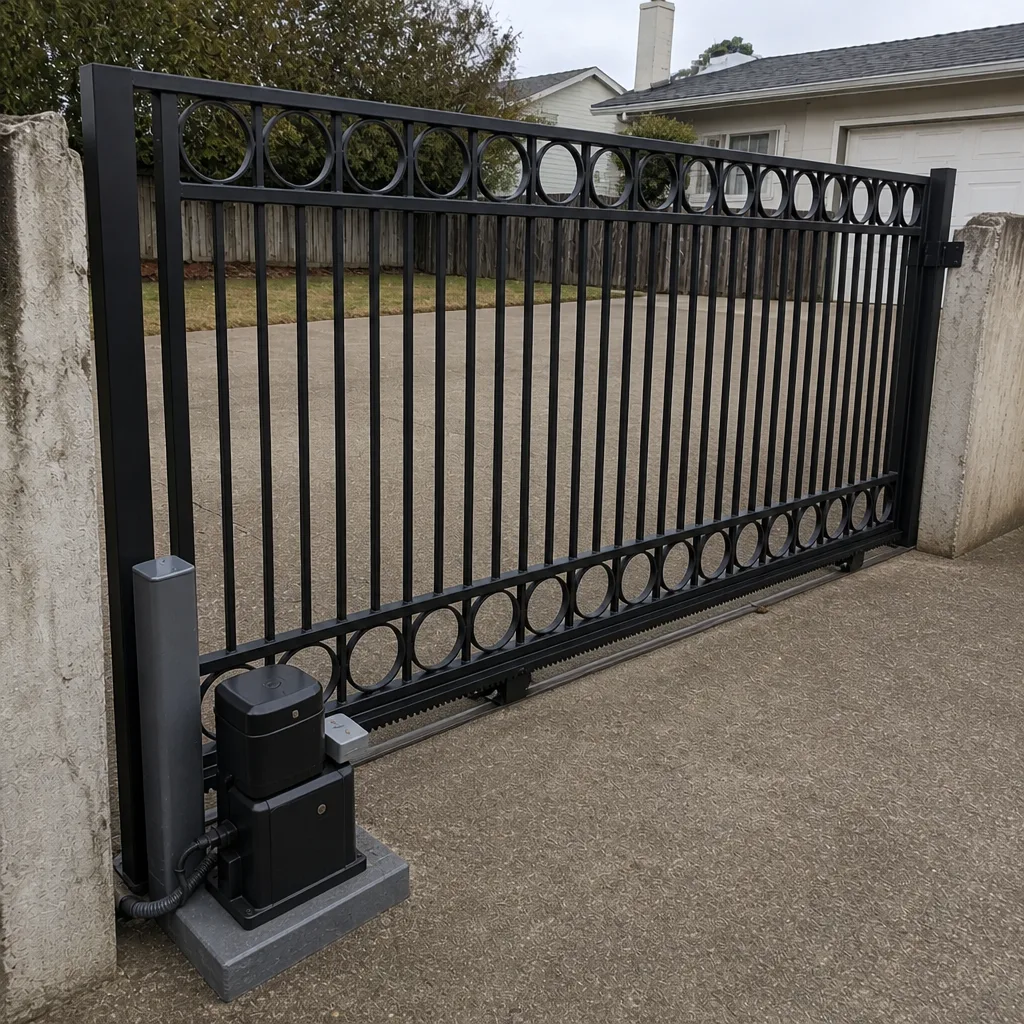 After
Frequently Asked Questions
The most important window is the pre-rain inspection in October and November. That’s when a year of dry-season wear turns into a failure, and a 20-minute inspection before the first real storm prevents most of it. Second most important is the spring reset in March and April, when tension, lubrication, and travel limits get recalibrated for the year ahead. Call (888) 298-3409 for an exact quote – estimates are free.
Test the battery backup on your operator and test the emergency release before any shutoff event. Make sure you know exactly how the manual release works, and check that the battery in your operator will carry the gate through a multi-day outage. Fire season prep (August-October) is when you should do this. If the battery backup isn’t holding, that’s a repair call, not a wait-and-see. Call (888) 298-3409 for an exact quote – estimates are free.
Because first rain hits everything that’s been drying out for months. Seals shrink, hinges lose their lubrication, dust and ash wash into the track, and anything that was already wearing finally fails. It’s not the rain itself that breaks the gate; the rain reveals damage the dry season caused. A pre-rain inspection in October prevents most of these failures. Call (888) 298-3409 for an exact quote – estimates are free.
Yes, over time. The late-spring fog cycle means hardware goes through a wet-dry cycle every single day for weeks, and that accelerates corrosion on exposed fasteners, hinges, and latch hardware. Quality exterior finishes and properly rated fasteners hold up; cheap zinc-plated hardware doesn’t. That’s why fog season (May-July) is the right window to check fasteners and finish. Call (888) 298-3409 for an exact quote – estimates are free.
You can handle the visual inspection, debris clearing, lubrication, and any testing that doesn’t involve opening an operator enclosure. Anything involving the control board, motor drive, power wiring, or the safety sensors should go to a gate specialist who’s trained on gate operators. For the electrical and automated side, have a professional do the seasonal check. Call (888) 298-3409 for an exact quote – estimates are free.
We work on the brand you already own: manual and automated swing gates, slide gates, and gates on operators from LiftMaster, FAAC, BFT, Linear, Viking, Ghost Controls, DoorKing, Elite, and Mighty Mule. Whether you need electric gate repair or a full installation, we handle the whole gate from the operator board to the hinge pin. If you’re not sure what brand or system you have, we can identify it on site. Call (888) 298-3409 for an exact quote – estimates are free.
The Bottom Line
Santa Rosa’s gate year runs on five phases, not four, and each phase has its own failure pattern. The fog season exposes fastener and finish corrosion. Fire season stress tests your battery backup and emergency release. The first rain reveals what the dry months did. Winter drainage determines whether your track and hardware survive. Spring is when you reset tension, lubrication, and travel limits for the year ahead. If you set one reminder for early October and one for early March, you’re already ahead of most gate failures we see in Santa Rosa. If something’s already failed, we can diagnose it and tell you whether repair or replacement makes sense.
Contact
If your gate needs a seasonal check, an electric gate repair, or a full installation in Santa Rosa, call (888) 298-3409 for a free estimate. We answer 24/7. Fast dispatch from 7am to 7pm, Sunday through Friday. We diagnose first and replace only when necessary, and the price is quoted and agreed before any work starts.
Written by the team at Gate Repair Santa Rosa.