
Last updated November 14, 2026
 Wrought iron
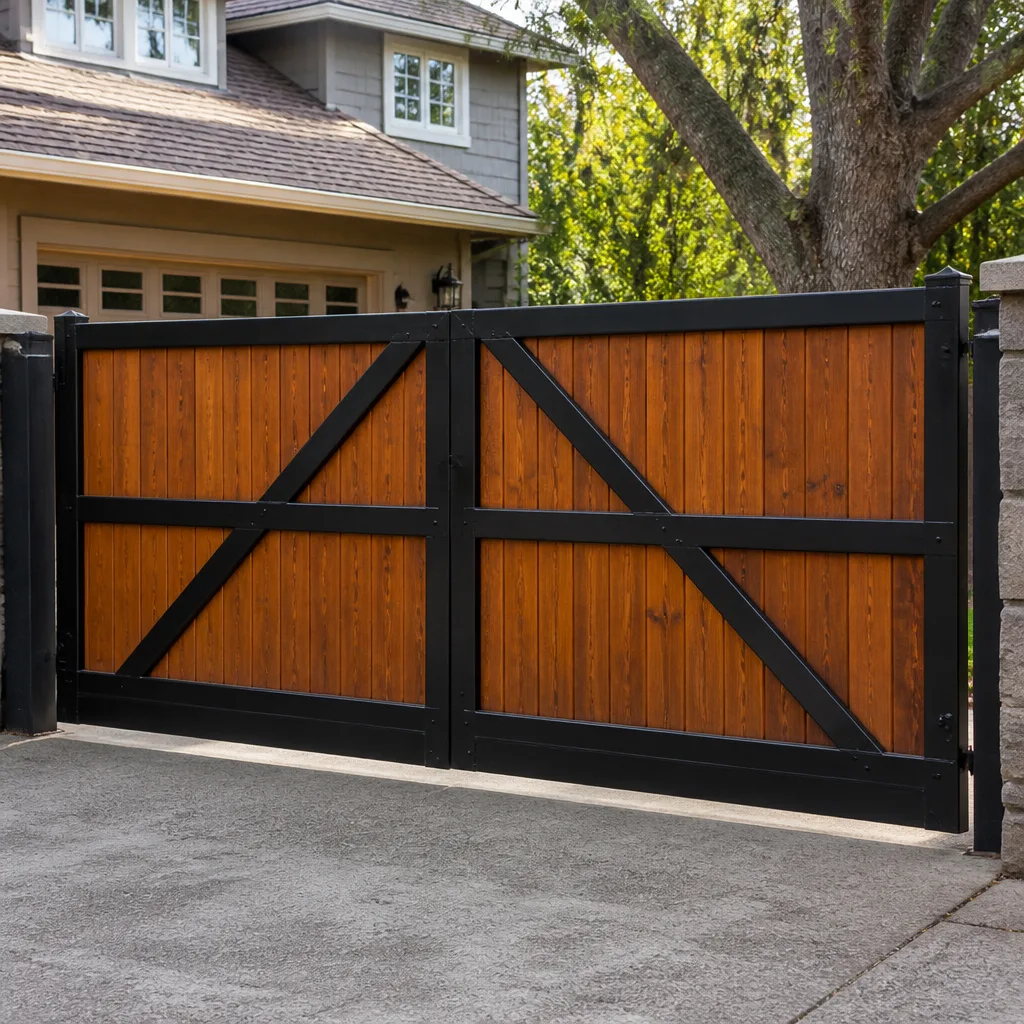 Wood & steel frame
 Farm & ranch
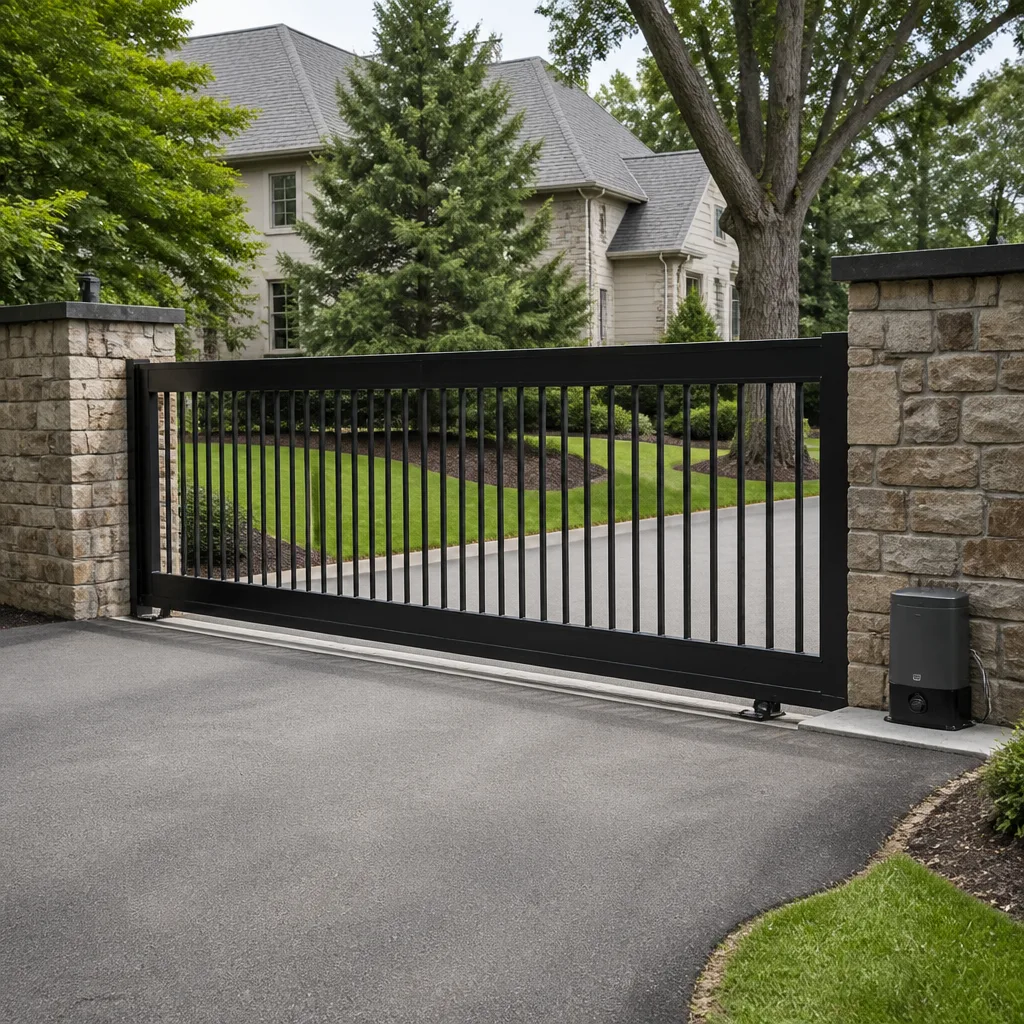 Sliding driveway gates
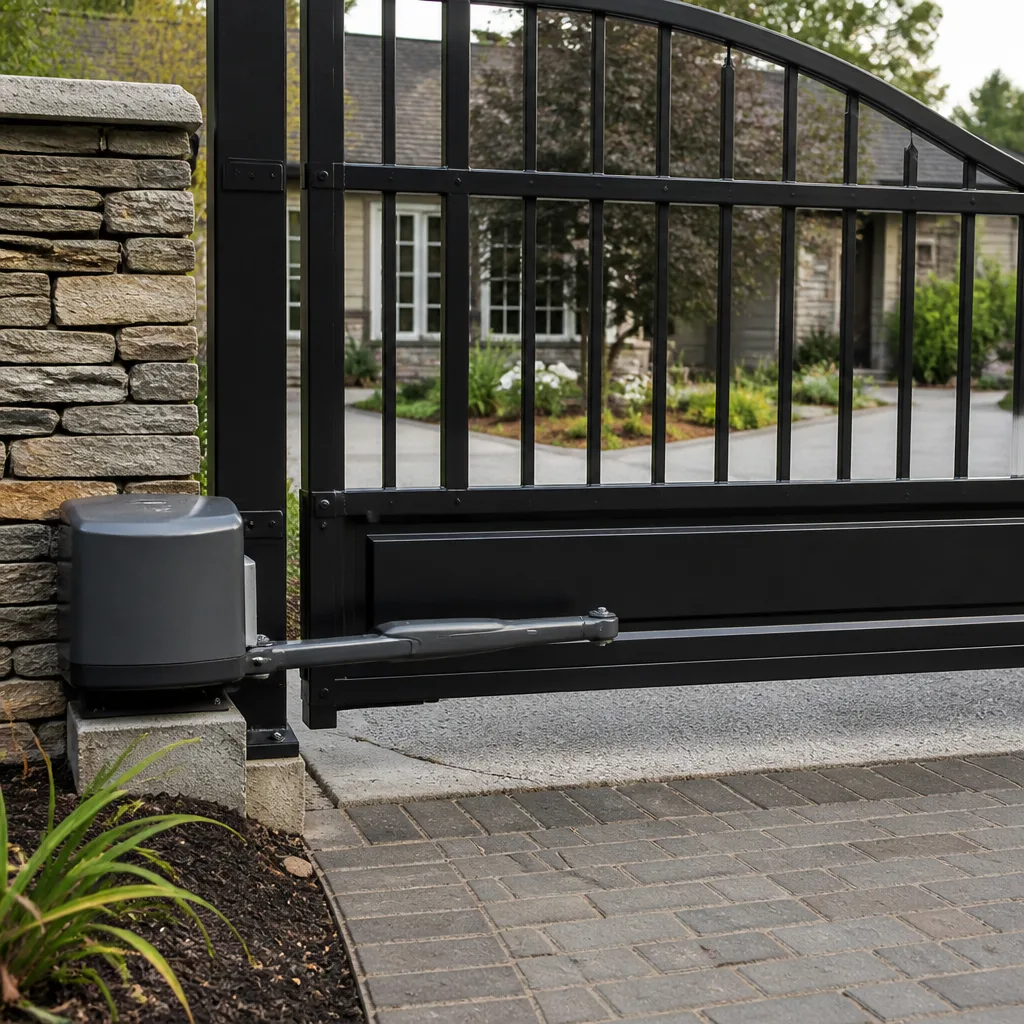 LiftMaster operators
Free on-site gate assessment - hinges, posts, and your LiftMaster or Nice gate operator checked before anything is quoted
The assessment is free and the quote is the invoice.
Get your free estimateDIY vs Professional Gate Repair: The Santa Rosa Homeowner’s Decision Guide
Replacing a gate remote battery is DIY. Adjusting a hydraulic operator’s pressure relief valve is not. Not because it’s technically complex, but because getting it wrong means your gate won’t stop when it should. The line between safe DIY and professional work is a system boundary, not a skill boundary, and too many Santa Rosa homeowners get hurt or waste money when they confuse the two. A swing gate with a simple electromechanical operator is genuinely serviceable by a careful homeowner. A hydraulic system, a control board needing reprogramming, or a safety sensor that has to hold a specific alignment is a different story. This guide draws that line precisely, so you know exactly which side of it your gate falls on.
Quick Answer
Mechanical adjustments on a simple electromechanical swing gate are DIY-safe for a mechanically inclined homeowner: hinge lubrication, remote battery swaps, clearing track debris, and aligning a gate that has dropped a little. Anything touching hydraulic pressure, control board programming, UL 325 safety sensors, operator wiring, or structural weld repair requires a trained technician, regardless of your skill level. If your gate has an automatic operator and the problem involves power, sensing, or hydraulics, the answer is professional repair, not a DIY project.
Styles & brands we work with
- Wrought iron
- Wood & steel frame
- Farm & ranch
- Sliding driveway gates
- LiftMaster operators
Table of Contents
- Why the Line Is a System Boundary, Not a Skill Boundary
- The Definitive DIY-Safe List for Santa Rosa Gates
- The Professional-Required List: Hydraulics, Control Boards, and UL 325
- How Wrong DIY Repair Affects Your Parts Warranty
- Tools and Parts: What You Actually Need to Stock
- The Cost-Per-Hour Breakeven Math in Santa Rosa
- Local Factors That Shift the DIY Calculus in Santa Rosa
- A Step-by-Step Diagnostic You Can Do Before Calling Anyone
Why the Line Is a System Boundary, Not a Skill Boundary
Most DIY-versus-pro debates focus on the person: how handy are you, how many tools do you own, how confident do you feel. That framing is wrong for gates. The real dividing line runs through the equipment itself. A gate operator is two systems bolted together. The mechanical half (hinges, hinges pins, chains, tracks, rollers, stops, receiver brackets) fails slowly and predictably, and a homeowner can see and feel what’s wrong. The electrical and fluid half (motors, control boards, limit switches, safety sensors, hydraulic pumps, pressure relief) fails invisibly, and reading its state requires either the right meter or the right software.
That’s why our technicians have up to 14 years of experience focused on gate systems and still call in a second set of hands when a hydraulic unit needs pressure work. The knowledge isn’t the barrier. The consequence of a mistake is. A gate that swings freely is an annoyance. A gate that fails to reverse on contact is a hazard to anyone walking through it, and the operator can’t tell you it’s misbehaving until the day it does.
Here in Santa Rosa, the local built environment makes this distinction matter. Sonoma County has a lot of properties with older sliding gates on long driveways, plus a growing number of recently installed swing operators on residential lots. On the older sliding gates, mechanical problems (sagging track, worn rollers, misaligned chain) often account for the whole complaint, and that part is DIY-accessible. On the newer swing units, the failure is almost always electronic, and that part is not. If you can’t tell which you’re facing, that’s your first sign to stop.
When you need us, we handle the whole gate from the operator board to the hinge pin. You can read more about our gate repair work before you decide.
The Definitive DIY-Safe List for Santa Rosa Gates
A mechanically inclined homeowner can complete these tasks safely, without voiding the parts warranty on most operators and without introducing a safety risk. If your problem is on this list, you don’t need to call anyone. If you already called, cancel it and save the money.
- Replacing gate remote control batteries. Pop the case, swap the coin cell or AAA, close it up. If the remote has to be re-paired, that usually involves a button sequence on the operator receiver, not the control board, and that step is fine too.
- Lubricating hinges, rollers, and chain. A few drops of appropriate lubricant on the hinge pins and a light coating on the drive chain reduce wear and eliminate a lot of the groaning and squealing complaints. Use a manufacturer-recommended lubricant, not WD-40.
- Clearing debris from the track or ground rail. Leaves, gravel, and small sticks jam more sliding gates in Santa Rosa than any electronic fault. Sweep or blow out the track, and run the gate through a full open-close cycle by hand.
- Tightening visible bolts, hinge plates, and fence post brackets. Loose hardware causes wobble and misalignment. If a bolt is stripped or a hinge plate is cracked, stop and call a professional; that’s a structural issue.
- Adjusting a mechanical stop or limit tab. On older electromechanical operators, the physical open and close stops are mechanical and adjustable with basic tools. Photograph the original position first.
- Checking the fuse in the operator housing. A blown fuse is a common, cheap fix. Replace with an identical rating only. If a replacement fuse blows immediately, that’s an electrical fault and you should stop.
- Resetting the operator after a power outage. Many operators need a simple reset or a single full cycle to re-learn position after power has been cut. Check the manual; it’s usually one button.
If your gate has a small panel-mounted keypad or intercom station, changing the batteries in the keypad or re-seating a loose connector is also on this list. Everything inside the operator housing beyond the fuse and the reset button is not.
The Professional-Required List: Hydraulics, Control Boards, and UL 325
These tasks are professional-only. Not because you lack skill, but because the failure mode of each is a safety hazard to someone other than you. If your gate problem is on this list, stop and call a technician.
- Any hydraulic operator pressure adjustment. Hydraulic gate operators (common on heavier swing gates and many commercial units) have a pressure relief valve that sets how hard the gate pushes. Set too high and the gate can crush or trap. Set too low and the gate won’t fully close. The correct setting is specific to the operator, the gate weight, and the UL 325 requirements for the site. This is not a DIY adjustment.
- Control board replacement, diagnosis, or firmware updates. Control boards manage every behavior of the gate: soft start, soft stop, reverse on obstruction, timer-to-close, and interlock with external safety devices. Diagnosis requires a multimeter and familiarity with the specific board. Programming requires the installer code, and firmware updates require the manufacturer’s software. Brands like LiftMaster, DoorKing, and Elite all have model-specific protocols.
- UL 325 safety sensor alignment and testing. UL 325 is the standard that governs automatic gate operators and their safety devices. Photoelectric sensors, safety edges, and loop detectors must be positioned and tested to specific tolerances. If a sensor is misaligned, the gate may fail to reverse on an obstruction and injure someone. Alignment and testing are not homeowner tasks.
- Any work on operator wiring, the power feed, or the disconnect. Low-voltage control wiring and line-voltage power to the operator are two different animals, and both require a trained technician. This is an electrical safety issue first and a gate issue second.
- Structural weld repair on the gate leaf, post, or frame. A cracked weld or bent post that has moved the gate out of alignment is a structural repair. Grinding and welding a structural member requires a welder and an understanding of what the gate was engineered to do.
- Sliding gate roller or track replacement where the gate must be lifted or unweighted. Heavy sliding panels can fall or bind during a lift. If the gate weighs more than a homeowner can safely lift and block, and it almost always does, this is a professional job.
- Adding, moving, or re-programming access control. Intercoms, keypads, telephone entry, and networked access systems depend on wiring runs and programming that need a gate specialist. We handle electric gate repair here in Santa Rosa and see a lot of failed DIY access control installs that would have cost less the first time.
How Wrong DIY Repair Affects Your Parts Warranty
Most gate operator manufacturers void or limit parts warranty coverage when a failure is caused by unauthorized disassembly, by a non-approved installer, or by a repair made with non-OEM parts. The specific language varies by brand, and reading it before you pick up a wrench is worth ten minutes.
LiftMaster’s residential operator warranty, for example, generally limits coverage to defects in materials and workmanship and excludes damage from improper installation, modification, or repair by anyone other than an authorized dealer. That phrase matters: if you open the operator housing and replace the control board yourself with an aftermarket part, you may lose the warranty on both the board and anything the failed board took down with it. On a LiftMaster unit that was still under warranty, this is a pure loss.
Viking Access Systems publishes similar language. Their operator warranty generally excludes damage from unauthorized service, and Viking parts are dealer-channel products, which means the replacement board or motor you buy online may not be genuine. If a technician later has to redo the job with an OEM part, you’ve paid twice.
Apollo (now part of the same ownership parent as several other gate brands) publishes warranty terms in the manual for each model. The pattern is consistent across the industry: authorized service preserves coverage, unauthorized service risks it. DoorKing commercial operators carry a warranty that explicitly requires a licensed installer for structural and electrical work, and their boards are not sold through general retail.
The takeaway is simple. Any repair that opens the operator housing beyond a fuse change is a warranty risk. Get the free estimate, get the written price, and let a specialist do the work. If you’d like to know which brands we work on, we cover the brand you already own, so ask.
Tools and Parts: What You Actually Need to Stock
A working DIY maintenance kit for a Santa Rosa gate is small and cheap. The tools you need to diagnose and repair the electronic side are neither, and the parts aren’t available to you at all without a dealer account.
What a homeowner should stock:
- Correct lubricant for hinges, rollers, and chain (consult your manual; usually a lithium or PTFE-based product).
- Replacement remote batteries (CR2032 or AAA, depending on the remote) and keypad batteries.
- A set of basic hand tools: socket set, adjustable wrench, screwdrivers, hex keys, and a small pry bar for debris clearing.
- A spare fuse in the correct rating for your operator, if the operator uses one.
- A flashlight and a pair of work gloves. Simple, but the number of homeowners who try to reach into an operator housing in the dark is not zero.
What requires dealer-channel sourcing:
- Control boards for LiftMaster, DoorKing, Elite, FAAC, BFT, Viking, Ghost Controls, Linear, and Mighty Mule. Some of these are available through online retailers, but they may be aftermarket, non-OEM, or a superseded model. Genuine boards for most of these brands come through dealer channels.
- Safety sensor sets and safety edges. These must match the operator’s signaling protocol; buying the wrong sensor leaves the gate functionally unsafe even if it looks fine.
- Hydraulic pumps, pressure relief valves, and hydraulic fluid for hydraulic operators. These aren’t homeowner-serviceable parts.
- Operator motors and gearboxes. Same story: the correct part depends on the exact model, and installing it wrong damages the rest of the system.
- Access control boards, loop detectors, and intercom components. These interface with the operator’s low-voltage input and must be compatible.
If you want a specific part identified before you buy, call us and we can tell you what the correct replacement is for the model you own. Take a photo of the operator’s data plate before you call.
The Cost-Per-Hour Breakeven Math in Santa Rosa
DIY sometimes looks cheaper because the part is $60 and the technician costs more. That math usually falls apart once the DIY attempt takes four hours at a homeowner’s real hourly value, fails, and then becomes a professional repair anyway. Here is the honest version.
Say a gate fault looks like a control board issue but is actually a misaligned safety sensor. A homeowner’s diagnostic path usually goes: search the internet (30 minutes), test the remote and batteries (30 minutes), open the operator housing and check the fuse (30 minutes), pull the control board and order a replacement (30 minutes, plus a week of shipping), install the new board (90 minutes), discover the gate still won’t close properly because the sensor was the real fault (60 minutes of further frustration), and finally call a technician anyway. That’s five and a half hours, a non-returnable board you probably didn’t need, and a delay of a week.
A technician with the right meter and experience diagnoses the sensor fault in about 45 minutes and fixes it in another 45. The job is done in 90 minutes, done once, and diagnosed correctly. In Santa Rosa, where afternoon temperatures push a lot of homeowners to work on gates in less-than-ideal conditions, the DIY path also frequently means the job gets started on a hot afternoon and not finished that day. If we came out on a Sunday, the gate would be back in service and the homeowner’s weekend would be intact.
Where DIY really is cheaper: simple hinge lubrication, remote battery swaps, debris clearing, loose bolt tightening, and a fuse change. Those tasks take ten to thirty minutes, cost almost nothing, and a professional visit isn’t worth the call.
Where DIY reliably costs more: anything that requires opening the operator housing, testing a safety device, or lifting the gate off the track. Once you’re past 90 minutes on a diagnostic attempt, the math has already favored a professional. Same-day service is available on repair calls, and fast dispatch runs from 7am to 7pm, Sunday through Friday.
If you want a free estimate before you commit, call (888) 298-3409. The written price is set before any work starts, so you’ll know exactly what it costs.
Local Factors That Shift the DIY Calculus in Santa Rosa
A few things about Santa Rosa specifically make the DIY-versus-pro call different from a lot of other markets.
First, the seasonal pattern. Santa Rosa’s winters are mild, and the dry months run long. That means gate wood, painted steel, and hinge hardware spend a lot of the year in dry, dusty conditions, which is good for rust and bad for wear. Hinges dry out faster and start squealing earlier than in wetter climates. The result is that a huge share of “broken gate” complaints in Santa Rosa turn out to be a lubrication and alignment issue, which is right on the DIY list. Take that as good news: many Santa Rosa gate problems are homeowner-fixable.
Second, the housing stock. Sonoma County has a lot of long driveways, rural lots, and properties with sliding gates installed for privacy and vehicle control. Sliding gates on long driveways often have their operators installed a good distance from the house, which makes diagnosing them from the kitchen window impossible. If your gate is more than a few yards from the house, you can’t see the control board LEDs, the safety sensor status lights, or the drive chain condition without walking out to it. Some homeowners mistake a sensor misalignment for a dead operator because they can’t see the sensor LEDs. If your gate is remote from the house, get a technician to walk the system once and label the components.
Third, permits. Gate operator installations and major structural work on a Santa Rosa property often need a city or county permit, and the requirements depend on the gate type, the power source, and the property zoning. If a DIY installation needs a permit you haven’t pulled, the city may require you to bring it into compliance, which is more expensive than starting correctly. Ask the city’s building department before you install anything new. Repair of an existing, permitted gate usually doesn’t require a new permit, but confirming with the city is the safe move.
Fourth, neighborhood patterns. In Rincon Valley and Bennett Valley, we regularly see gates paired with long privacy fence lines and swing operators that are heavier than the operator was rated for. In the older parts of town, sliding gates on original hardware are common. Both patterns create DIY opportunities (loose fence line and hinge lubrication) and DIY traps (heavy swing gates that need a pressure adjustment after lubricating). We work across Santa Rosa and would rather answer a phone call and tell you it’s a DIY job than have you hurt yourself.
A Step-by-Step Diagnostic You Can Do Before Calling Anyone
Do these seven steps before you call. Take notes as you go. Whichever step you stop at, you’ll be able to describe the problem accurately to a technician, which saves time on the visit and gets you to a real fix faster.
- Observe the failure mode. Does the gate fail to move at all? Move partially and stop? Move but not fully close? Reverse partway? Each of these points to a different system. Write it down.
- Test the remote and any exterior keypad. Try a fresh battery. Try a second remote if you have one. If the gate opens from one control and not another, the problem is that control, not the operator.
- Cycle the power. If the operator has a manual disconnect and a breaker, power it down at the breaker, wait a minute, and power it back up. Re-test. Some faults are transient and clear on a power cycle, especially after an outage.
- Look at the safety sensor LEDs. Most photoelectric sensors have a visible LED. If the LEDs are dark, misaligned, or flickering, that’s your fault and you shouldn’t touch it. Call a technician.
- Walk the gate by hand (if safely disengageable). With the operator disengaged, open and close the gate by hand. It should move smoothly, without binding or grinding. If it binds, the problem is mechanical and often on the DIY list. If it moves freely but the operator can’t cycle it, the problem is electronic or hydraulic.
- Check the fuse, if accessible. If the operator has an externally accessible fuse, check it. If it’s blown, replace with the identical rating and retest. If it blows again, stop.
- Photograph the data plate on the operator. Every operator has a label with the model number and manufacture date. Take a clear photo. If you end up calling, the technician can often confirm the system before arriving.
If you’ve stopped before step 4, you probably have a DIY job on your hands. If you stopped at step 4 or step 7, call us. It’s a free estimate, and a written price is set before any work starts.
When the diagnostic doesn’t give a clear answer
Sometimes the symptom is intermittent (the gate opens fine in the morning, fails in the afternoon): intermittent faults are genuinely hard to reproduce in a short visit, and a homeowner may spend days chasing one. If your fault appears and disappears, that’s a technician job. We see intermittent faults on safety sensors, on access control loops, and on hydraulic operators that are near their pressure limit. All three need professional diagnosis. For Santa Rosa, we know the systems and often the brands, and our technicians carry the right meter and the right test rigs.
What to tell the technician on the phone
Give us four things: the operator brand and model if you can read it (or the photo), the failure mode you wrote down in step 1, whether the gate is a swing or slide type, and whether the power feed is low voltage or line voltage if you know. That’s enough to route the call and tell you whether we need to bring a part. Brand naming matters: we’re fluent in Viking, Ghost Controls, DoorKing, Elite, LiftMaster, FAAC, BFT, Linear, and Mighty Mule, so the model number gets us moving fast. If you’re a Santa Rosa homeowner calling about a repair, Santa Rosa is our coverage area and we can tell you on the phone whether the job is worth a visit.
Common Mistakes to Avoid
- Opening the operator housing to “have a look.” On most operators, opening the housing to inspect the board is the moment the warranty status changes. If you need a visual inspection, have a professional do it. This is the single most common costly mistake we see on Santa Rosa gates.
- Adjusting the pressure relief valve on a hydraulic operator to “fix” a slow gate. A slow hydraulic gate is almost always a symptom of a different problem (fluid, pump wear, or a mis-set limit), and turning the relief valve up doesn’t fix any of those. It just makes the gate unsafe. Leave it alone.
- Replacing a control board with a “compatible” aftermarket part from an online seller. The board might physically fit, but the firmware, timing, and safety functions may be wrong for your model. You’ll pay the technician to re-install a genuine board later.
- Misaligning safety sensors because “the gate works fine without them.” If the sensors are bypassed, the gate will run and close on an obstruction without reversing. This is the most dangerous state a gate can be in and the reason UL 325 requires those devices in the first place.
- Letting loose hinges become bent hinge plates. It takes one month of squealing for a worn hinge to become a bent one in the dry Santa Rosa summers. Grease first, replace second.
- Lifting a heavy sliding gate off the track without blocking. Sliding gate panels weigh more than most homeowners expect, and dropping one can break the panel, the track, or a foot. Any work that involves lifting the gate is a professional call.
- Starting a repair on a hot afternoon and knocking off before it’s finished. A gate in a half-disassembled state overnight is a security risk, and often a bigger repair when the wind or a passerby finishes the job. If you start, finish in one go. If you can’t, don’t start.
See the difference
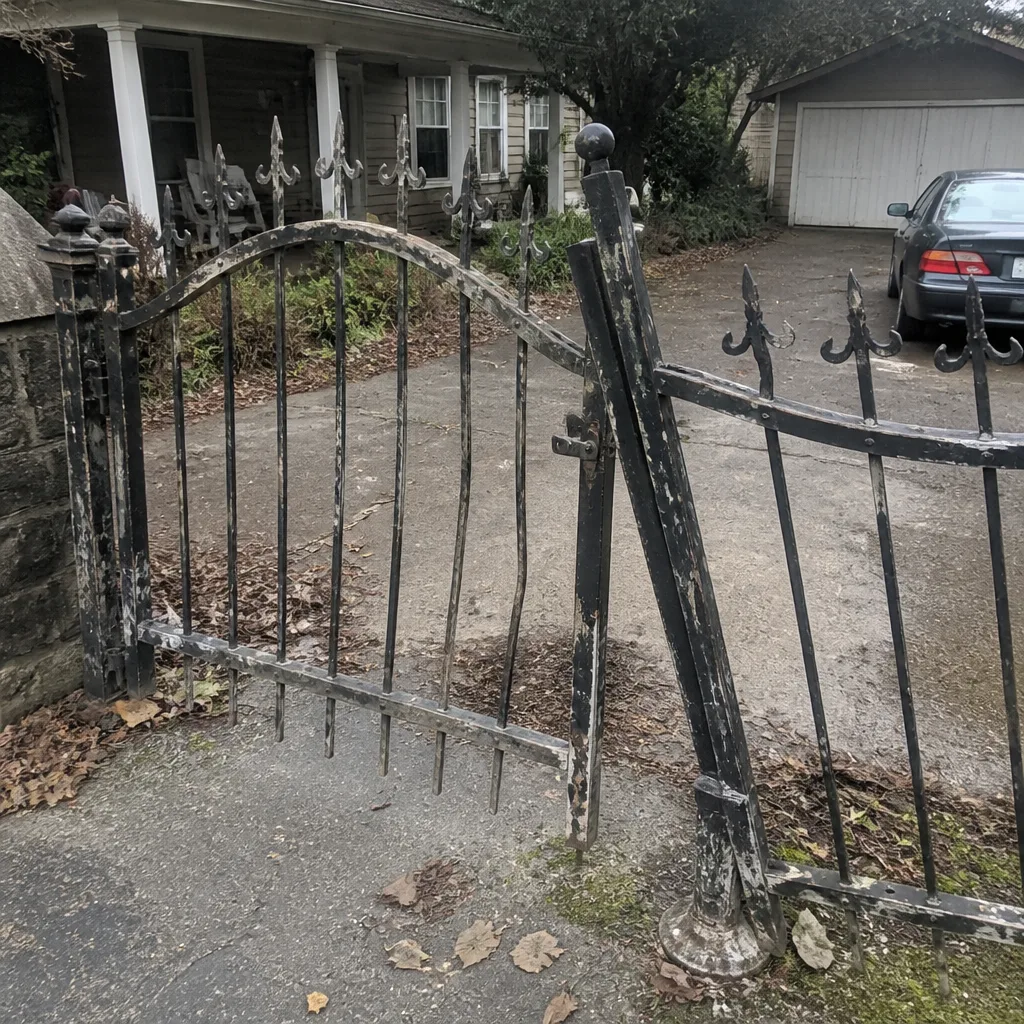 Before
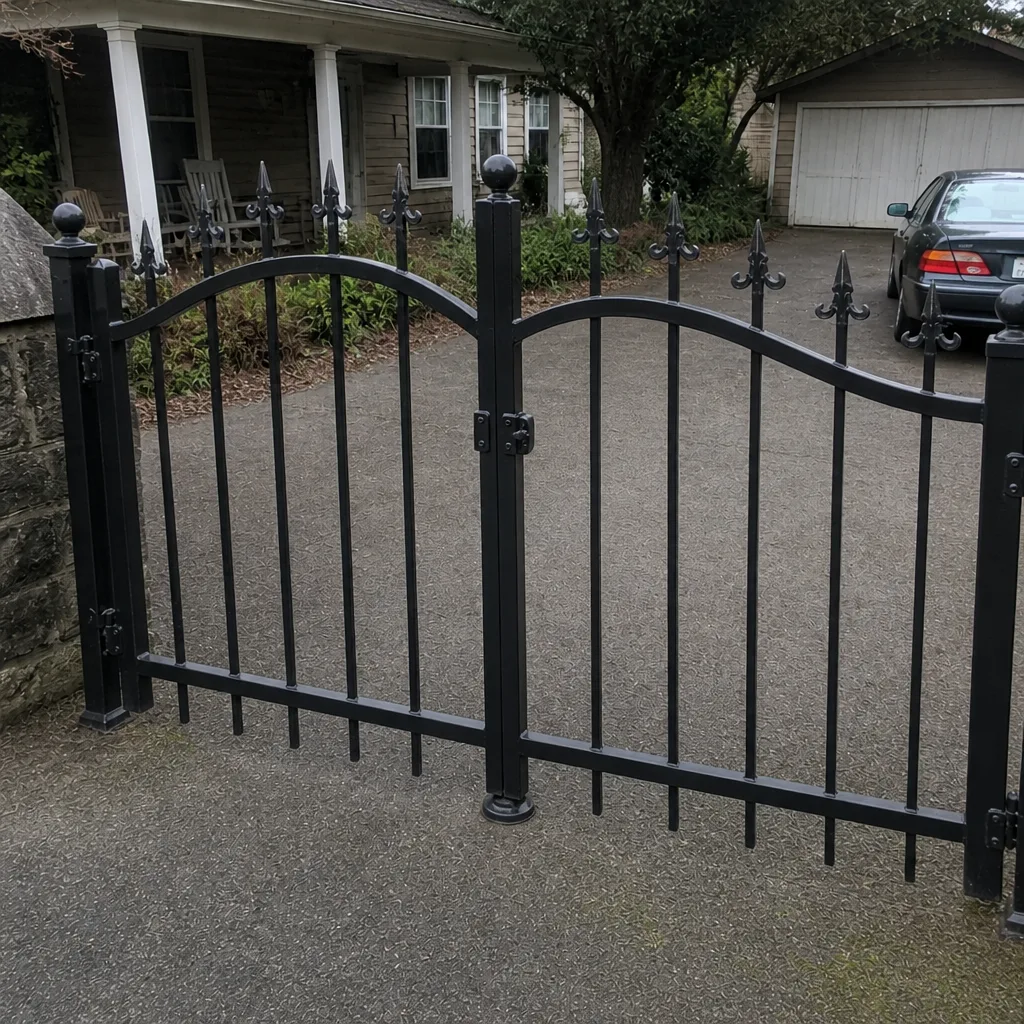 After
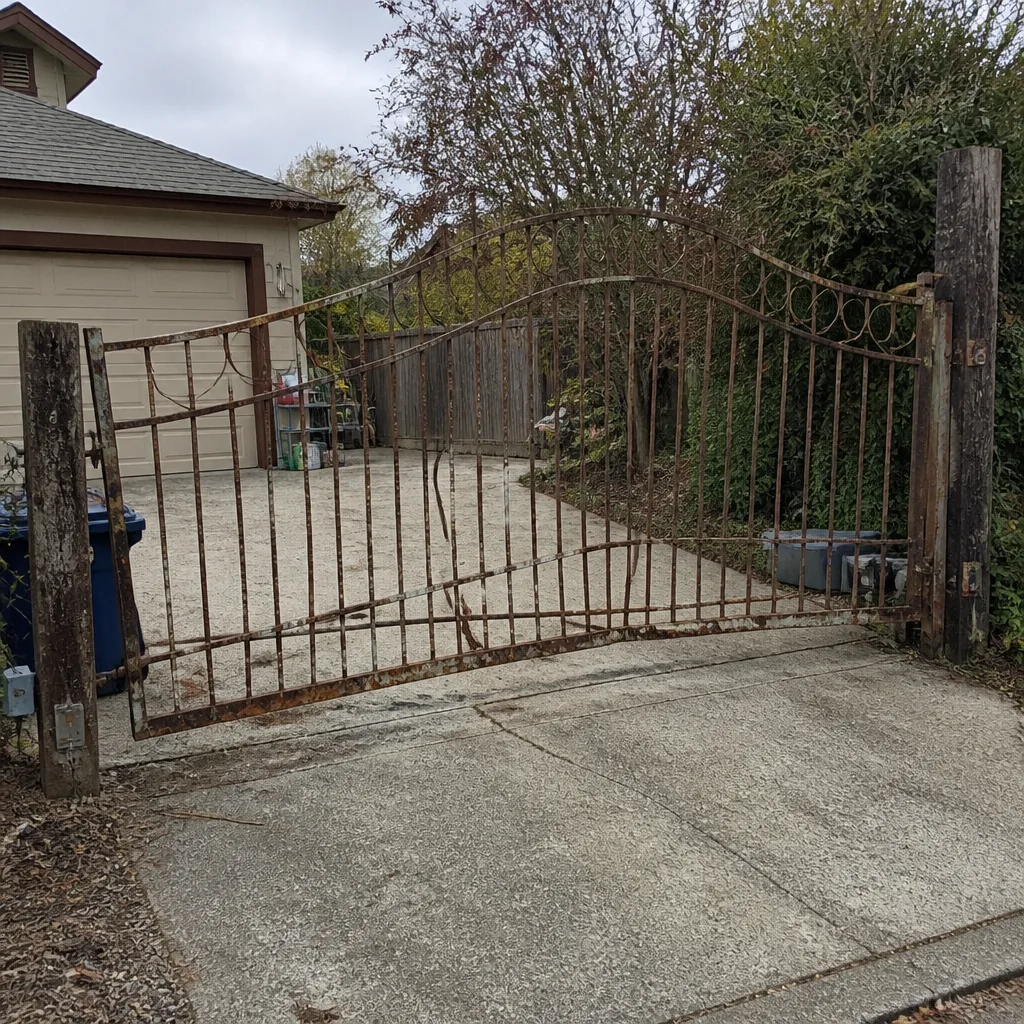 Before
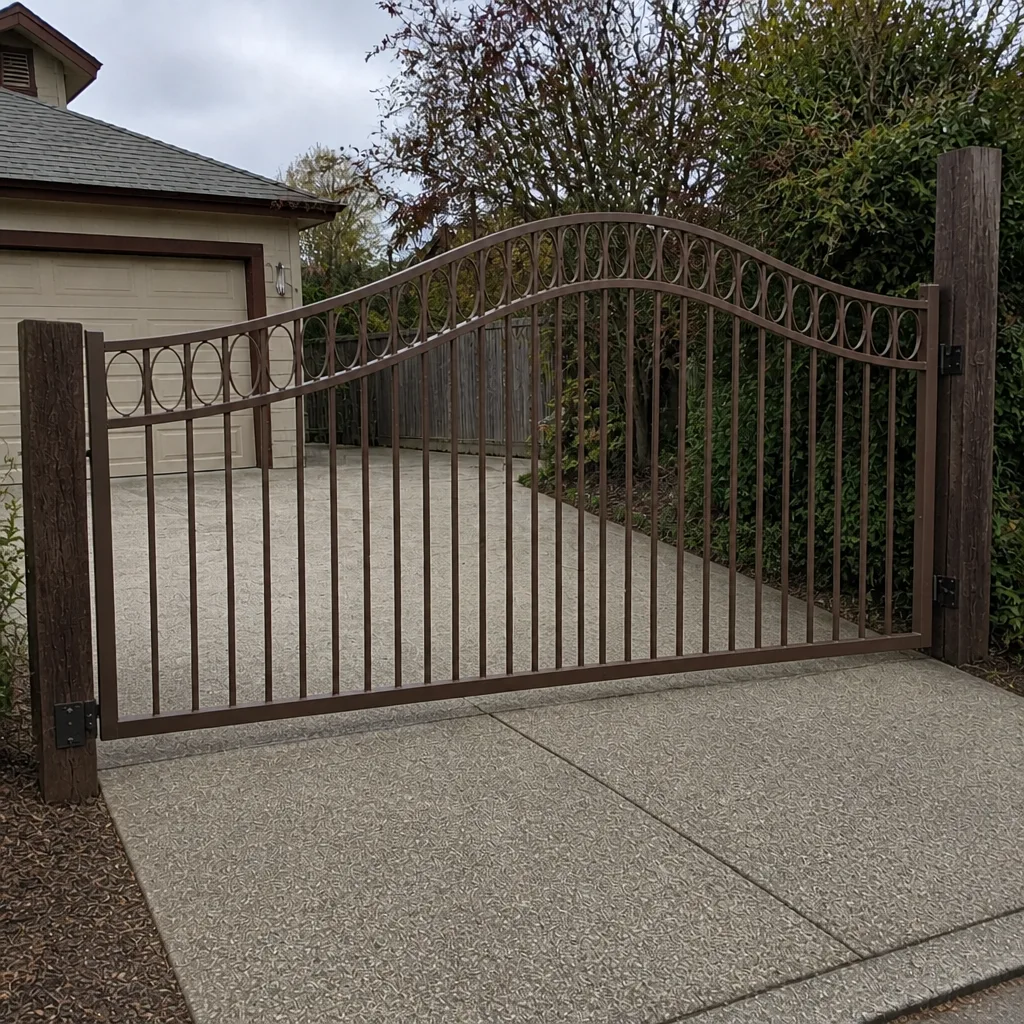 After
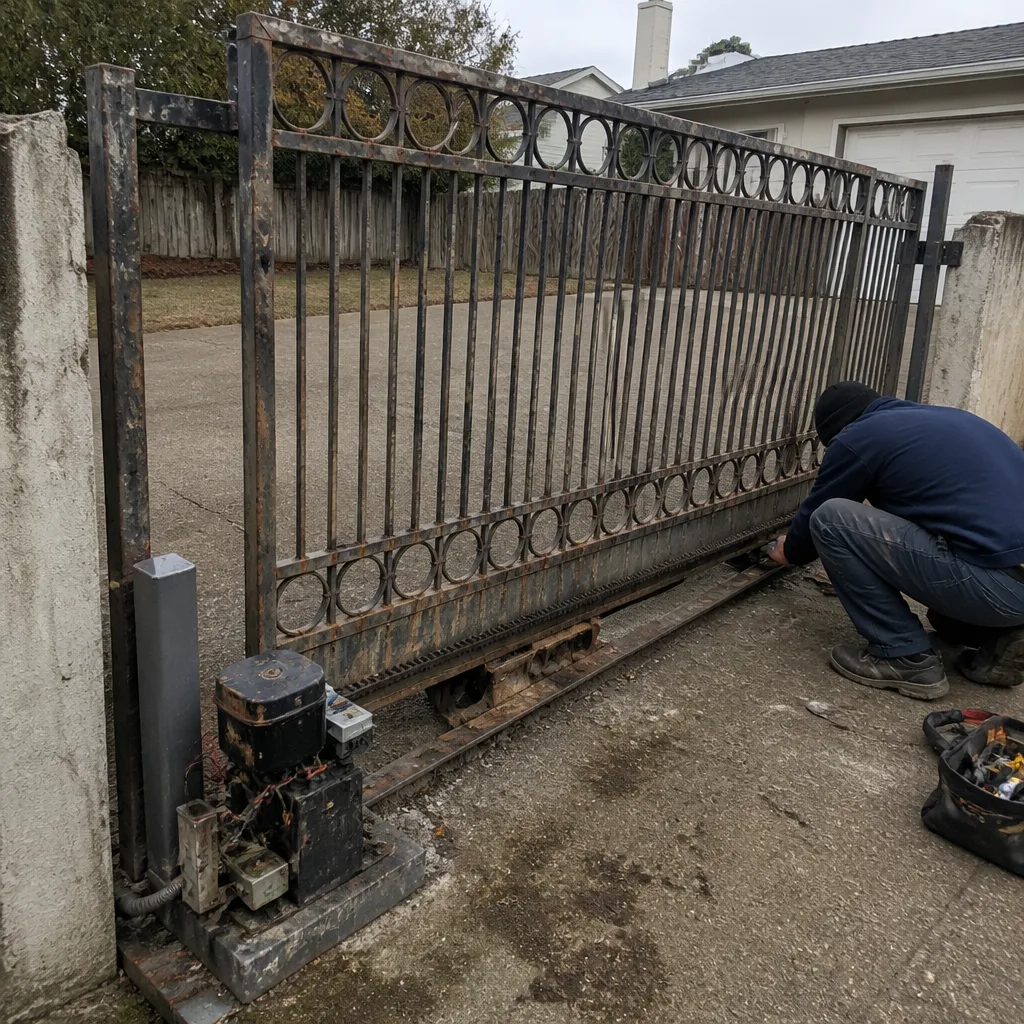 Before
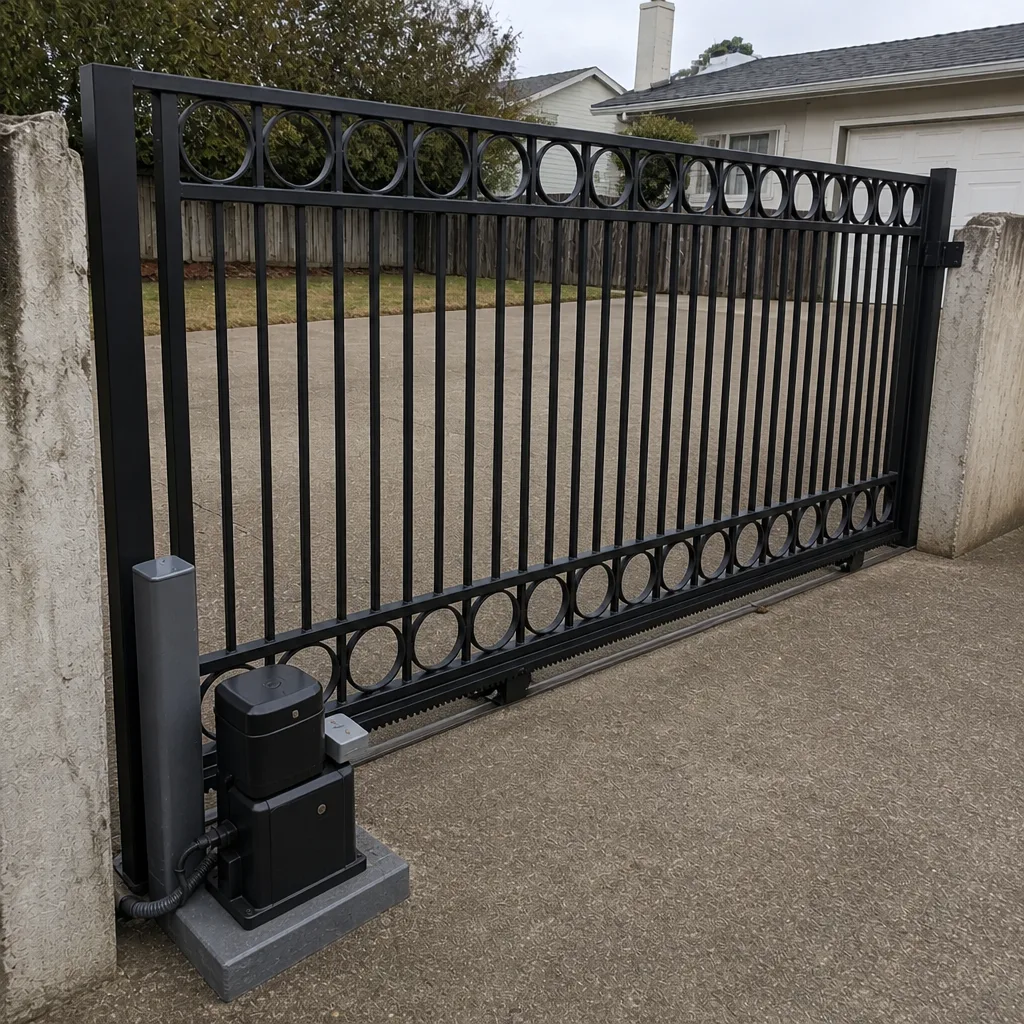 After
When to Call a Professional
Call a professional if the gate involves any of these: a hydraulic operator, a control board, a safety sensor, the power feed, a structural weld, or a heavy panel that has to be lifted. Call if the problem is intermittent, if the gate is remote from the house, if the data plate is unreadable, or if you don’t know which system you’re looking at. Call if you’ve already spent more than 90 minutes on diagnosis. Call if the gate fails to reverse on an obstruction, or if it moves on its own outside a normal cycle. Any of those, and the DIY question is already answered. Gate Repair Santa Rosa offers free estimates in Santa Rosa. The price is set per job by the written estimate before any work starts. Call (888) 298-3409. We answer 24/7, and fast dispatch runs from 7am to 7pm, Sunday through Friday. You can also read more about the specialist side of our work on the Gate Repair Santa Rosa page.
Frequently Asked Questions
You technically can, but you shouldn’t. Control boards manage every safety behavior of the gate, and the correct board for your model must match both the operator and the safety device protocol. A mismatch can leave the gate unable to reverse on obstruction, and self-installed aftermarket boards often void the operator’s parts warranty. Call (888) 298-3409 for an exact quote. Estimates are free.
No. The pressure relief valve sets how hard the gate pushes, and an incorrect setting either keeps the gate from fully closing or makes it unsafe for anyone walking through. The correct setting depends on the operator, gate weight, and UL 325 requirements for the site, and only a trained technician should set it.
It depends on the diagnosis and the part, which is why we set price per job by the written estimate. A simple hinge or lubrication adjustment is a modest job; a control board replacement or hydraulic pressure adjustment is a larger one. The estimate is free, and the written price is agreed before any work starts, so there are no surprises.
Often, yes. Both LiftMaster and Viking publish warranty language excluding coverage for damage from unauthorized service, modification, or non-OEM parts. A fuse change or remote pairing usually doesn’t trigger that language; opening the housing to replace a board usually does. Check your manual before you open the operator.
Every automatic gate operator is required to have some form of obstruction-sensing safety device under UL 325: photoelectric sensors, safety edges, or loop detectors. If you can see LEDs or a small sensor pair near the gate path, those are the sensors, and they need professional alignment if they’re misaligned or dark. Don’t bypass them or cover them.
A specialist should handle whatever you already own. We work on LiftMaster, FAAC, BFT, Linear, Viking, Ghost Controls, DoorKing, Elite, and Mighty Mule, so we can fix the system you have rather than pushing a replacement. Ask about the model before you agree to a visit. Call (888) 298-3409 for a free estimate.
For simple mechanical tasks like tightening a hinge or clearing debris, yes. For electrical work, control boards, or safety devices, no. A generalist may be able to swap a hinge, but the electronics and hydraulics need a gate specialist. The difference shows up when a diagnosis is wrong and the gate ends up unsafe.
Same-day service is available on repair calls, and we run fast dispatch from 7am to 7pm, Sunday through Friday. We answer the phone 24/7, and a call outside dispatch hours is booked into the next opening. Call (888) 298-3409 for an exact quote. Estimates are free.
The Bottom Line
The DIY-versus-pro question for gate repair comes down to system type. Lubrication, remote batteries, hinge tightening, debris clearing, and a fuse swap are safe for any mechanically inclined homeowner and cheap enough that a professional visit doesn’t make sense. Anything touching hydraulic pressure, control boards, UL 325 safety sensors, operator wiring, structural welds, or a heavy panel that has to be lifted is a professional job, and attempting it risks injury, warranty, and a much larger repair bill. In Santa Rosa, the dry months and long driveways mean a lot of “broken gate” calls turn out to be lubrication and alignment issues that are genuinely DIY. When your gate has an automatic operator and the failure is electronic or hydraulic, that’s the boundary. Our technicians have up to 14 years of experience across nine major operator brands. If you’d like a free estimate, call (888) 298-3409. We answer 24/7 with fast dispatch from 7am to 7pm, Sunday through Friday. The written price is agreed before any work begins.
Written by the team at Gate Repair Santa Rosa.