
Last updated November 14, 2026
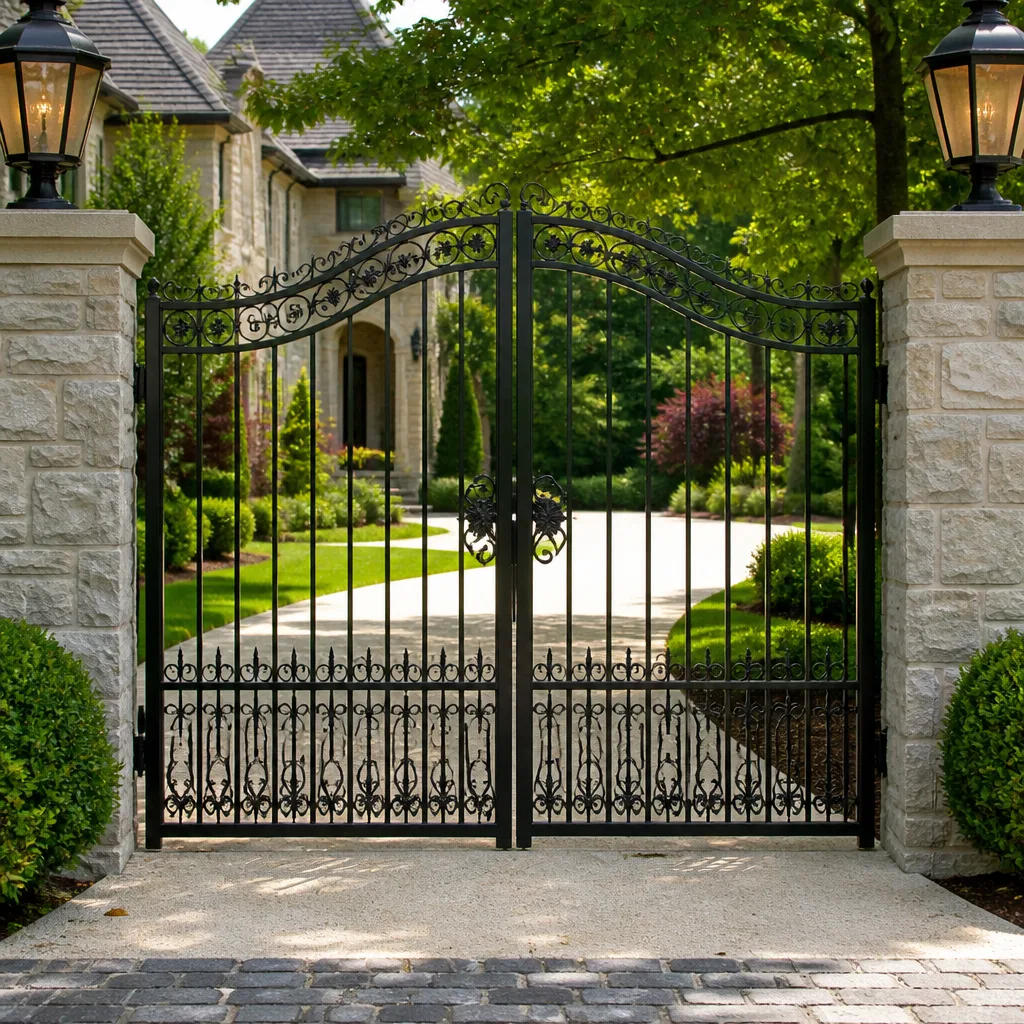 Wrought iron
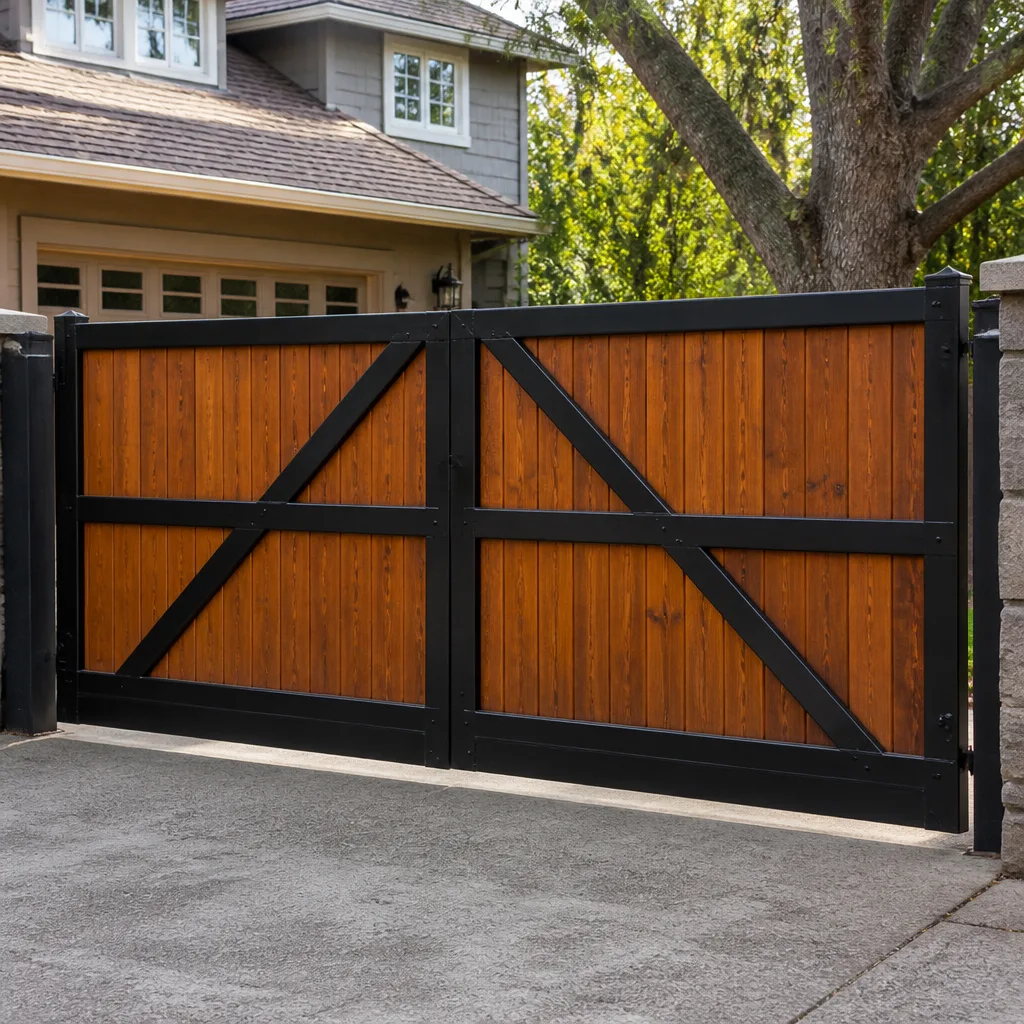 Wood & steel frame
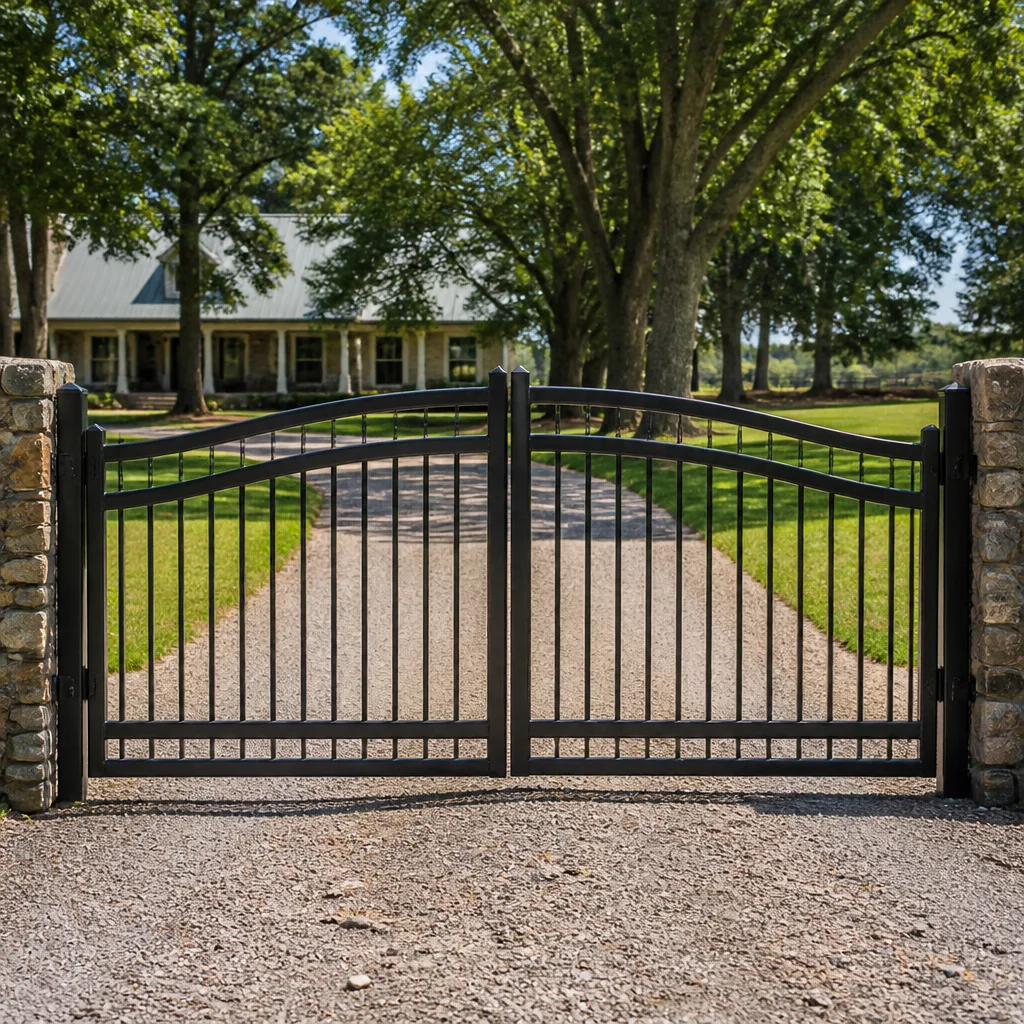 Farm & ranch
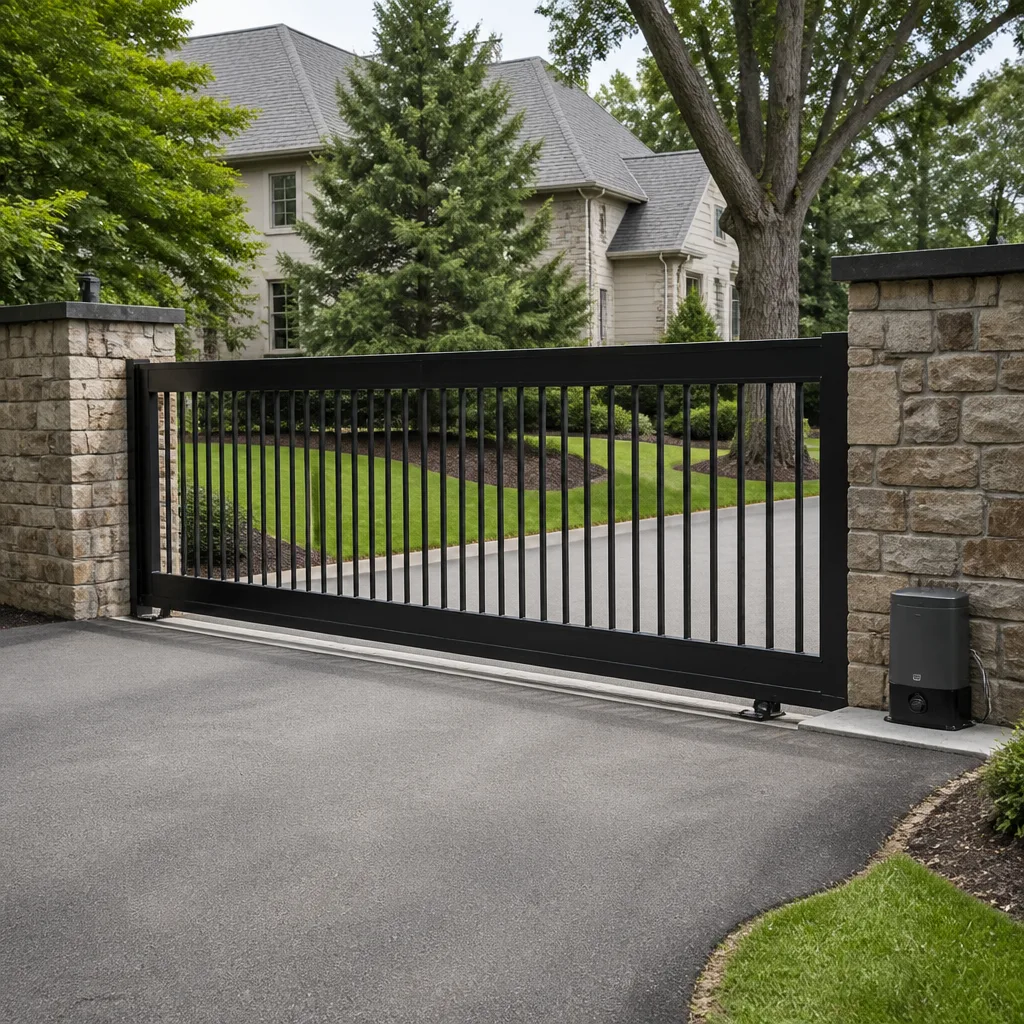 Sliding driveway gates
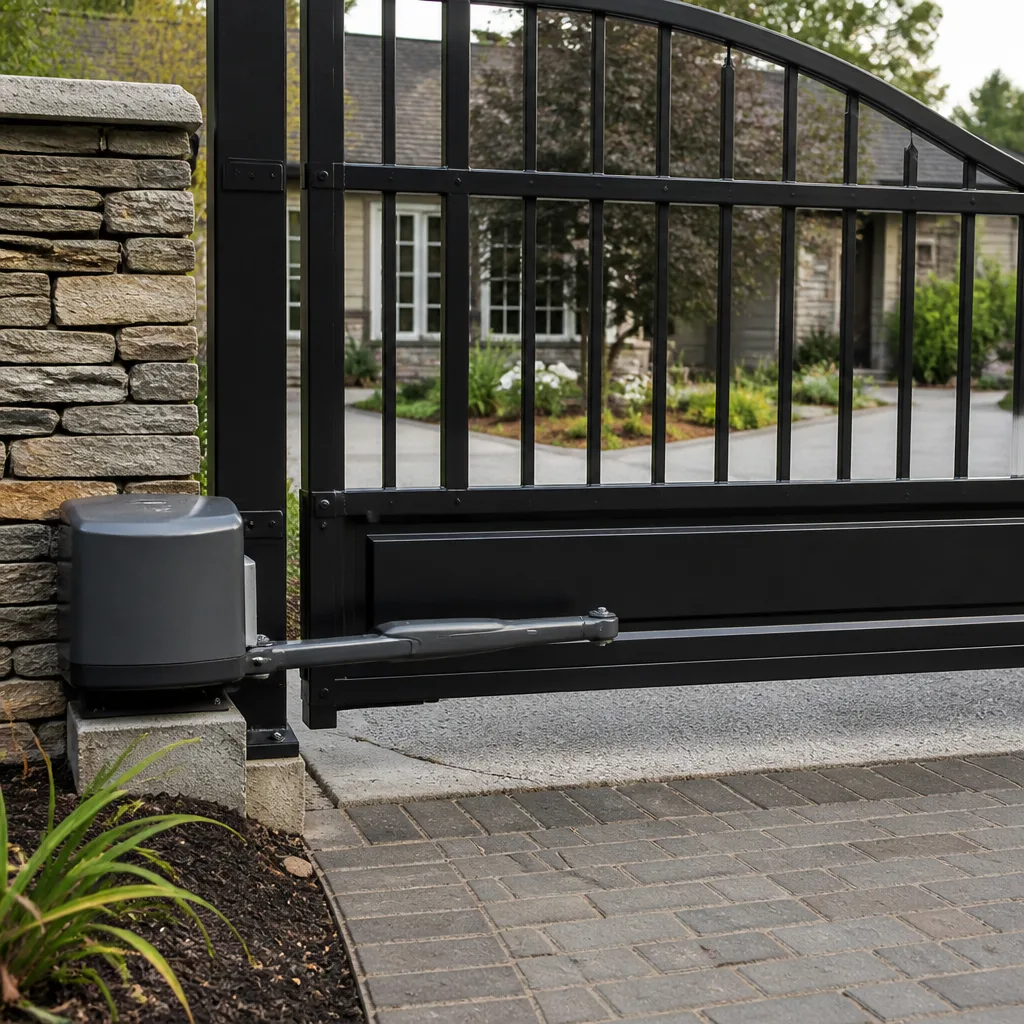 LiftMaster operators
Free on-site gate assessment - hinges, posts, and your LiftMaster or Nice gate operator checked before anything is quoted
The assessment is free and the quote is the invoice.
Get your free estimateChoosing the Right Gate Repair Brand: A Buyer’s Guide for Santa Rosa
The gate brand with the strongest national reputation can be the hardest one to service in Santa Rosa. If the nearest dealer who stocks its control board is 60 miles down the highway, a five-star online rating does nothing for a gate stuck open. Local parts availability is the specification that never shows up in a product review, and it matters more here than most buyers realize. This guide scores the major operator brands against the real conditions of Sonoma County: hillside grades, marine-layer humidity, a power grid that interrupts service during fire-season shutoffs, and the parts network that actually supplies Santa Rosa technicians. You’ll learn which systems are easy to keep alive, which ones quietly drain your wallet, and how to choose a gate repair brand you can live with for a decade.
Styles & brands we work with
- Wrought iron
- Wood & steel frame
- Farm & ranch
- Sliding driveway gates
- LiftMaster operators
Quick Answer
The right gate repair brand in Santa Rosa is the one that’s both well-built and locally serviceable. In our experience, that means prioritizing operators with parts available same-day or within a few days in Sonoma County (LiftMaster, Linear, FAAC, and BFT tend to clear this bar), matching the operator’s duty rating to your actual gate weight and driveway grade, and choosing open-protocol systems over locked-in proprietary ones so any competent technician can fix you later. A brand is only as good as the next replacement part.
Table of Contents
- Why Parts Availability Beats Brand Reputation in Santa Rosa
- The Santa Rosa Parts Availability Audit
- How Northern California Conditions Test Gate Operators
- Grades and Gate Weight: The Specs That Actually Matter
- Proprietary vs. Open-Protocol Control Systems
- Long-Term Cost of Ownership by Brand
- How to Choose a Repair Brand in Santa Rosa: Step by Step
- Common Mistakes to Avoid
- When to Call a Professional
- Frequently Asked Questions
- The Bottom Line
Why Parts Availability Beats Brand Reputation in Santa Rosa
A gate operator is a machine with wear parts, and it will need those parts. The question isn’t whether your control board, motor, or safety sensor dies, but how long you wait when it does. That wait is dictated almost entirely by the local supply chain, not by how well the brand markets itself.
Santa Rosa sits about an hour north of the Bay Area’s denser distribution hubs. Some operators have regional warehouses and dealer networks that put common parts within a same-day or next-day reach. Others are effectively special-order-only in Sonoma County: an authorized dealer might be an hour or more away, and factory orders can run into multi-week lead times for anything beyond a basic component. When your gate is the only vehicle access to your property, a three-week wait for a board is a real problem, not a minor inconvenience.
Here’s the practical takeaway:
- Reputable brand + strong local parts = a good long-term gate; repairs are fast and predictable.
- Reputable brand + weak local parts = a risky gate; great until it breaks, then slow and costly.
- Weak brand + strong local parts = workable, but the mechanics may fail more often.
- Weak brand + weak local parts = the worst of both; frequent failures and slow fixes.
This is why we lead with parts availability when we talk to Santa Rosa property owners. A brand that any trained technician can source parts for in a reasonable window beats a fancier system that strands you every time it needs attention. When you’re comparing quotes, ask each provider one blunt question: “If my control board fails, can you get a replacement from local stock, or does it ship from the factory?” The answer tells you more than the brochure.
For anyone choosing a repair provider rather than a brand, the same logic applies to the company itself: the best provider is the one fluent in the system you already own. That specialist approach is exactly what you get with gate repair in Santa Rosa, where the diagnosis starts with identifying your exact operator before anyone recommends a swap.
The Santa Rosa Parts Availability Audit
We can’t give you a live inventory sheet, but we can tell you how the nine major operator brands sort by how easily their parts move through the local supply chain. Here’s the practical ranking a Santa Rosa buyer should use when weighing a brand.
Usually easy to source locally or regionally
LiftMaster is the most widely distributed operator brand in the residential and light-commercial market. Its parts pipeline is deep, and most common failures (batteries, control boards, safety sensors, remotes) can be found through the regional distribution network without a factory order. Linear and FAAC sit in a similar, if slightly narrower, position: strong dealer support, common components available regionally, and a large enough installed base in the North Bay that a working technician has usually handled the system before.
Solid but with some special-order lag
BFT and Viking are capable, reliable systems, but their parts availability through Santa Rosa-area channels is thinner than LiftMaster’s. A common wear part might need to come from a regional distributor or be ordered, which adds days, not weeks. For a residential swing gate, that’s usually acceptable. For a busy commercial entry where every day of downtime hurts, it’s worth checking on lead time before you commit.
Sourced case by case
DoorKing, Ghost Controls, Elite, and Mighty Mule each have their own distribution story. DoorKing is a commercial mainstay with good support for access-control components but a narrower residential dealer footprint. Ghost Controls and Mighty Mule are popular DIY and budget operators where certain parts are easy to order but not always stocked locally. Elite’s parts depend heavily on which distributor you’re working with. None of these brands is a bad choice. They just require a direct question about lead times before you buy.
The one spec that never appears in a product review is the time between “part failed” and “part in hand.” Build that number into your decision. If you’re weighing a new system and want a straight read on your existing operator, an on-site check from electric gate repair can tell you what’s realistically serviceable before you commit to anything new.
How Northern California Conditions Test Gate Operators
Santa Rosa’s climate is mild, and that’s a mixed blessing for a gate. Nothing freezes, nothing bakes, and the operator gets a gentler ride than systems in harsher regions. But the conditions that do exist here put specific stress on an automatic gate, and the brand you choose handles some stressors better than others.
Marine-layer humidity and the morning fog
Through the summer and into fall, fog rolls in off the coast and settles over the valleys, and the marine layer keeps the air damp for part of most mornings. For a gate operator, that means condensation on metal housings, hinges that want lubrication more often than you’d expect, and electronics that live in a slightly humid environment. Enclosures that seal well and boards with conformal coating hold up better. The difference between a durable operator and a fussy one often comes down to how well the housing and control electronics handle persistent damp air.
What to watch: a gate that starts sluggish in the cooler mornings, a control board that occasionally acts up after a foggy stretch, or rust blooming at hinge pins and post mounts. Consistent lubrication on moving hardware is the single easiest thing you can do to keep humidity from eating your gate.
Power interruptions and fire-season shutoffs
This is the big one for Santa Rosa. Public Safety Power Shutoffs and ordinary outages are part of life in Sonoma County, and an electric gate without a viable backup plan becomes a manual gate, or a locked one, when the grid drops. Battery backup is where brands separate: a system with a well-supported battery and charge board recovers cleanly; a system with a weak or proprietary battery setup can leave you hand-cranking your gate for days.
When you compare operators, ask about backup power specifically. A residential swing or slide gate that has to work during an outage needs a battery that’s easy to source locally and a charging circuit that’s a known quantity to area technicians. The systems with the deepest local support tend to be the ones whose backup batteries you can actually get your hands on when you need one.
Grades and Gate Weight: The Specs That Actually Matter
Santa Rosa has hillside properties where driveways climb at grades of 8 to 15 percent, and the operator that works flawlessly on flat ground can be badly overmatched on a grade like that. Gate weight and driveway slope are the two specs that decide whether an operator fairs well or fails early, and they’re the two most commonly ignored.
How grade changes the load
A gate on a slope isn’t just moving its own weight; it’s moving that weight against gravity, and the operator has to deliver extra force to swing or slide it. Some operators are rated for inclined installations and some aren’t. A budget unit chosen for a flat driveway can be installed on a Santa Rosa grade and run, then wear out its motor or strip gears far sooner than its rated life. The operator has to be specified for the grade, not just the gate.
Gate weight and duty rating
Every operator has a maximum gate weight, and the honest ones publish a realistic number. Two rules of thumb:
- Match the operator’s weight rating to the gate’s actual weight, plus a margin. A gate at the very top of a unit’s range is being asked to do its hardest work every single day.
- Match the duty cycle to your daily open-close count. A two-car household is a light-duty use. A property manager running a dozen units through the gate on the same morning is a different proposition, and the operator needs to be built for that volume.
Heavy ornamental steel and solid wood gates that look beautiful on a hillside property can be hard on a small operator. If you’re planning a new system, this is where a real measurement of the gate and the grade saves you from buying twice. Existing gates get the same treatment: we measure before we recommend, because the brand only works if it’s matched to the actual load.
You can see how this plays out across a whole city in our Santa Rosa service information.
Proprietary vs. Open-Protocol Control Systems
Here’s a spec that has nothing to do with how well a gate works on day one and everything to do with how hard it is to fix in year three: whether the control system is proprietary or open.
What “proprietary” really means
Some operator brands build access-control ecosystems where the receiver, remotes, keypads, and sometimes the wiring and board connections only work with that brand’s accessories. At first that feels tidy. Later, it limits you. If a proprietary receiver fails and the replacement part is special-order, you’re stuck. If you want to add an intercom or loop detector that isn’t theirs, you may not be able to without swapping the whole control head.
What “open protocol” buys you
Open-protocol systems use industry-standard connections, so a competent technician can integrate common accessories, substitute equivalent parts, and keep your gate running without being locked into one brand’s box. This flexibility is what lets a repair-only focus actually save you money over time. When the system you already own uses standard components, we can fix the failing part instead of replacing a whole ecosystem.
The practical test when you’re comparing brands:
- Can a technician source the receiver and remotes from more than one distributor?
- Does the board accept standard safety edge and loop detector connections?
- If the manufacturer stopped making one accessory, could the gate still work?
- Is the wiring diagram accessible and the board documented?
If you can’t answer yes to most of these, you’re buying a closed system. Closed systems can be perfectly good, but know that a repair in year three will be more of a scavenger hunt than a swap.
Long-Term Cost of Ownership by Brand
The purchase price of a gate operator is the smallest number in the long run. The bigger number is the total cost of owning it: control board replacements, motor life, and the labor premium that comes with a system most local technicians haven’t worked on.
The three cost drivers
- Control board replacement frequency. Power surges, humidity, and simple component aging all take a toll. Brands with well-sealed boards and responsive surge protection tend to sit longer between failures. Systems with deep local support also tend to be cheaper to fix, because the part is available at a normal price rather than pulled from a factory queue.
- Motor longevity under daily cycles. A motor rated well above the gate’s actual weight and rated for a higher duty cycle will outlast one that’s running near its ceiling every day. On Santa Rosa’s inclined driveways, that margin matters more than on flat lots.
- The local labor familiarity premium. This is a real cost and it’s invisible on the spec sheet. A system that every Sonoma County technician has opened a hundred times gets diagnosed fast. A rare system means billable time spent figuring out the board before anyone turns a wrench. Multiply that by every service call over ten years and the difference adds up.
How to weigh it
Rank each brand you’re considering on these three filters, then cross-check against the parts-availability audit above. A somewhat less prestigious brand with strong local support and well-matched duty rating will usually cost less to own over a decade than a premium brand that’s hard to source. The right question isn’t “what’s the best brand” but “what’s the best brand I can actually keep running.”
For any property where the gate is the primary access point, that long-term math should also include a call-when-it-fails plan. Repair problems don’t wait for a convenient week, and being able to reach a technician who knows your system is itself a form of value.
How to Choose a Repair Brand in Santa Rosa: Step by Step
Choosing a gate repair company (as opposed to a specific hardware brand) follows a short, practical checklist. Here’s the sequence we’d recommend to any Santa Rosa buyer.
- Identify the exact operator on your gate. Note the brand, model number if visible, and any labeling on the control box. This single step determines everything that follows, and a specialist will start here rather than guessing.
- Confirm your gate’s weight and your driveway’s grade. These are the two load numbers that decide whether a repair is worth pursuing or a replacement is the smarter money.
- Ask the parts question directly. “If the control board needs replacing, what’s your realistic lead time in Santa Rosa?” Compare answers across providers. Fast, clear answers signal real local supply-chain knowledge.
- Check the full-system picture. Look for a provider that handles mechanical hardware, operator electronics, safety sensors, access control, and installation as one scope. A company that does all of it can diagnose across the whole gate instead of handing you off.
- Ask whether repairs or replacement is preferred. A repair-first provider will tell you honestly when a fix makes sense and when the math favors a new operator.
- Get a written, itemized estimate before work starts. The price should be agreed and quoted in writing before anyone begins, so there are no surprises when the invoice arrives.
This isn’t the same as choosing a generalist. A dedicated gate specialist has seen the systems that fail and knows which fixes hold. When you’re ready to act on that, the Gate Repair Santa Rosa team can help you interpret your operator and plan the next step.
Common Mistakes to Avoid
- Buying on brand reputation alone. A famous name with no local parts network in Sonoma County is a slow-repair gate, no matter how good it looks online.
- Choosing an operator that only meets the gate’s weight on paper. A gate at the top of the range is a gate that will strain its motor, especially on a Santa Rosa hillside driveway.
- Ignoring backup power. If your operator’s battery setup can’t survive a Public Safety Power Shutoff, the gate stops working exactly when you need it most.
- Assuming any handyman can service gate electronics. A generalist who moves from plumbing to gate wiring the same day is guessing at a board they don’t know. Gate repair is its own trade.
- Letting a proprietary system lock you in. If all your accessories only work with one brand’s receiver, your repair options shrink with every passing year.
- Failing to maintain hinge pins, hinges, and the gate itself. A well-tuned operator on a dry, well-lubed gate lasts longer than a premium operator on a binding one, and coastal fog makes regular lubrication matter.
- Skipping the written estimate. Agreeing to work on a verbal number is how people end up with an invoice they didn’t expect. Get the quote in writing before anything starts.
When to Call a Professional
Some gate problems are cosmetic and some are serious. Call a technician when your operator stops responding to commands, when the gate reverses on its own or refuses to close, when the motor strains or stalls partway, when a control board displays errors you can’t clear, or when the gate has come off its track. Also call when an electric gate fails right after a power outage or a wind event and shows no sign of coming back on its own.
These are situations where the right answer depends on knowing your exact operator, the gate’s weight, and the wiring. A trained technician can identify the system, confirm whether the failure is mechanical, electrical, or board-level, and make the call on repair versus replacement with the math in front of them.
One safety note that matters: gate operators include safety sensors and, often, high-voltage wiring to the control box. Never bypass a safety edge or sensor to make a gate close, and don’t reach into a live control enclosure. Those systems exist to prevent injury to people and property, and the wiring is a genuine hazard. Let a technician handle anything beyond a visual check.
Gate Repair Santa Rosa offers free estimates in Santa Rosa. Call (888) 298-3409. We answer 24/7. Fast dispatch from 7am to 7pm, Sunday through Friday.
Frequently Asked Questions
There isn’t one universal best brand. The best choice for a Santa Rosa property is the operator with strong local parts availability, a duty rating that matches the gate’s weight and driveway grade, and an open-enough control system that any trained technician can fix it. In our experience, LiftMaster, Linear, FAAC, and BFT tend to strike the best balance locally, while BFT and Viking are reliable but lean more on regional ordering.
Because any gate operator needs replacement parts eventually, and the difference between a same-day part and a three-week factory order is the difference between a brief repair and a month without vehicle access. A brand with a regional distribution path through the North Bay handles failures quickly. A brand with a thin local dealer network can strand you even if the unit itself is well-built.
We work on the system you already own across LiftMaster, FAAC, BFT, Linear, Viking, Ghost Controls, DoorKing, Elite, and Mighty Mule. Our approach is diagnostic first: we identify the exact operator and fix it rather than pushing a replacement or steering you to a preferred brand. That brand-neutral stance is what lets a repair stay a repair.
Repair usually wins when the mechanical gate is sound, the grade and weight are within the operator’s rating, and the failure is a single component like a control board, motor, or sensor. Replacement makes more sense when the operator has been chronically overmatched, parts are no longer available, or repeated failures have added up past the cost of a new unit. Call (888) 298-3409 for an exact quote; estimates are free and the price is set in writing before work begins.
Open-protocol systems use industry-standard connections, so a technician can source parts from multiple distributors and integrate common accessories without being locked into one brand’s ecosystem. Proprietary systems feel tidy at first but narrow your repair options over time, because a single failed accessory can force a special order or a whole control-head swap.
Yes. We handle the full gate lifecycle: mechanical and electric gate repair and new gate installation, so there’s no need to bring in a second company. For a new installation, the conversation starts with your grade, gate weight, power availability, and daily cycle count, because those numbers decide which system actually fits your property.
The Bottom Line
Choosing a gate brand for a Santa Rosa property is a site-specific decision, not a universal one. The operator that ranks best on paper can be the hardest to service locally if its parts pipeline doesn’t reach Sonoma County, and a well-supported brand matched to your gate’s weight and driveway grade will usually cost less to own over a decade than a premium system you can’t source. Prioritize local parts availability, open-protocol control systems, backup power for fire-season outages, and a repair-first provider who diagnoses before recommending anything. A gate specialist who knows the brand you own beats a famous brand every time the gate stops moving. Written by the team at Gate Repair Santa Rosa.
Ready to talk through your gate? Call (888) 298-3409 for a free estimate. We answer 24/7. Fast dispatch from 7am to 7pm, Sunday through Friday.
See the difference
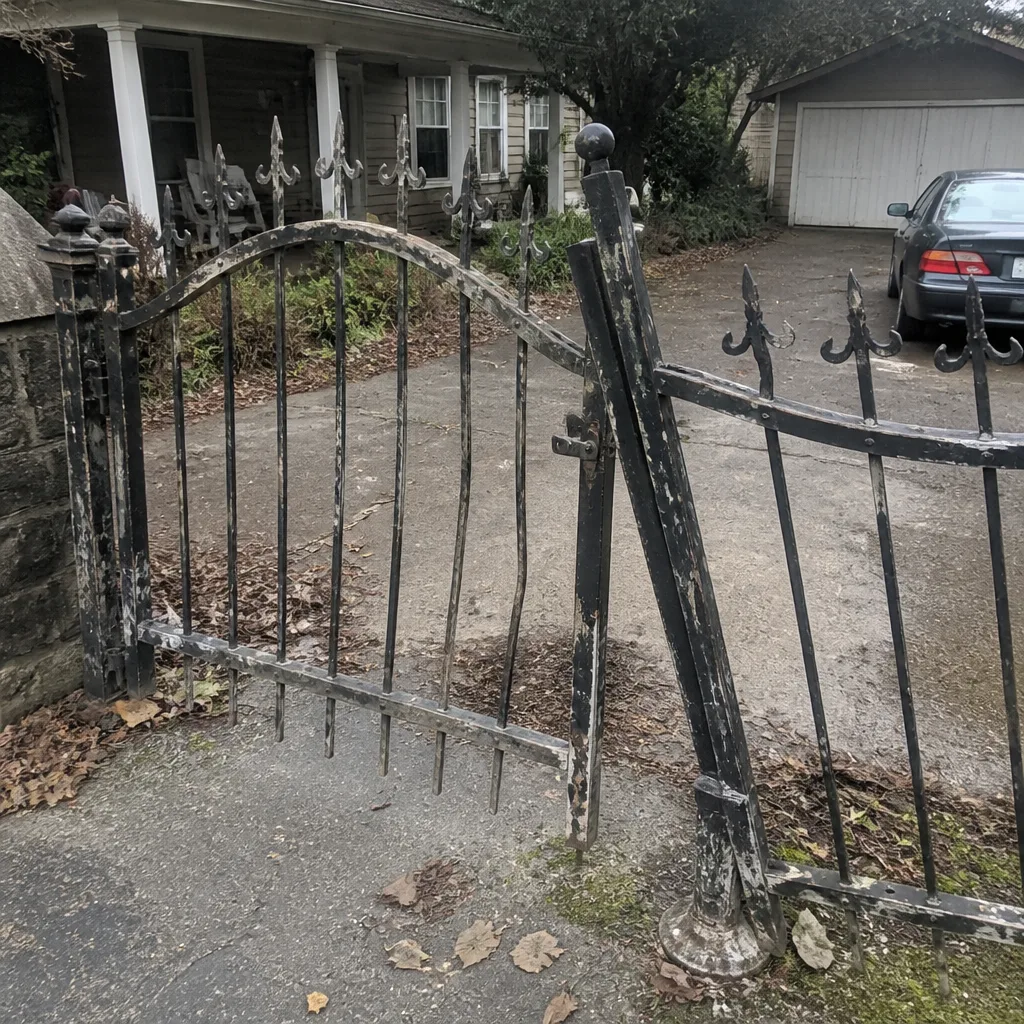 Before
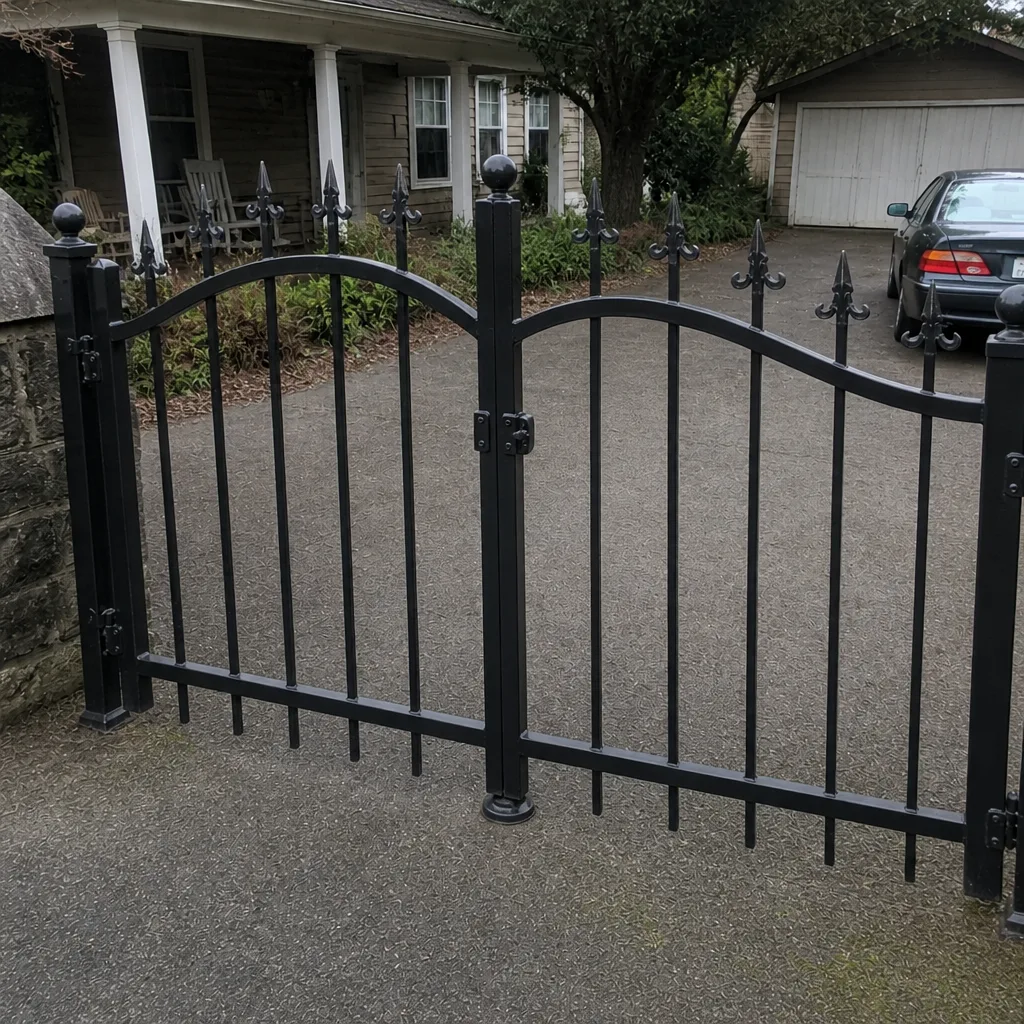 After
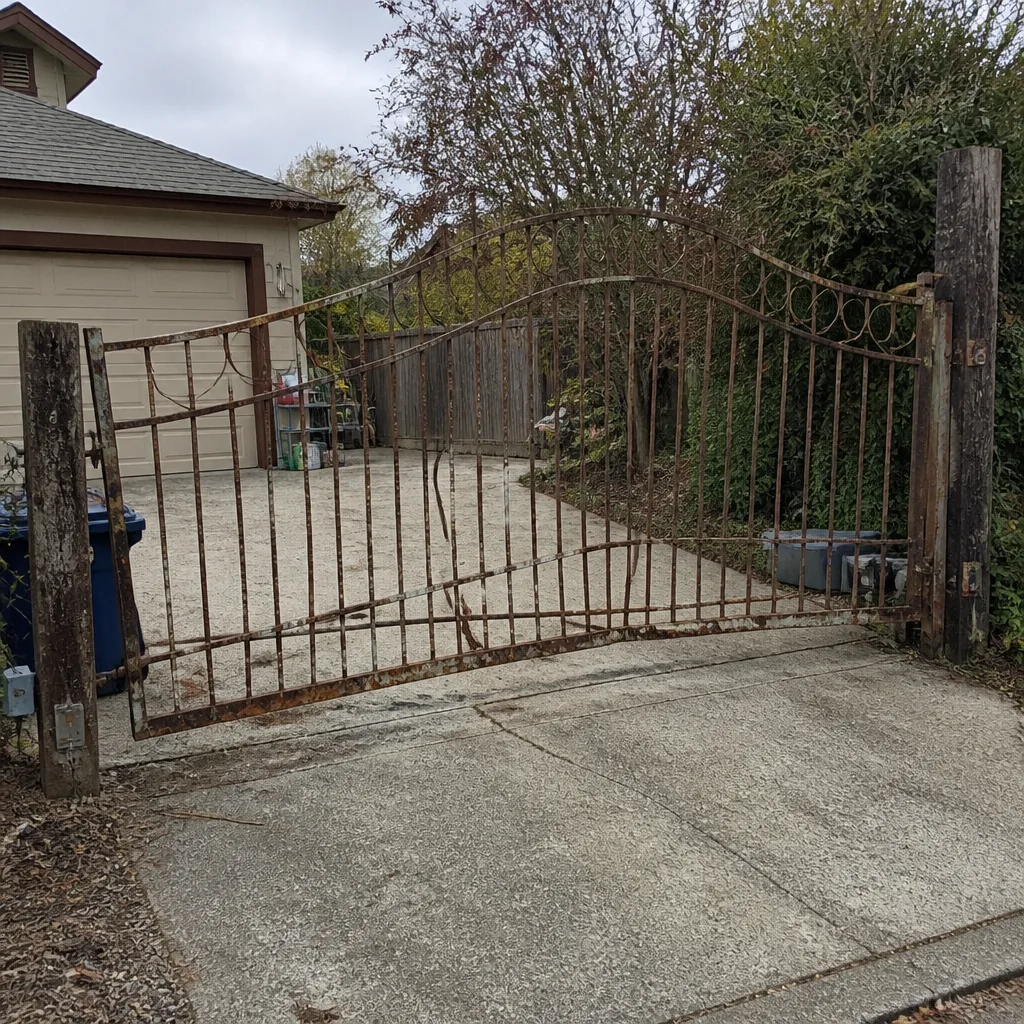 Before
 After
 Before
 After