
Last updated November 14, 2026
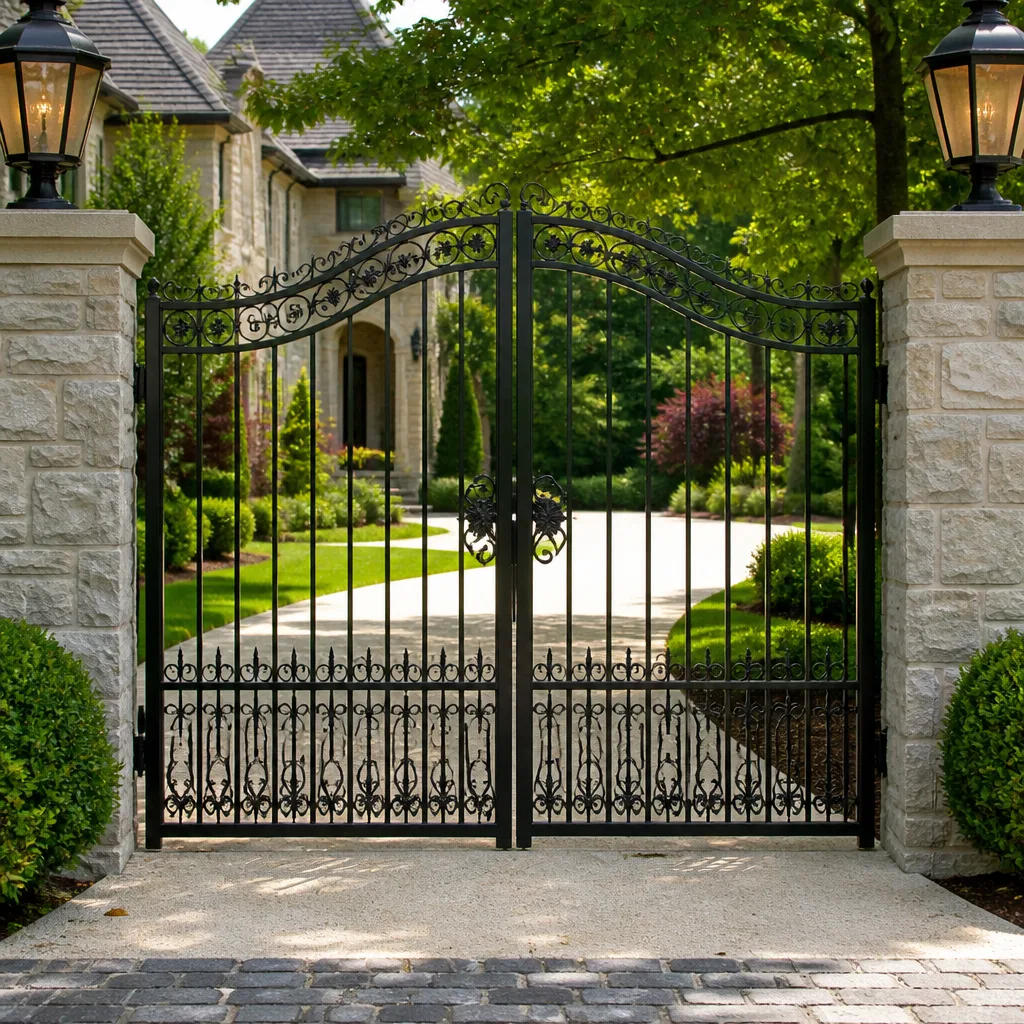 Wrought iron
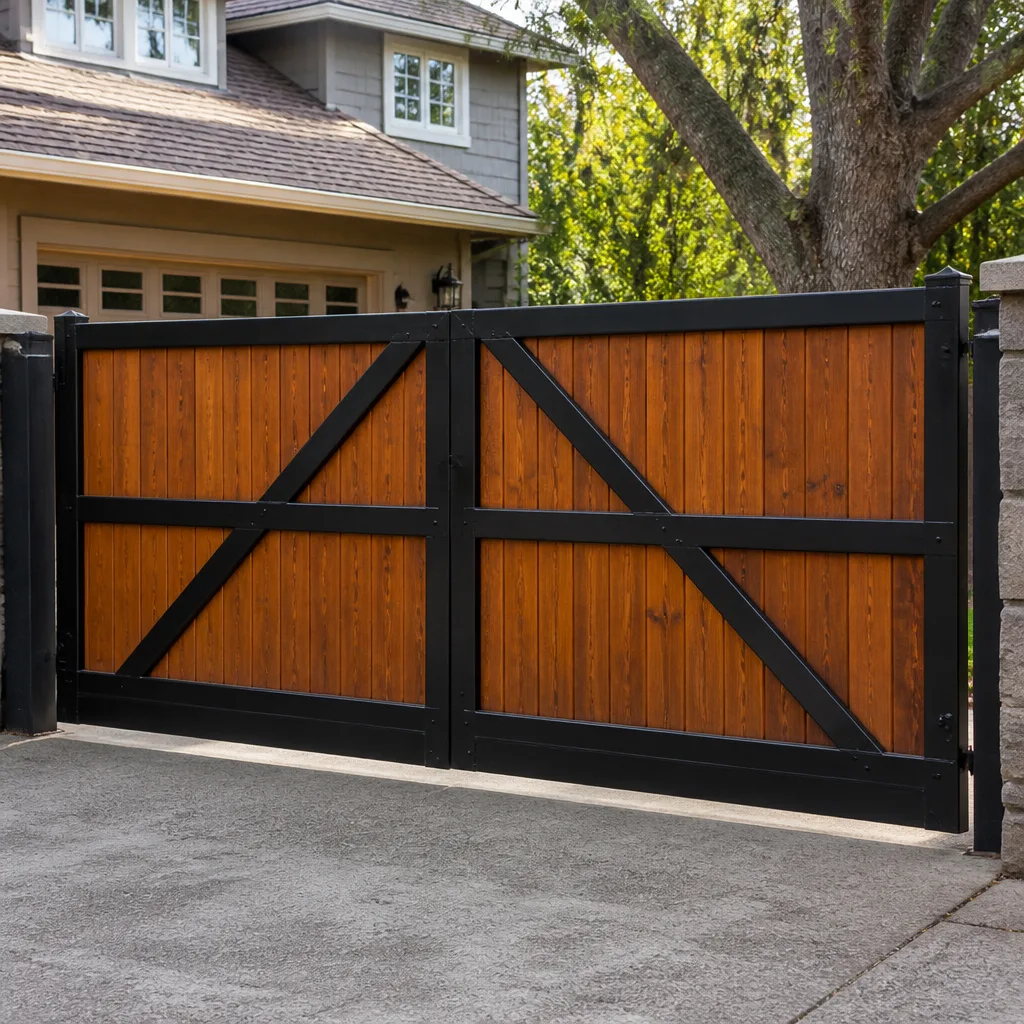 Wood & steel frame
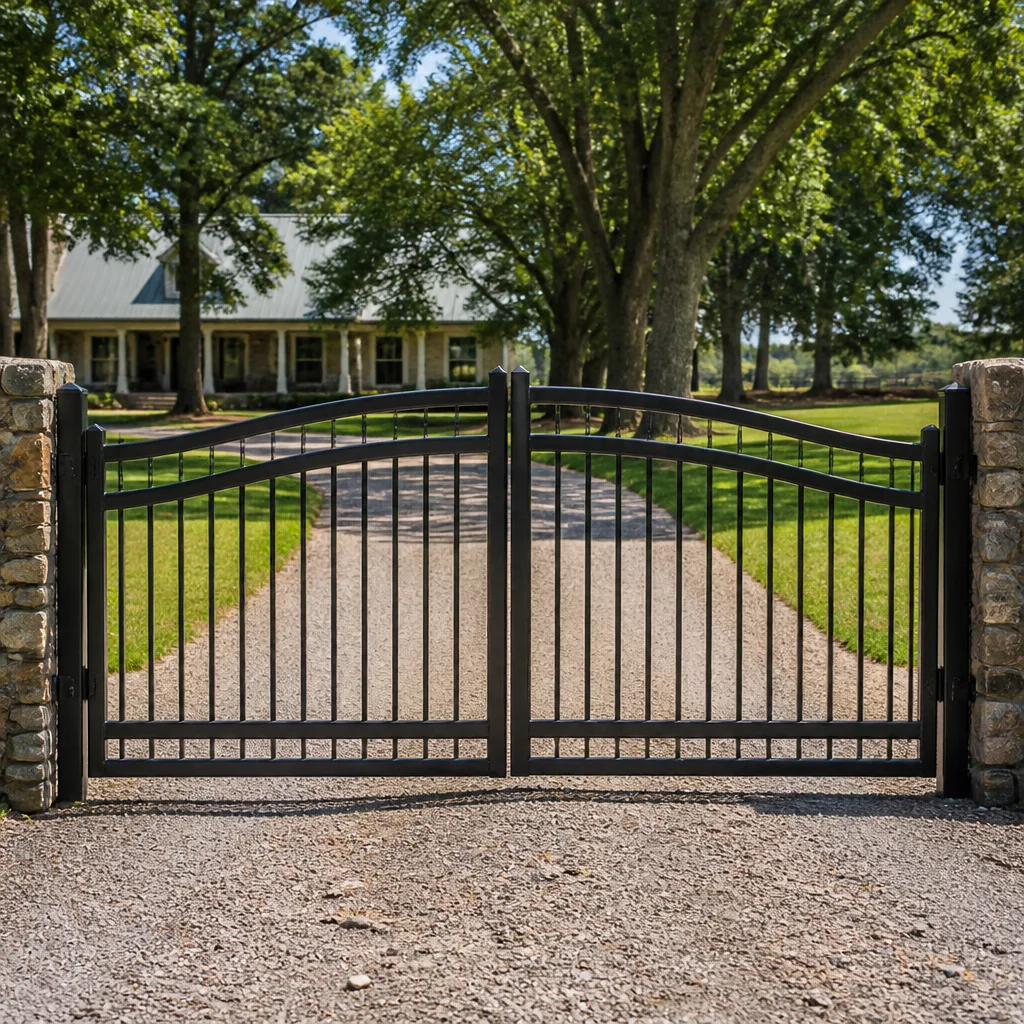 Farm & ranch
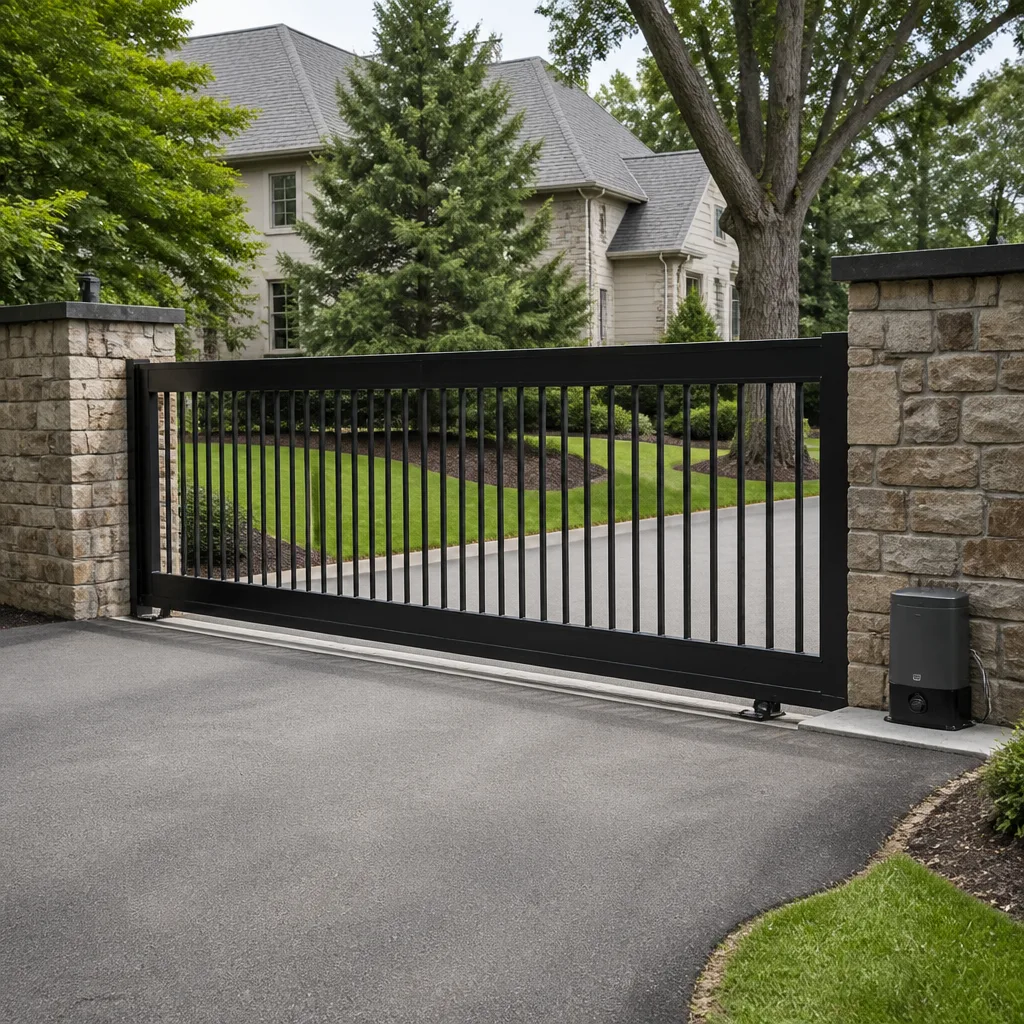 Sliding driveway gates
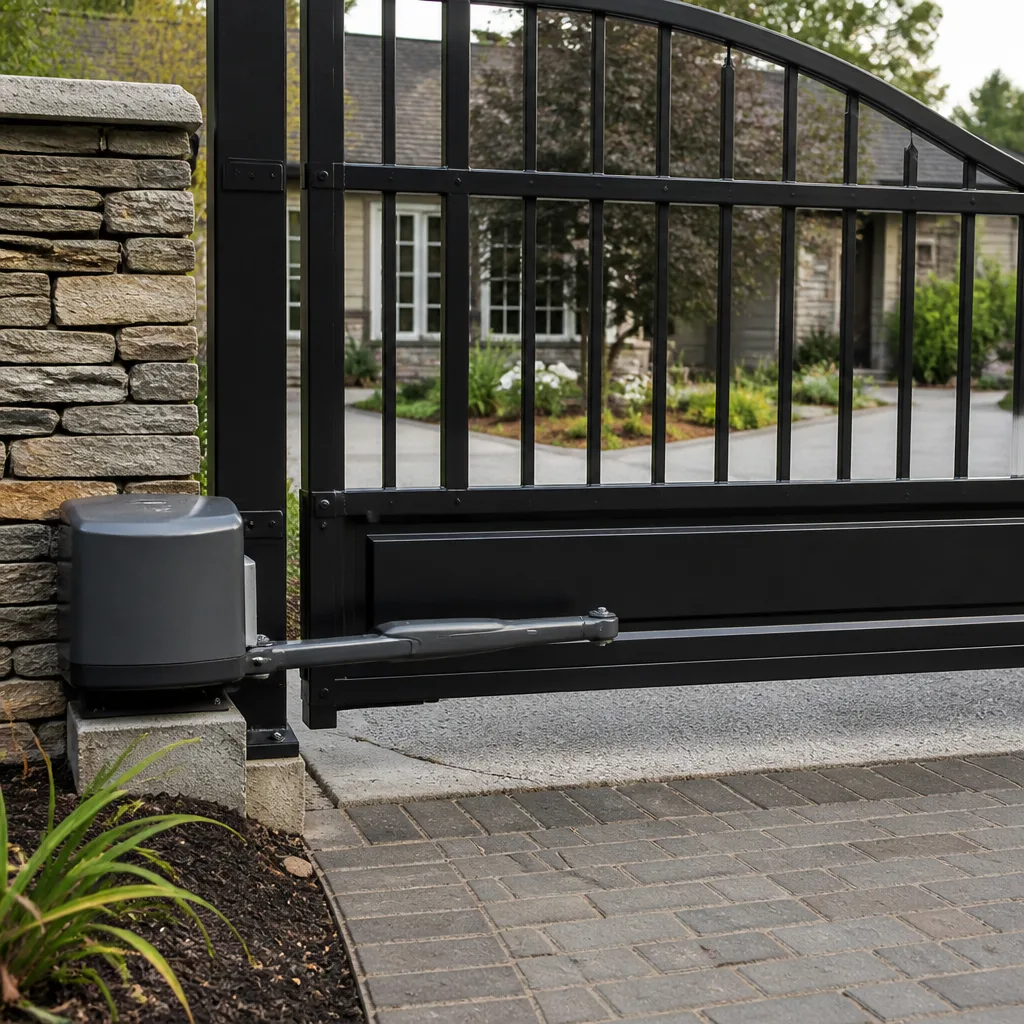 LiftMaster operators
Free on-site gate assessment - hinges, posts, and your LiftMaster or Nice gate operator checked before anything is quoted
The assessment is free and the quote is the invoice.
Get your free estimateThe Complete Guide to Gate Repair in Santa Rosa
Most people assume a gate that won’t open is the worst-case scenario. In our experience, it’s the gate that still opens but does it slowly, jerkily, or with a grinding noise that costs homeowners the most money. That’s because a slow gate is usually a drive system working against resistance, and resistance is what kills motors, control boards, and hinges over time. This guide covers how to identify the gate system you have, the five root causes behind most Santa Rosa gate failures, and how to document a problem so a specialist can diagnose it correctly on the first visit instead of the third.
Quick Answer
Most gate failures in Santa Rosa come from one of five system-level causes: a drive motor struggling against resistance, a misaligned or sagging hinge, a failed control board, a safety sensor or loop detector fault, or wiring damaged by soil movement or moisture. Identifying your gate’s drive type (hydraulic, electromechanical, or solar-hybrid) before calling anyone determines which repair path you’re on, and it’s the single most useful thing you can do to get an accurate diagnosis fast. A gate that runs slow or grinds is often closer to a full motor failure than a gate that’s stopped dead.
Styles & brands we work with
- Wrought iron
- Wood & steel frame
- Farm & ranch
- Sliding driveway gates
- LiftMaster operators
Table of Contents
- How to Identify Your Gate’s Drive System
- The Five Root Causes Behind Most Santa Rosa Gate Failures
- Why a Slow Gate Is More Urgent Than a Dead Gate
- Brand-Specific Failure Patterns in Sonoma County
- How to Document a Gate Problem in 10 Minutes
- Repair or Replace: How to Decide
- What a New Gate Installation Involves
- What Gate Repair Costs in Santa Rosa
How to Identify Your Gate’s Drive System
Before you call anyone, find out what kind of drive your gate uses. The drive type determines the repair path, the parts involved, and often whether the same technician can handle the job at all. Hydraulic, electromechanical, and solar-hybrid systems each fail in different ways and need different diagnostic tools.
Here’s how to tell them apart:
- Look for a fluid reservoir or hydraulic arm. A hydraulic operator typically has a smooth, thick arm with a visible fluid cylinder or a small reservoir cap. If you see dampness or an oily film around the cylinder, that’s a hydraulic system losing pressure or leaking fluid.
- Check for a gearbox and exposed motor housing. Electromechanical operators have a motor connected to a gearbox, often with an exposed arm or track. These are the most common residential operators and tend to fail with grinding noises, slipping gears, or a motor that hums without moving the gate.
- Look for a solar panel and battery box. A solar-hybrid system has a panel mounted nearby and a battery enclosure. These fail most often from battery degradation, charge controller faults, or wiring that’s worked loose from temperature swings.
- Note the voltage and control setup. Residential gates typically run on low-voltage DC, while commercial-grade systems like DoorKing often use higher-voltage AC with a dedicated control board and access hardware. Snap a photo of the operator’s label and control box before you call.
In Santa Rosa, gates on properties with significant slope or long driveways are more likely to have hydraulic operators because they handle heavier loads. Flatter lots more often use electromechanical systems. Knowing which you have saves diagnostic time and gets you an accurate quote by phone. Our electric gate repair team works on all three drive types and can usually identify the system from a photo and a description.
The Five Root Causes Behind Most Santa Rosa Gate Failures
Ranked by how often we see them, here are the five system-level causes behind the majority of gate failures in Santa Rosa and the surrounding Sonoma County area:
- Drive motor working against mechanical resistance. A hinge that’s out of alignment, a sagging post, or a track that’s shifted forces the motor to work harder than it was designed to. The motor usually fails before the hinge does, so the real problem gets missed if only the motor is replaced.
- Control board failure from power surges or moisture. Santa Rosa’s wet winters and dry summers create repeated expansion and contraction around control enclosures. Moisture intrusion and voltage spikes are the two most common killers of control boards.
- Safety sensor and loop detector faults. Loops buried in the driveway crack or shift with soil movement, and safety beams get knocked out of alignment. Both cause a gate to reverse, refuse to close, or open and then immediately reopen.
- Wiring damage from soil movement and moisture. Underground wiring runs to the operator, the loop, and any intercom or keypad. When the soil shifts, connections loosen or wires chafe, causing intermittent failures that are hard to reproduce.
- Battery and solar component degradation. Solar-hybrid systems, common on rural Sonoma County properties, lose capacity over time. A weak battery makes the gate sluggish and eventually stops it entirely, but the battery is rarely the first thing a homeowner suspects.
The reason this list matters is that the first four causes produce nearly identical symptoms: a gate that stutters, reverses, or stops. A technician who replaces the motor without checking the hinge alignment will be back at the same gate in a few months. Diagnose first, replace only when necessary, and the repeat visit disappears. If you’re trying to figure out which of these is behind your gate’s behavior, our gate repair team can walk you through the symptoms and narrow it down before anyone comes out.
Why a Slow Gate Is More Urgent Than a Dead Gate
A gate that has stopped dead is inconvenient, but it’s not getting worse. A gate that still opens but runs slow, jerks, or grinds is actively damaging itself every cycle. That distinction matters more than most homeowners realize.
When a gate runs slowly, it means the motor is drawing more current than it should to overcome resistance. That extra current stresses the control board, the motor windings, and the battery in a solar system. Every cycle wears those components a little further. Left alone, a slow gate usually becomes a dead gate within weeks or months, and the eventual repair is more expensive because more parts have failed by then.
Here’s what to watch for:
- Inconsistent speed – the gate starts fast and slows partway through the cycle.
- Stuttering or jerking at the same point in every cycle, which usually points to a mechanical hang-up.
- A grinding or humming sound when the gate isn’t moving, which can mean the motor is running but the gearbox has stripped.
- The gate reversing partway through opening or closing.
- A visible sag at the far end of the gate, which changes the load on the hinges and the operator.
In Santa Rosa, gates on properties with older posts or clay-heavy soil tend to develop these symptoms seasonally. The winter rain softens the ground, posts shift slightly, and the gate starts dragging. By summer the ground dries, the post moves again, and the problem either worsens or changes. A slow gate in January might be a different problem by July, so it’s worth having it looked at before it becomes a full motor failure. One call covers the whole gate, from the operator board down to the hinge pin. Related: Gate Repair Santa Rosa.
Brand-Specific Failure Patterns in Sonoma County
We work on the brand you already own, and we’ve learned that most operators have predictable failure patterns. Knowing what typically fails on your brand can save you a diagnostic step.
LiftMaster
LiftMaster operators used on residential gates in Sonoma County tend to hold up well mechanically, but the control boards are sensitive to power fluctuations. A gate that works fine most of the time and randomly reverses or refuses to close often has a board issue. LiftMaster’s safety sensor systems are usually reliable, but a misaligned sensor after a post shift will cause the same symptoms, so both need checking.
Viking
Viking operators are common on gates with lighter arms and are generally straightforward to repair. The most frequent failure we see is in the limit switch, which tells the motor when to stop. When it fails, the gate overruns or stalls at the end of its cycle. Viking’s control boards are well-built, so a board replacement is rarely the answer unless the gate has taken a power surge.
Ghost Controls
Ghost Controls is a popular residential brand, and its solar-hybrid systems are common on rural properties around Santa Rosa and the surrounding hills. The failure pattern here is battery and charge controller related. A gate that slows progressively over a few weeks is usually losing battery capacity, and the operator is trying to run on a marginal charge. The rest of the system is often fine.
DoorKing
DoorKing is a commercial-grade brand, common on gated communities, apartment complexes, and controlled-access properties. These systems are robust but they’re integrated with loop detectors, intercoms, keypads, and sometimes telephone entry systems. When something fails, the fault is often in the access-control wiring rather than the operator itself. Diagnosing DoorKing systems requires checking the whole access chain, not just the motor.
We also work on Linear, FAAC, BFT, Elite, and Mighty Mule systems. Our technicians have up to 14 years of experience across all nine of these brands, and we don’t push replacements or prefer one brand over another. If you’re in Santa Rosa and your gate isn’t working, we can tell you what’s likely failing based on the brand and the symptom, then confirm it on-site.
How to Document a Gate Problem in 10 Minutes
The faster a specialist can identify your system, the more accurate the first quote will be. Here’s how to document a gate problem so any technician can hit the ground running. Ten minutes of preparation makes the phone call shorter and the estimate tighter.
- Photograph the operator label. The brand, model, and voltage are usually on a plate or sticker on the operator housing. Get a clear, close shot with a flashlight if the label is faded.
- Photograph the control box and its wiring. Open the box (only if the power is off at the breaker) and photograph the board and the terminals. Never touch wiring inside the box; just photograph it. This helps the technician spot a burnt relay, a loose connection, or a board fault before arriving.
- Record a video of the failure. Run the gate through a full open and close cycle and film it. Note what it does before it stops or reverses, whether the motor hums, and how far it travels before the fault appears. This is the single most useful thing you can do.
- Note the drive type. Hydraulic, electromechanical, or solar. Note if the operator has a visible arm, a gearbox, or a solar panel and battery box.
- List the symptoms in order. Note when the failure started, whether it’s intermittent or constant, whether weather affects it, and whether anything changed recently (new landscaping, soil work, a power outage, a heavy storm).
- Note the gate type and weight. Sliding or swinging, and approximately how heavy the gate is. For sliding gates, note whether it rides on a track or cantilevers.
- Note the access hardware. Keypad, intercom, remote, loop detector, or all four. This matters for DoorKing and any commercial-grade system.
If you’re in Santa Rosa and the gate is attached to a shared driveway or a multi-unit property, note that too. Commercial-grade systems with access control need a diagnostic chain that starts at the access point, not the motor. Send us the photos and video, and we can often tell you what’s likely failing before we arrive.
Repair or Replace: How to Decide
Most gate failures are repairable, and replacement is rarely the first answer. But there are situations where repair stops making sense, and it’s worth knowing which ones before you decide.
Repair is usually the right call when:
- The operator is intact and the fault is in a single component (hinge, sensor, limit switch, battery, wiring).
- The gate itself is structurally sound and the posts aren’t shifting.
- The failure has a clear cause, like a power surge, a seasonal ground shift, or a battery that’s reached the end of its life.
- The system is a known brand we work on (LiftMaster, FAAC, BFT, Linear, Viking, Ghost Controls, DoorKing, Elite, or Mighty Mule) and replacement parts are available.
Replacement may make more sense when:
- The operator has failed repeatedly for the same underlying cause and the repair isn’t addressing it.
- The gate hardware is fatigued, the posts are unstable, or the gate itself is past its useful life.
- The control board and motor have both failed, and the cost of repairing both approaches the cost of a new operator.
- The system is obsolete and parts are no longer available.
Our approach is diagnose first, replace only when necessary. We won’t recommend replacement because it’s easier; we recommend it when repair isn’t cost-effective. For a Santa Rosa gate that’s failing repeatedly, the answer is usually to find the system-level cause the previous repair missed. If you want an honest assessment of repair versus replace, our Santa Rosa team will give you one.
What a New Gate Installation Involves
A new gate installation is a measured, scheduled job, not a same-day repair. It starts with an on-site estimate where we assess the property, the grade, the driveway, and the access requirements, and it ends with a commissioned system that’s been tested through a full cycle on every access point.
Here’s what a typical installation involves:
- Site assessment and measure. We check the driveway width, the grade, the soil, and the space for the operator. We note where the power will run and where the access hardware will be installed.
- System selection. The gate type (sliding or swinging) and the drive type (hydraulic, electromechanical, or solar-hybrid) are chosen based on the property, the gate weight, and how the gate will be used. For rural properties with no nearby power, a solar system is often the practical choice.
- Power run and safety edges. The power run is installed to the operator, and the safety edges and sensors are placed so the gate stops or reverses if something is in its path. This is required for a safe automated gate and should never be skipped.
- Post and footing installation. Posts are set to proper footing depth for the gate type and load. For sliding gates, the track or cantilever setup is leveled and secured.
- Operator and access hardware installation. The operator, control board, keypad, intercom, loop detector, and any remote receivers are installed and wired.
- Testing and commissioning. The gate is run through multiple full cycles, with the access hardware tested at every point. Safety sensors and reversing behavior are checked before the job is signed off.
We handle the power run and the safety edges as part of the installation, so you don’t need a second contractor. If you’re planning a gate on a new-construction or remodel property in Santa Rosa, we can advise on the operator system and the access layout before the driveway is finished. Get a free measure and a written price before any work is scheduled.
What Gate Repair Costs in Santa Rosa
Gate repair costs in Santa Rosa typically range from about $150 for a simple hinge or sensor adjustment to $900 or more for a control board or drive motor replacement. The written estimate sets the final price, and it’s quoted and agreed before any work starts.
Here’s a rough line-item view of what different repairs involve:
| Repair type | Typical estimated range | What’s involved |
|---|---|---|
| Hinge or roller adjustment | $150 – $300 | Realigning or replacing hinges, rollers, or track components |
| Safety sensor or loop detector repair | $200 – $450 | Realigning sensors, repairing or replacing loop wiring |
| Limit switch or wiring repair | $200 – $400 | Diagnosing the control chain and repairing the fault |
| Battery or solar component replacement | $250 – $550 | Replacing the battery or charge controller, testing the solar system |
| Control board replacement | $400 – $800 | Replacing the board, testing the full access chain |
| Drive motor replacement | $500 – $900+ | Replacing the motor or operator, testing through full cycles |
These ranges are typical estimates, not exact prices. A commercial-grade DoorKing system integrated with an intercom and multiple access points will land at the higher end. A residential Ghost Controls system with a single remote and a failed battery will land at the lower end. The written estimate you get after the on-site diagnosis is the price you pay, and it’s agreed before any work begins.
Installation costs are separate and depend on the gate type, the drive system, and the power run. A new gate installation is measured, ordered, and scheduled, so it’s not a same-day job. Call (888) 298-3409 for a free estimate and we’ll give you a written price for either repair or installation. We answer 24/7, with fast dispatch from 7am to 7pm, Sunday through Friday.
Common Mistakes to Avoid
- Replacing the motor before diagnosing the resistance. If the hinge, roller, or post is misaligned, the new motor will fail the same way the old one did. The resistance is the root cause, not the motor.
- Ignoring a slow gate until it stops. A slow gate is actively damaging the control board and the motor. By the time it stops, you’re usually looking at more than one failed component.
- Assuming all gate operators are interchangeable. Hydraulic, electromechanical, and solar-hybrid systems fail differently and need different parts. A technician who doesn’t check the drive type before ordering parts is guessing.
- Letting a generalist diagnose a brand-specific control issue. DoorKing and Ghost Controls, for example, have very different failure patterns. A technician who works on gates specifically knows the brand patterns; a general handyman is starting from scratch on every call.
- Skipping the safety sensor check. A gate that reverses or refuses to close is often a safety sensor or loop fault, not a motor fault. Replacing the motor won’t fix a sensor misalignment.
- Not documenting the problem before calling. A photo of the operator label and a video of the failure can cut the diagnostic time in half. Without it, the technician arrives blind and the first visit is often a fact-finding trip.
- Running underground wiring through soil that shifts. In Santa Rosa, clay-heavy soil expands and contracts with the seasons, which is why underground wiring runs need to be in conduit and checked for chafing. This is a common cause of intermittent gate failures that resist diagnosis.
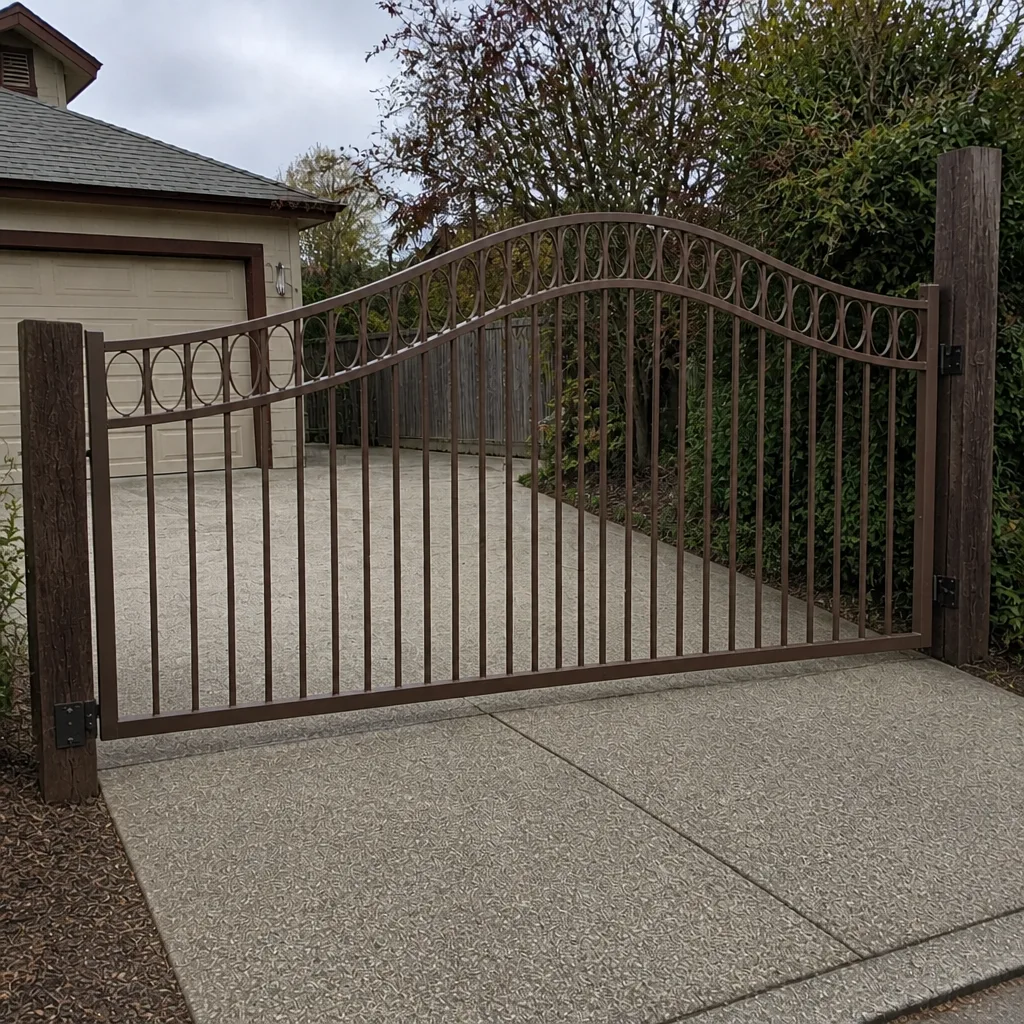
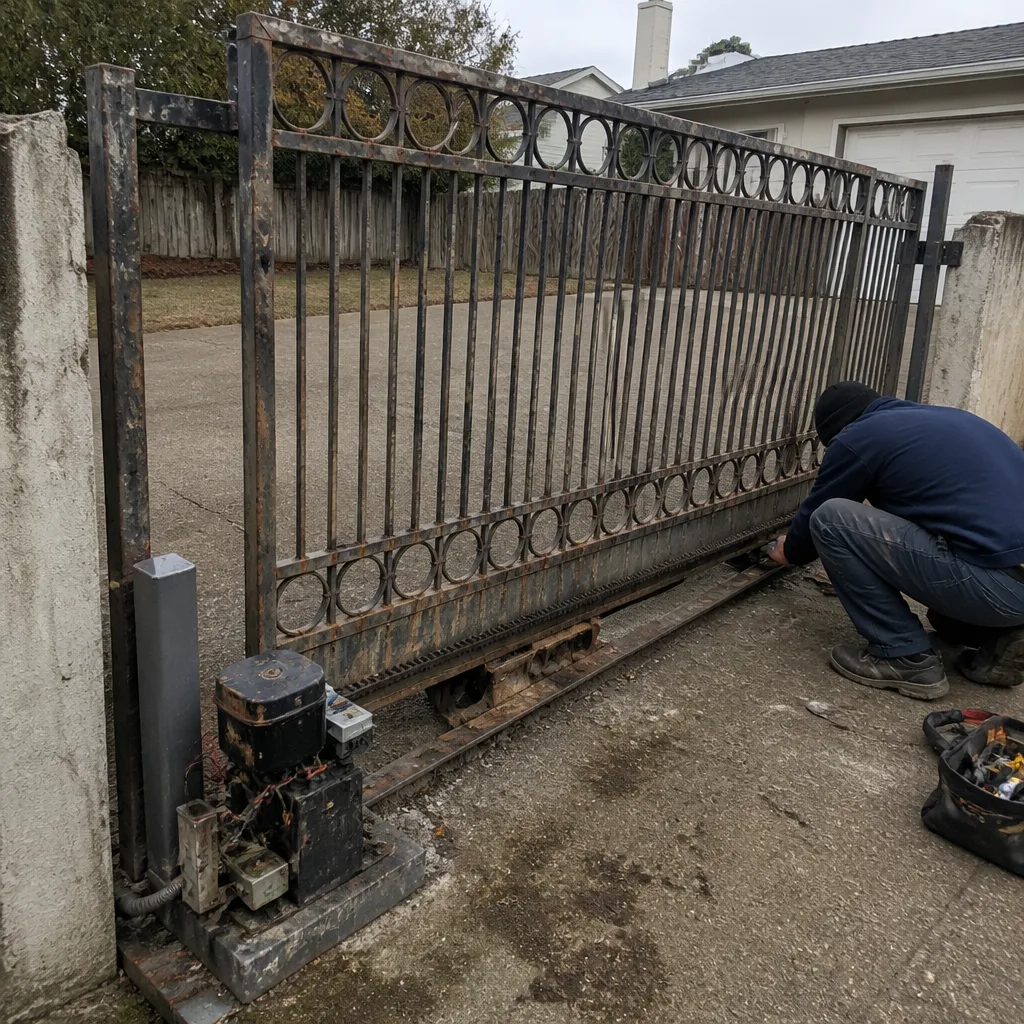
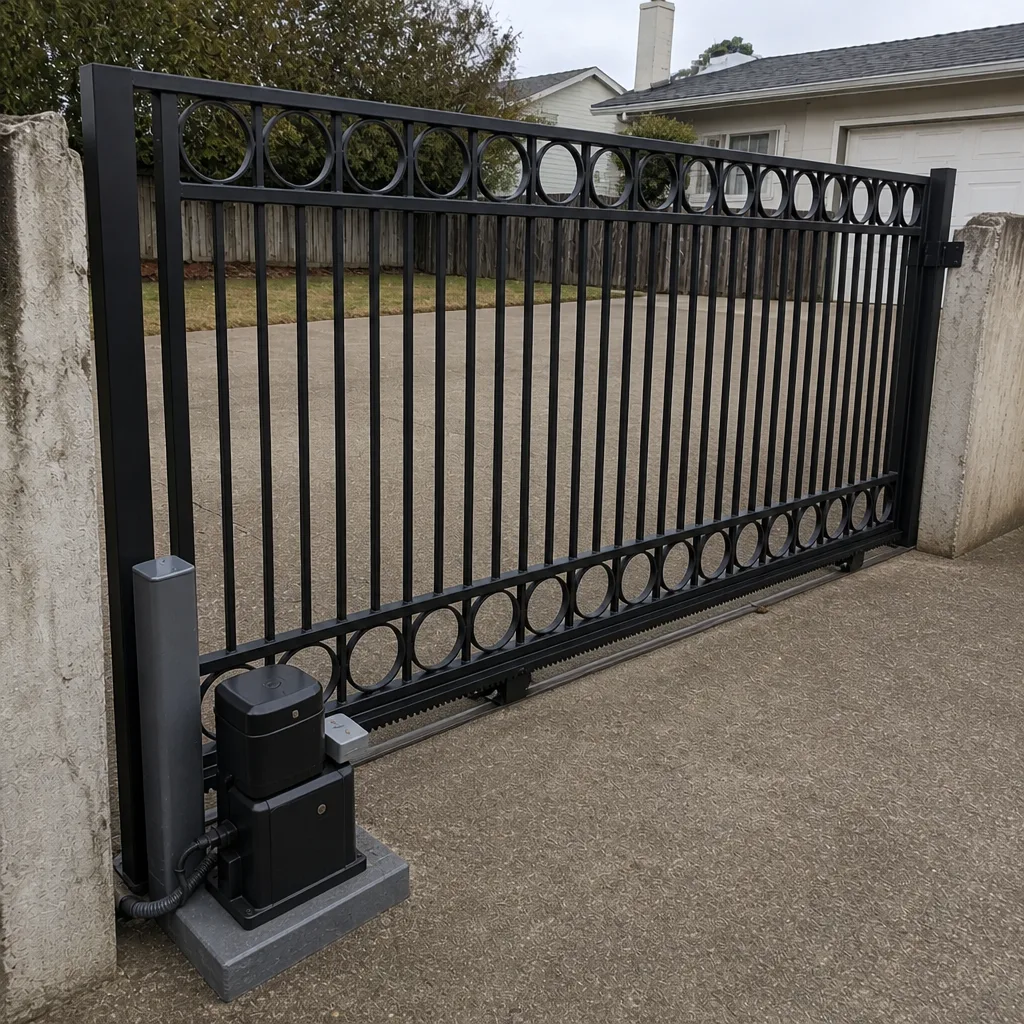
See the difference
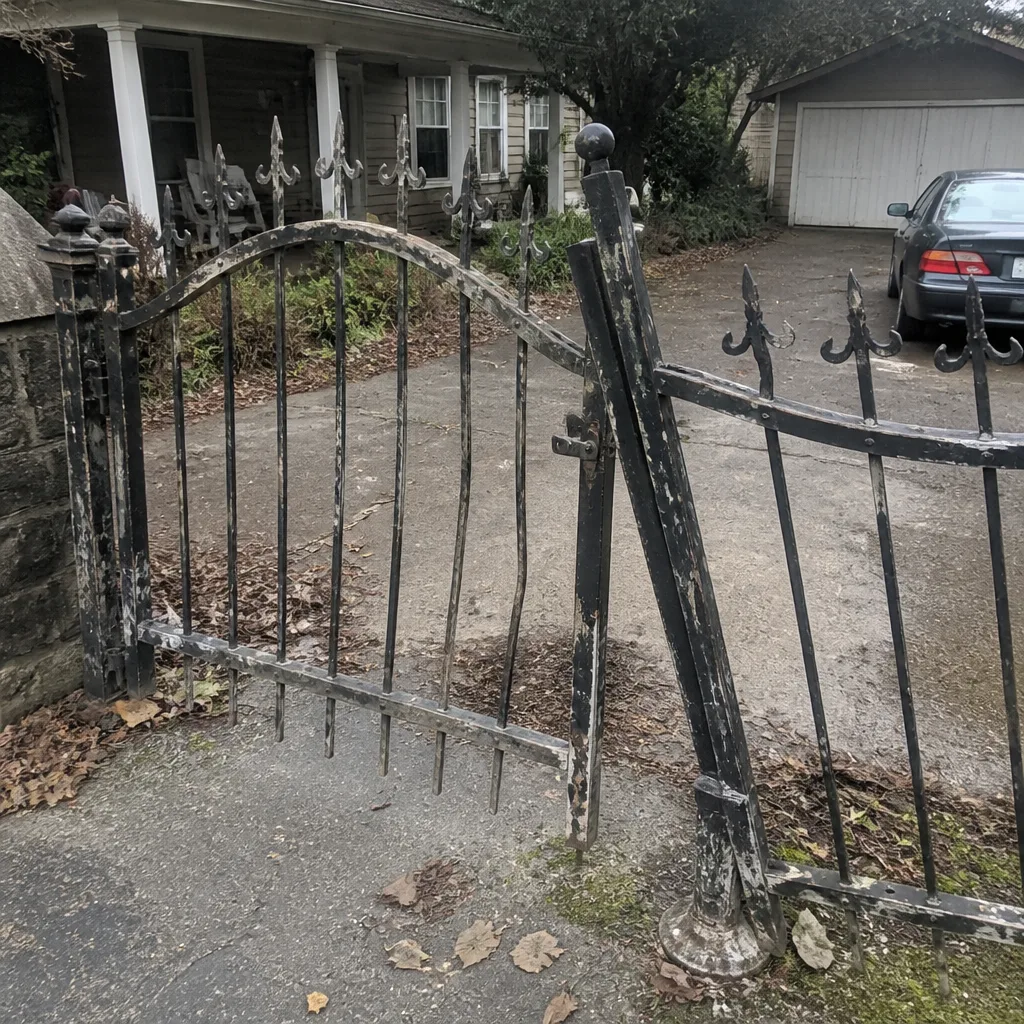 Before
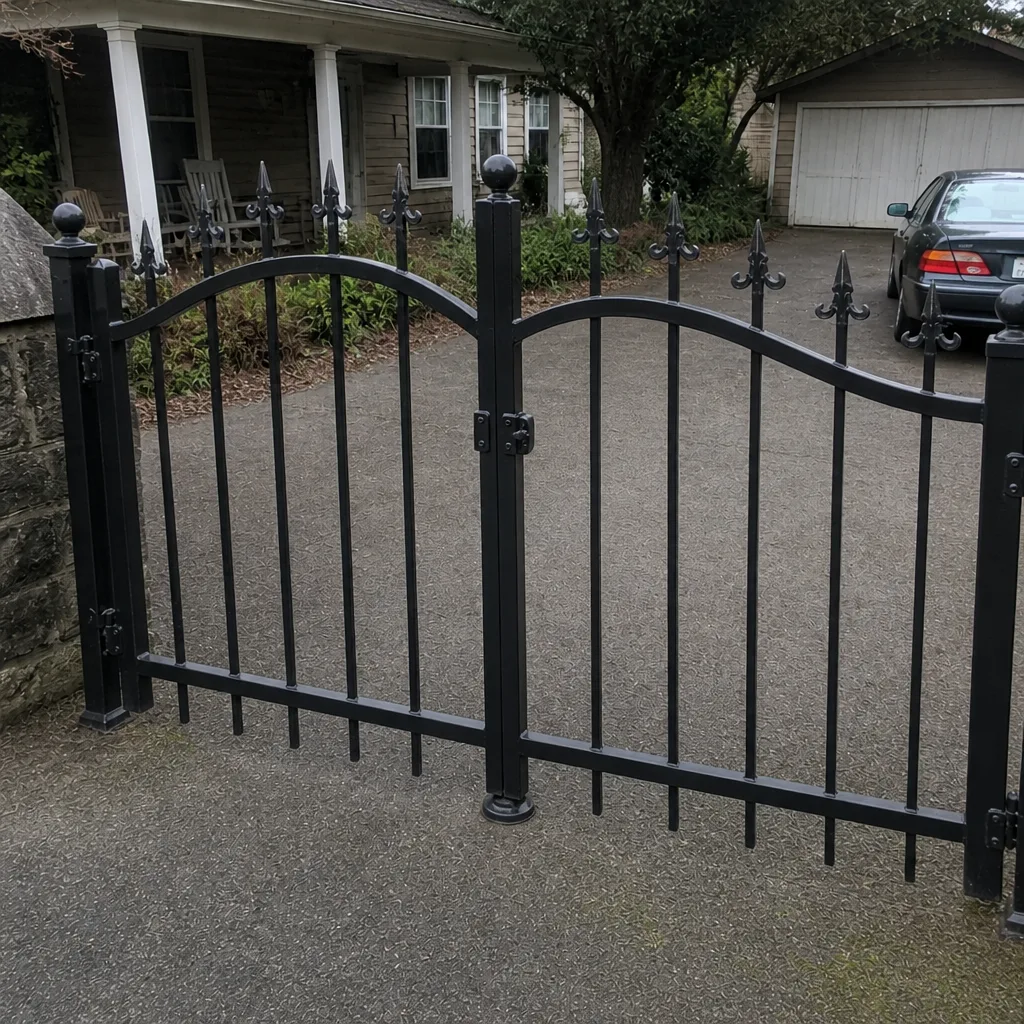 After
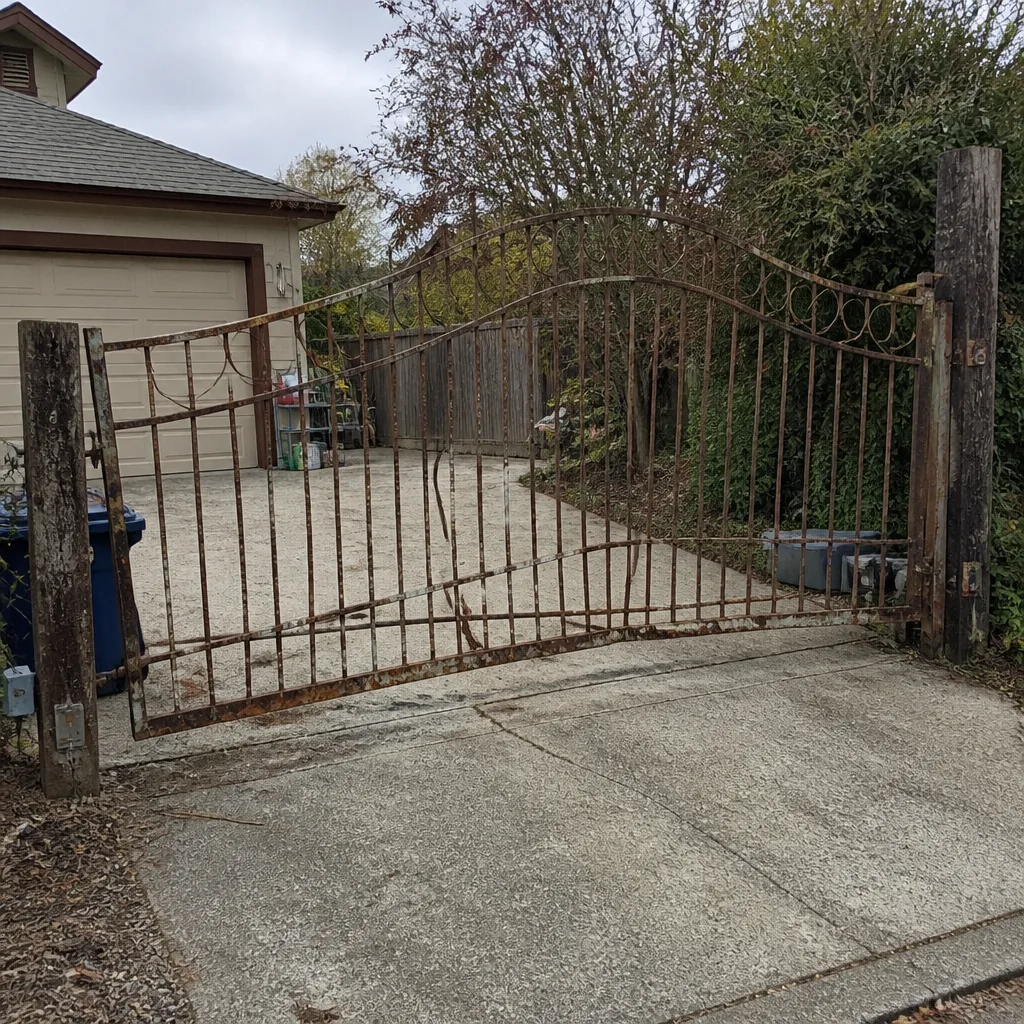 Before
 After
 Before
 After
When to Call a Professional
Call a professional whenever the problem involves the operator, the control board, high-voltage or buried wiring, or a gate that’s physically heavy enough to crush. Those aren’t DIY jobs, and a mistake in the control box or a gate that closes on a person or vehicle is genuinely dangerous. Call us if the gate reverses unpredictably, if the motor hums without moving, if you smell burning inside the control box, if a hinge or post has shifted, or if the gate has failed more than once for the same apparent cause. Gate Repair Santa Rosa offers free estimates in Santa Rosa. Call (888) 298-3409. We answer 24/7, with fast dispatch from 7am to 7pm, Sunday through Friday.
Frequently Asked Questions
Most gate repairs in Santa Rosa cost between $150 and $900, with simple hinge or sensor repairs at the low end and control board or motor replacement at the high end. The written estimate you get after diagnosis is the final price, agreed before any work starts. Call (888) 298-3409 for an exact quote; estimates are free.
Yes, same-day service is available for gate repair in Santa Rosa. We answer 24/7, with fast dispatch from 7am to 7pm, Sunday through Friday. A call outside dispatch hours is booked into the next opening. Call (888) 298-3409 and we’ll tell you the next available window.
Yes, a slow gate is more urgent than a dead one because it’s actively wearing out the motor and control board every cycle. In our experience, a gate that’s running slow is usually weeks away from a full failure. Call (888) 298-3409 for a free estimate before it stops entirely.
We work on the brand you already own, including LiftMaster, FAAC, BFT, Linear, Viking, Ghost Controls, DoorKing, Elite, and Mighty Mule. We repair your existing system rather than pushing a replacement or a preferred brand. Call (888) 298-3409 to describe your system and get an accurate quote.
Yes, we handle the power run and the safety edges as part of a new gate installation. That means you don’t need a second contractor for the electrical or the safety sensors. Installation is measured, ordered, and scheduled, so call (888) 298-3409 for a free measure and a written price.
Intermittent gate failures usually trace to loose wiring, a safety sensor or loop detector losing contact, or a battery in a solar system that’s marginal on charge. These are among the most common causes in Santa Rosa’s expanding and contracting soils. Call (888) 298-3409 and describe when the failure happens; that pattern often points to the cause before anyone comes out.
The Bottom Line
Most Santa Rosa gate failures come down to one of five system-level causes, and the fix starts with identifying your drive type before anyone touches the gate. A slow gate is a warning, not a reprieve. Document the failure with photos and video, and a specialist can diagnose faster and quote accurately on the first call. We work on the brand you already own, diagnose first, and replace only when repair isn’t cost-effective. Whether it’s a residential Ghost Controls operator or a commercial DoorKing system with access control, one call covers the whole gate. Call (888) 298-3409 to book a free estimate in Santa Rosa.
Written by the team at Gate Repair Santa Rosa.