
Last updated November 14, 2026
 Wrought iron
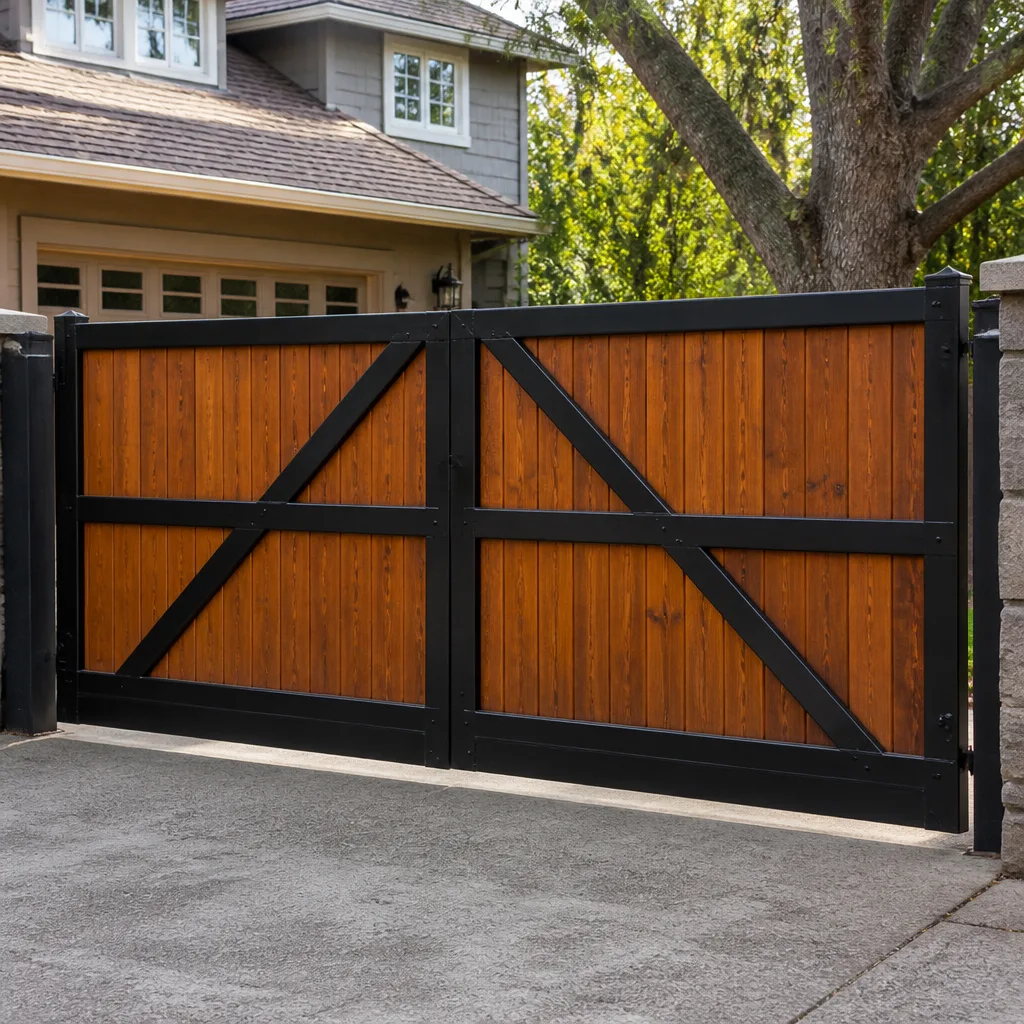 Wood & steel frame
 Farm & ranch
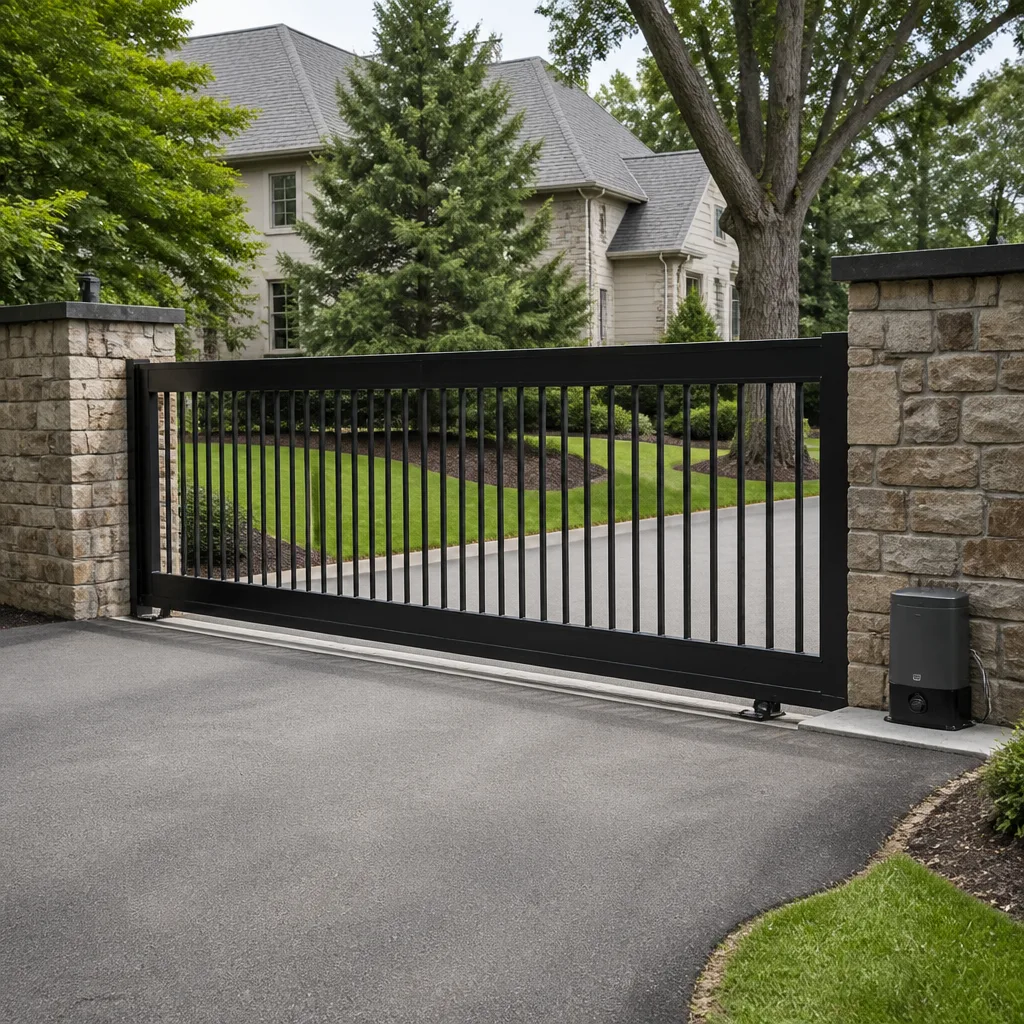 Sliding driveway gates
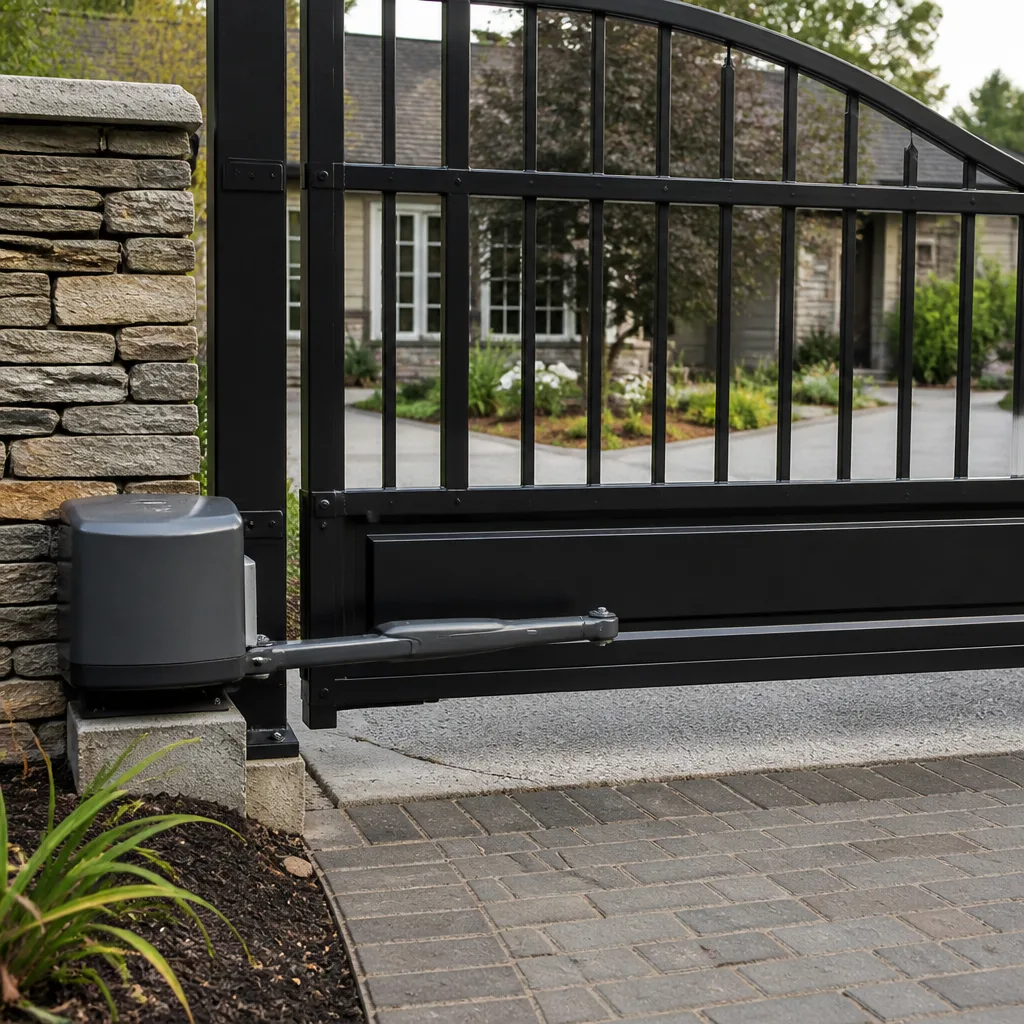 LiftMaster operators
Free on-site gate assessment - hinges, posts, and your LiftMaster or Nice gate operator checked before anything is quoted
The assessment is free and the quote is the invoice.
Get your free estimateGate Repair Warning Signs: A Santa Rosa Homeowner’s Reference Guide
Most gate owners wait for the gate to stop. That’s the wrong signal to watch for. A gate that quits entirely is obvious, but the failures that cost the most usually announce themselves weeks earlier through small changes in behavior: a half-second hesitation, a new rattle at the hinge, a motor that hums a beat longer than it used to before the arm swings. In Santa Rosa, where foggy mornings and warm afternoons work on wood, steel, and control boards alike, those early clues are easy to miss if you don’t know what you’re hearing. This guide teaches you to read your gate the way a technician does, so you can catch a cheap repair before it becomes an expensive replacement.
Quick Answer
The most important gate repair warning signs in Santa Rosa are intermittent operation, grinding or clicking sounds, a motor that hums without moving the gate, visible sag or hinge gaps, track wear, and error codes on the control board. A gate that hesitates, reverses on its own, or works “most of the time” is often closer to failure than a gate that has stopped completely, because intermittent faults usually point to a part that’s already failing and just hasn’t given out yet.
Styles & brands we work with
- Wrought iron
- Wood & steel frame
- Farm & ranch
- Sliding driveway gates
- LiftMaster operators
Table of Contents
- The Behavioral Matrix: What Your Gate’s Sounds and Movements Tell You
- Visual Warning Signs on the Gate Itself
- Control Board Warning Signals and Error Codes
- The Intermittent Failure Pattern
- How to Photograph and Document Warning Signs Before We Arrive
- Why Santa Rosa Gates Fail the Way They Do
- Seasonal and Environmental Factors Specific to Santa Rosa
- Safety Warning Signs You Should Never Ignore
The Behavioral Matrix: What Your Gate’s Sounds and Movements Tell You
A gate delivers information through sound and motion before it delivers it through failure. Learning to match the symptom to the likely cause is the single most useful skill a homeowner can develop, and it’s the same diagnostic method our technicians walk through on every on-site estimate.
Here’s how the common symptoms map to mechanical and electrical causes:
- Grinding during travel: Usually a worn drive gear inside the operator, a chain stretched past its adjustment, or a roller seized on its track. If grinding happens only at one end of travel, suspect a track or hinge problem rather than the motor.
- Clicking but no movement: Often the control board sending a signal that the motor can’t act on, or a safety sensor that thinks the path isn’t clear. Listen for whether the click comes from the operator head or from a relay box on the post.
- Humming without movement: The motor is getting power but the drive is stuck. On swing operators this is frequently a worn gear or a bound arm; on slide gates it can be a jammed trolley or a chain that’s jumped its sprocket. Stop using the gate, since continued humming can burn out the motor.
- A half-second hesitation before moving: Often the first sign of a capacitor losing its charge, a control board relay wearing, or a drive system straining against friction it wasn’t designed for.
- Reversing on its own mid-travel: Almost always a safety sensor or loop detector, but sometimes a control board interpreting a voltage drop as an obstruction.
- Squealing or whining: Dry or worn bearings in the operator, or rollers that need inspection. Squealing gets louder and cheaper to fix the sooner you catch it.
In our experience across Santa Rosa properties, the operators that fail soonest are the ones where a small sound went unaddressed for a season. A grinding FAAC or BFT arm on a residential driveway often starts as an intermittent tick.
Visual Warning Signs on the Gate Itself
Walk out and look at your gate with fresh eyes. The metal and wood are telling you which part is going to break next, and the pattern of the sag or gap points to the cause.
Sag Patterns and What They Mean
- Sag at the latch end of a swing gate: A hinge that’s pulling loose, or a post that’s settled. On wood gates in Santa Rosa’s wet winters, the post footing can shift over time.
- Sag in the middle of a wide gate: Frame or brace failure. The gate may still open, but the operator is fighting the droop every cycle.
- Slide gate riding high on one end: A worn roller or a track that’s out of level. Left alone, the gate will start jumping the track.
Track, Hinge, and Hardware Clues
- Track wear: Flat spots, shiny grooves, or debris packed into the channel. A gate that grinds along a worn track will wear the rollers and eventually the operator.
- Hinge gaps: Look for daylight or a widening gap between the gate frame and the hinge plate. A loose hinge puts the entire gate load on the operator arm.
- Rust bloom at the weld points: Cosmetic on some gates, structural on others, and always worth noting before it spreads.
- Bent or bowed pickets or panels: Even a small bow can change the gate’s center of gravity and put extra stress on the motor.
If you see any of these and the gate also hesitates, that’s two warning signs pointing at the same failing part. That combination is what we look for on a routine gate repair visit before any work begins.
Control Board Warning Signals and Error Codes
The operator’s control board is the gate’s brain, and it’s the part of the system homeowners understand least. Error codes that look cryptic are usually simple once you know what each one tracks.
Reading the Codes in Plain Language
Different brands format their codes differently, but the categories are consistent:
- Obstruction or reverse codes: The board believes something is in the path. Usually a misaligned safety sensor, a leaf or debris on a loop detector, or a photo eye that’s been bumped. On a LiftMaster or Linear operator, this is the most common code you’ll see and the least scary.
- Limit and travel codes: The board lost track of where the gate is fully open or fully closed. Often a limit switch out of adjustment, a slipping chain, or an encoder issue. These usually appear right after a gate has been manually released and re-engaged.
- Motor or current codes: The board measured too much current draw from the motor. This one matters: it’s often a warning that the drive system is straining against friction, or that the motor itself is on its way out.
- Communication codes: On Viking and FAAC systems with add-on modules, a communication fault often traces to a loose wire or a failing receiver rather than the board itself.
One word of caution: control boards and operator wiring carry line voltage. If you’re not trained on the specific system, don’t open the enclosure to chase a code. Read the code, write it down, and let a technician who works with your brand interpret it. Our electric gate repair technicians are trained on boards, loop detectors, sensors, and motor drives from brands including FAAC, BFT, Linear, and Viking, and we work on the system you already own rather than pushing a replacement.
The Intermittent Failure Pattern
Here’s the counterintuitive part of gate diagnostics: a gate that works “most of the time” is often closer to full failure than a gate that has completely stopped. When a gate stops entirely, the failure is behind you and the remedy is clear. When a gate works eight days out of ten, a part is actively degrading and the failure is still ahead.
Intermittent behavior usually traces to one of a few causes:
- A failing capacitor: The motor starts weakly on warm afternoons and fine on cool mornings. The gate “works” until it doesn’t.
- A marginal safety sensor: Sun angle, fog, or a spider web in the lens triggers a reverse only sometimes.
- A worn relay on the control board: The signal fires reliably on some cycles and not others. This is the classic pattern that leads to a gate stuck open at an inconvenient moment.
- A loose or corroded connection: Vibration from the gate itself loosens the terminal over time, so the fault comes and goes with temperature and use.
Why does intermittent matter so much? Because when a gate finally fails, it often fails in the open position or in mid-travel, and the operator has been running hot for weeks. Intermittent faults left alone tend to cost more to repair than the same faults caught early. If your gate in Santa Rosa works sometimes but not always, treat it as an active warning sign, not a quirk.
How to Photograph and Document Warning Signs Before We Arrive
Good documentation shortens the on-site diagnosis and usually means the technician arrives with the right part rather than making a second trip. Here’s how to do it well:
- Photograph the operator’s brand and model plate. A clear photo of the label on the operator head tells us exactly what we’re working with. A LiftMaster, BFT, or Linear label all look different, and the model matters.
- Photograph any error codes on the display. A photo of the exact code is more reliable than retyping it, especially if the code only shows briefly.
- Take a short video of the gate in motion. Capture a full open and close cycle. The hesitation, the grind, and the reverse all show up in video in a way a still photo can’t.
- Photograph the sag or gap from a low angle. Hinge gaps and gate sag are easiest to see from knee height at the latch end.
- Photograph the track and rollers close up. Get the full length of the track in one shot plus a close-up of any flat spot or debris.
- Note when the problem happens. Morning or afternoon, hot or cool, after heavy use or first cycle of the day. This pattern is often the most useful clue of all.
- Write down what you’ve already tried. If you’ve already replaced a battery in the remote or reset the operator, say so, so the technician doesn’t repeat a step.
- Note the gate type and access setup. Swing or slide, single or double, and whether there’s an intercom, keypad, or loop detector involved.
Send these notes and photos when you call. Our technicians have up to 14 years of experience, and a detailed photo set often lets them identify the likely system and the part family before the visit. On a Santa Rosa property, that context is worth scheduling the visit properly. If you’d rather walk through it first, call (888) 298-3409 and we’ll tell you what to photograph.
Why Santa Rosa Gates Fail the Way They Do
Gates in Santa Rosa live in a particular climate, and it shapes which parts fail first. Winters here are mild but wet, with weeks of fog and drizzle followed by warm, dry summers. That cycle is gentle compared with colder parts of the country, but it’s hard on wood gates, on exterior wiring, and on any hardware that sits in standing moisture.
What that means in practice:
- Wood gates take on moisture in winter and dry out in summer. The frame can move just enough to throw a hinge out of alignment or change where the gate sits relative to the operator arm. That’s often the hidden cause behind a swing gate that suddenly grinds.
- Exterior wiring and junction boxes on older properties deserve a look. A cracked conduit or a box that’s let in water can produce intermittent electrical faults that look like control board failures.
- Dust and pollen from nearby trees and vineyards coat tracks and photo eyes. A blocked photo eye reads as a safety trip, and a dusty track adds friction the operator has to overcome.
- Sun exposure on south- and west-facing gates fades plastic covers and cooks the electronics inside the operator head. Shade under an oak doesn’t have that problem but keeps moisture around longer.
We serve gates across Santa Rosa, from neighborhoods like Rincon Valley and Bennett Valley to Coffey Park and the older streets near downtown. If you’re not sure your gate is failing because of the climate or the hardware, a free estimate is the fastest way to find out.
Seasonal and Environmental Factors Specific to Santa Rosa
Timing matters when you’re reading a warning sign. Some failures cluster in specific seasons, and knowing that helps you decide how urgently to act.
- Late fall and early winter: The first real rains after a dry summer tend to reveal wood gate issues and exterior wiring faults. A gate that was fine in October can develop an intermittent trip in November.
- Summer heat: Control boards and motors run hotter, and an aging capacitor is more likely to fail on a hot afternoon. A gate that hesitates in the afternoon but not the morning is a summer-specific warning.
- Pollen season: Spring pollen coats photo eyes and tracks. If your gate reverses on its own for a week and then stops, clean the sensor lens and check again before assuming the board is bad.
- Wind events: Debris on the track or a bent panel after a gusty stretch is common on exposed properties. Check the track and the gate’s square after any notable wind.
None of these changes the diagnostic method. They just tell you when to look closely, and which part is most likely to be failing.
Safety Warning Signs You Should Never Ignore
Some warning signs aren’t about saving money. They’re about preventing injury. A gate is a heavy moving object with a motor behind it, and a few defects should always stop you from using it.
- A safety sensor that’s been taped over, unplugged, or bypassed: A gate that closes without a working sensor is a crush hazard. This isn’t fixable with patience. It needs repair before the gate is used again.
- A gate that doesn’t reverse when it meets an obstruction: The reverse function is a core safety feature. If you can stop the gate by hand and it doesn’t back off, the operator needs service.
- A gate that comes off its track or out of its hinge: A falling gate panel can crush a person or a vehicle. Stop using it, block the opening, and call a technician.
- Exposed wiring at the operator or at a junction box: Line voltage in an outdoor enclosure is not a homeowner repair. Keep people and pets away from the enclosure and have it inspected.
- A gate that reverses on its own without an obstruction: Often benign, but occasionally a sign the board is misreading a limit. Worth a diagnosis before it does something unpredictable.
If any of these are present, don’t wait for a convenient week. Call (888) 298-3409. We answer 24/7. Fast dispatch from 7am to 7pm, Sunday through Friday, and a free estimate sets the price before any work begins. Any gate repair in Santa Rosa that treats the operator and the wiring as one system starts with the safety parts, and that’s where our Gate Repair Santa Rosa team starts too.
Common Mistakes to Avoid
- Waiting for the gate to stop completely. The most expensive gate repairs usually begin with a warning sign the homeowner ignored for weeks. By the time the gate stops, the motor and drive train have often been strained for a while.
- Assuming intermittent means “not serious.” A gate that works most of the time is a gate mid-failure, not a healthy gate with a quirk. Treat the pattern seriously.
- Trying to adjust or bypass a safety sensor. Disabling a photo eye to “make the gate work” removes the part that protects people and vehicles. It’s never the right fix.
- Spraying any lubricant on the track or operator. A greasy track collects dust and grit, which is worse than a dry one. Ask a technician which lubricant, if any, belongs on your system before you touch it.
- Replacing the operator when only a part has failed. Brand-neutral diagnosis matters here. A gate that hums without moving often needs a gear or capacitor, not a whole new motor.
- Ignoring gate sag because it “still opens.” A sagging gate loads the operator differently on every cycle, and the strain shows up later as a motor or drive failure.
- Cleaning the photo eye lens but not the reflector. Many sensors use a reflector on the opposite post. If you clean only one side, the sensor can still misfire.
- Assuming an error code means the board is dead. Many codes point to a simple fix at the sensor or limit switch. Reading the code before replacing the board often saves the cost of an unnecessary part.
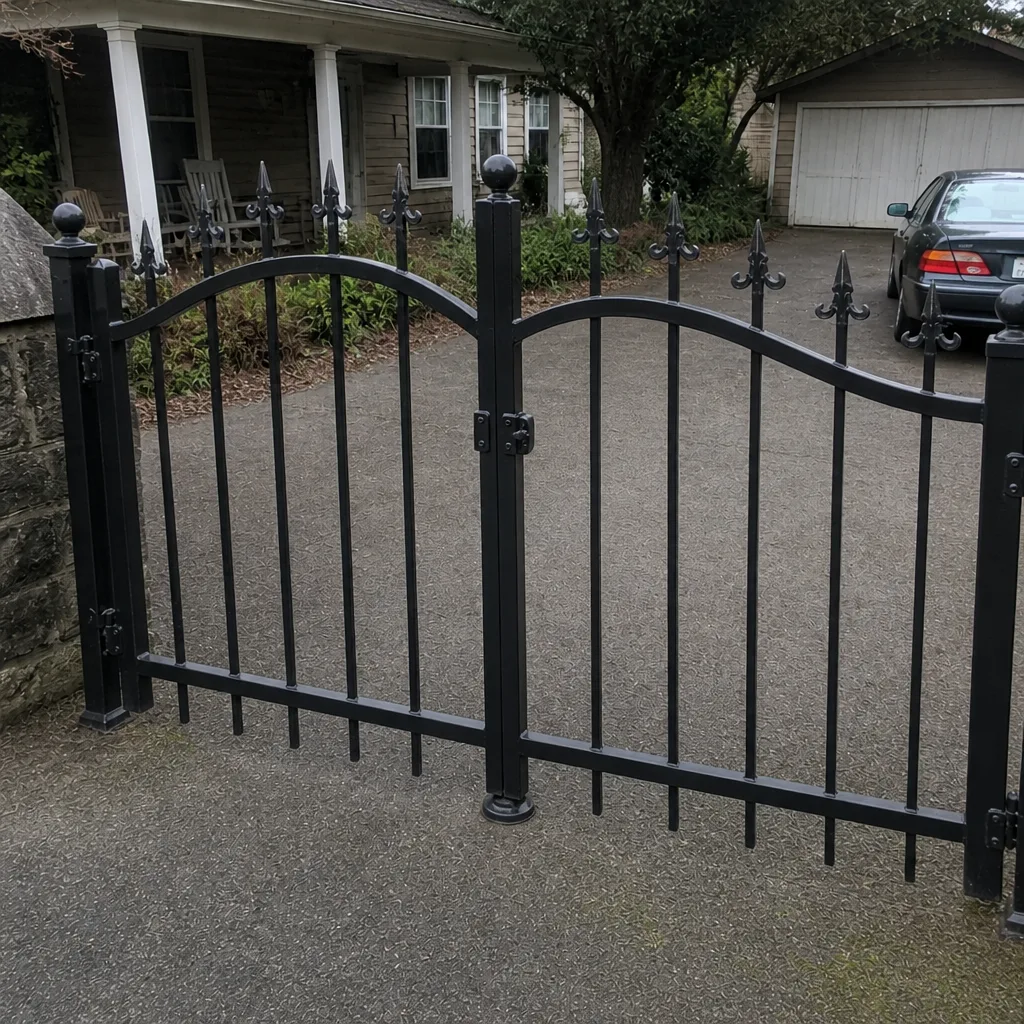
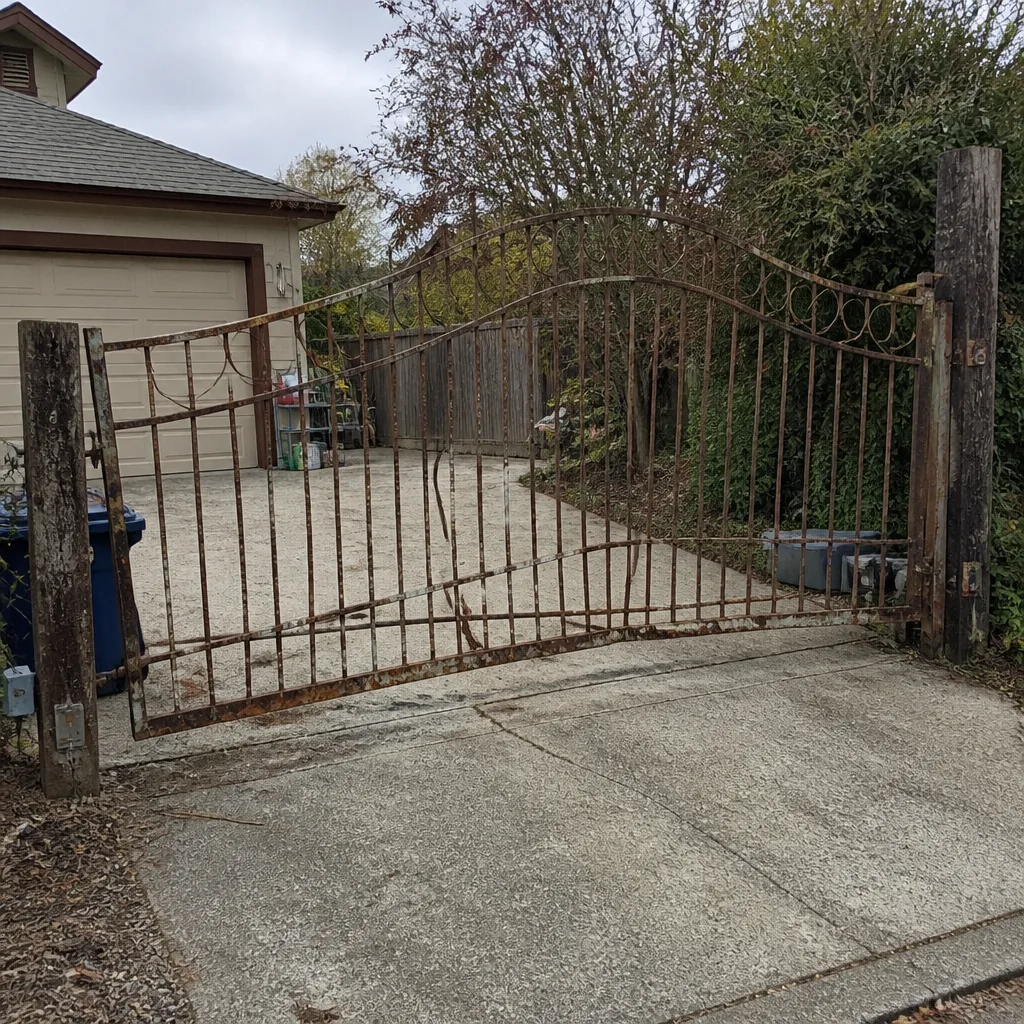
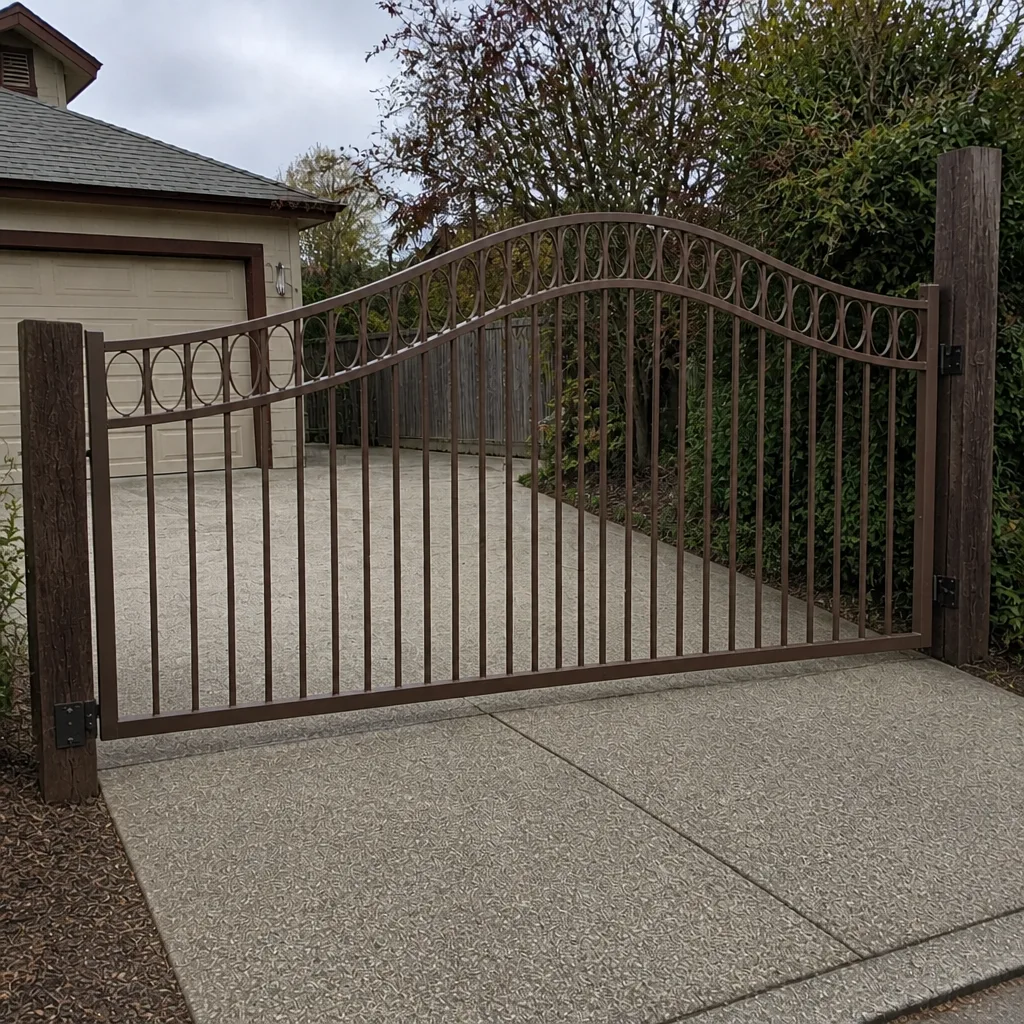
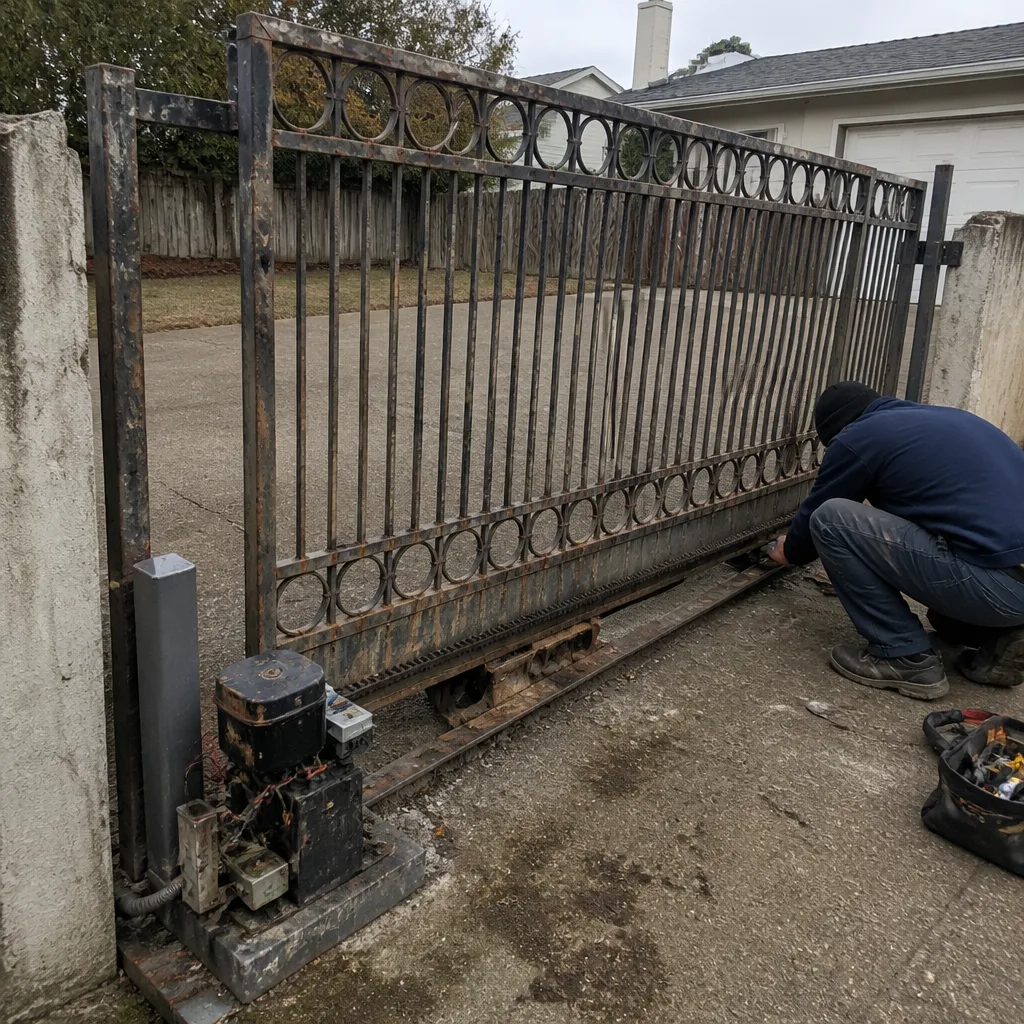
See the difference
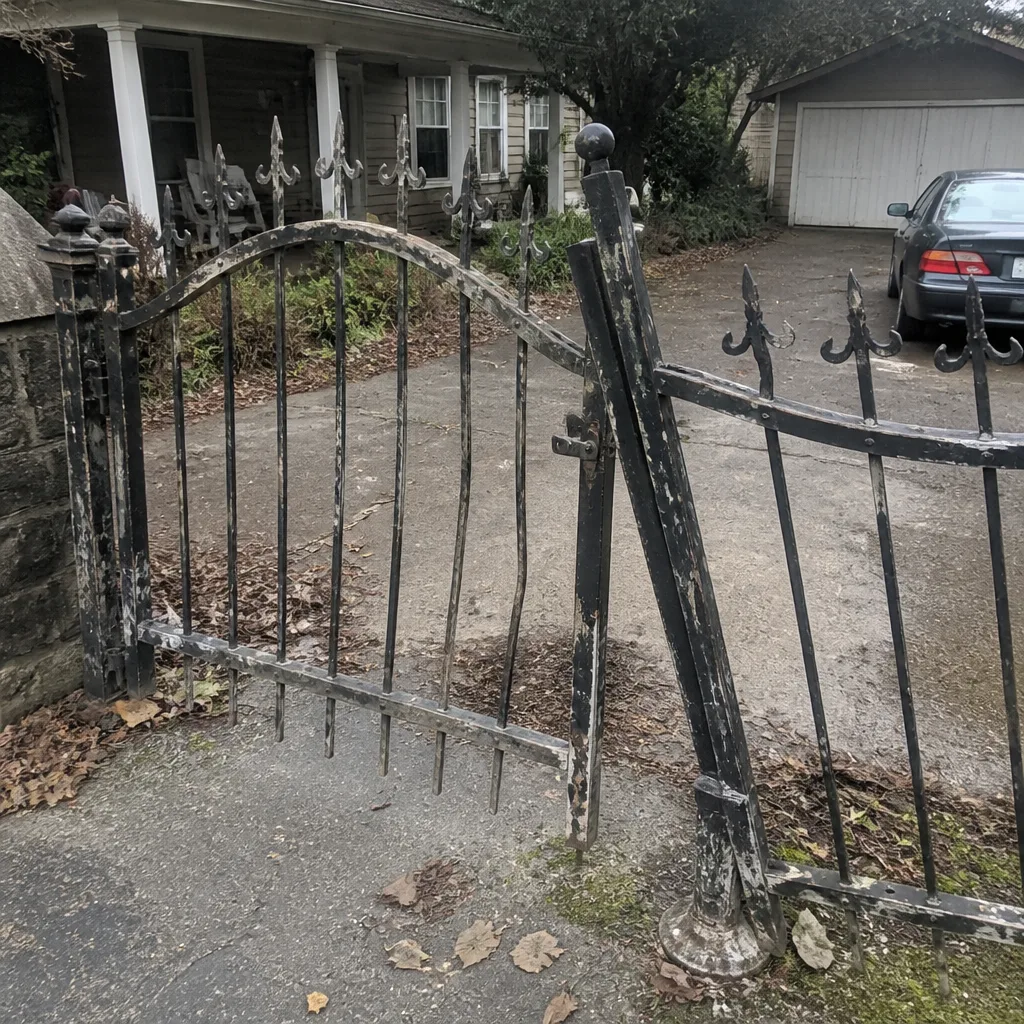 Before
 After
 Before
 After
 Before
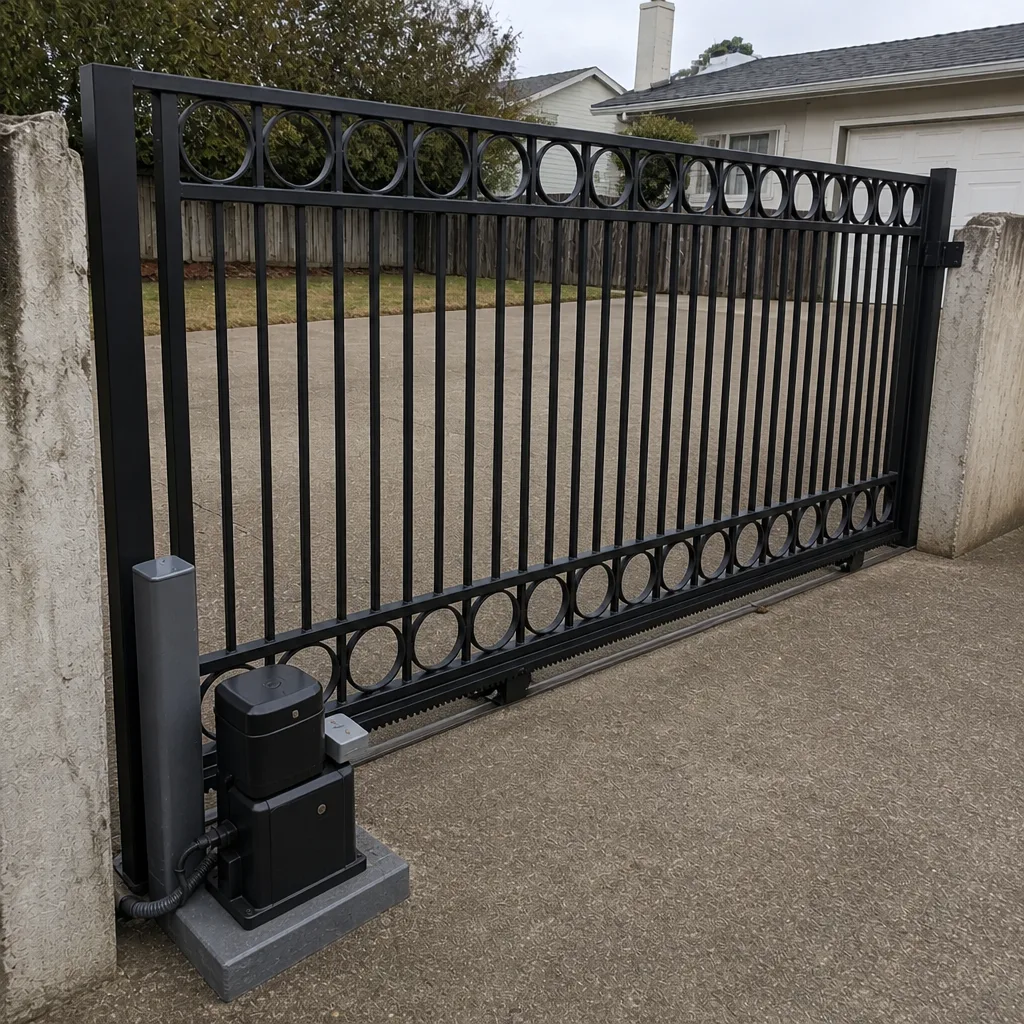 After
When to Call a Professional
You should call a technician when the gate hesitates, grinds, or reverses intermittently; when you see sag, a hinge gap, or a worn track; when an error code appears on the board; when the gate hums without moving; or when a safety sensor or the reverse function fails. Those are all conditions a trained specialist can diagnose and repair, and most are cheaper to fix early than late. If the gate is completely stopped, or a safety feature has failed, call right away.
Gate Repair Santa Rosa offers free estimates in Santa Rosa. Call (888) 298-3409. We answer 24/7, dispatch runs from 7am to 7pm Sunday through Friday, and the price is quoted and agreed before any work starts. Bring your photos and notes. That’s often the whole diagnosis.
Frequently Asked Questions
Intermittent operation is the single most important warning sign, because it points to a part that’s actively degrading and hasn’t failed yet. A gate that hesitates, reverses on its own, or grinds only sometimes is often closer to full failure than a gate that has stopped completely. Catch the intermittent fault and you may save yourself a bigger repair. Call (888) 298-3409 for a free estimate.
A humming motor that doesn’t move the gate is almost always a stuck drive: a worn gear, a bound arm, a jammed trolley, or a chain that’s jumped the sprocket. The motor is getting power, but the mechanical part isn’t responding. Stop using the gate, because continued humming can overheat the motor and turn a mechanical repair into a motor replacement. Our electric gate repair technicians handle this on brands including FAAC, BFT, Linear, and Viking. Call (888) 298-3409 to schedule a free estimate.
Usually not. Many error codes point to a sensor, a limit switch, or a wiring issue rather than the control board itself. The board only needs replacing when the specific diagnosis points there. Read the code, photograph the display, and let a technician interpret it before you buy any part. Call (888) 298-3409 and we’ll walk through what to check.
Intermittent gate behavior is usually a failing capacitor, a marginal safety sensor, a worn relay on the board, or a loose connection that shifts with temperature and vibration. That pattern is a warning, not a quirk. A gate that works eight times out of ten is closer to a full stop than one that has already quit, because whatever is failing is still in motion. Call (888) 298-3409 for a free estimate.
Yes, and it helps. A short video of a full open-and-close cycle, a photo of the operator model plate, and close-ups of the track, rollers, and any error code usually let us identify the likely system and part before the visit. That shortens the on-site diagnosis and often means the right part the first time. Call (888) 298-3409 and we’ll tell you exactly what to photograph.
Santa Rosa’s mild wet winters and dry summers are hard on wood gates, exterior wiring, and any hardware that holds moisture. You won’t see the freeze damage common in colder regions, but seasonal movement in wood gates and moisture in junction boxes are real causes of intermittent faults here. Address warning signs in fall before the rains, and in summer when the heat stresses control boards. Call (888) 298-3409 for a free estimate.
The Bottom Line
Your gate tells you it’s failing long before it stops, but only if you know what to listen for. Intermittent operation, grinding, humming without movement, sag, hinge gaps, track wear, and error codes are all early signals that point to a specific part. In Santa Rosa, mild wet winters and dry summers shape which parts fail first, and a gate that works “most of the time” is the one to worry about most. Diagnose early, document what you see, and let a gate specialist repair the part that’s failing rather than replacing the whole system. Visit our Santa Rosa page for local service details.
Call (888) 298-3409 for a free estimate. We answer 24/7, fast dispatch runs from 7am to 7pm Sunday through Friday, and the price is quoted and agreed before any work starts. Our technicians have up to 14 years of experience, and every job is gate work.
Written by the team at Gate Repair Santa Rosa.